US Shelves Russia Business Deals Plan To End Ukraine War, FT Reports
Witkoff and Kushner told European officials that corporate tie-ups are no longer central to the American pitch. Russia is still focused on territory, the report said.
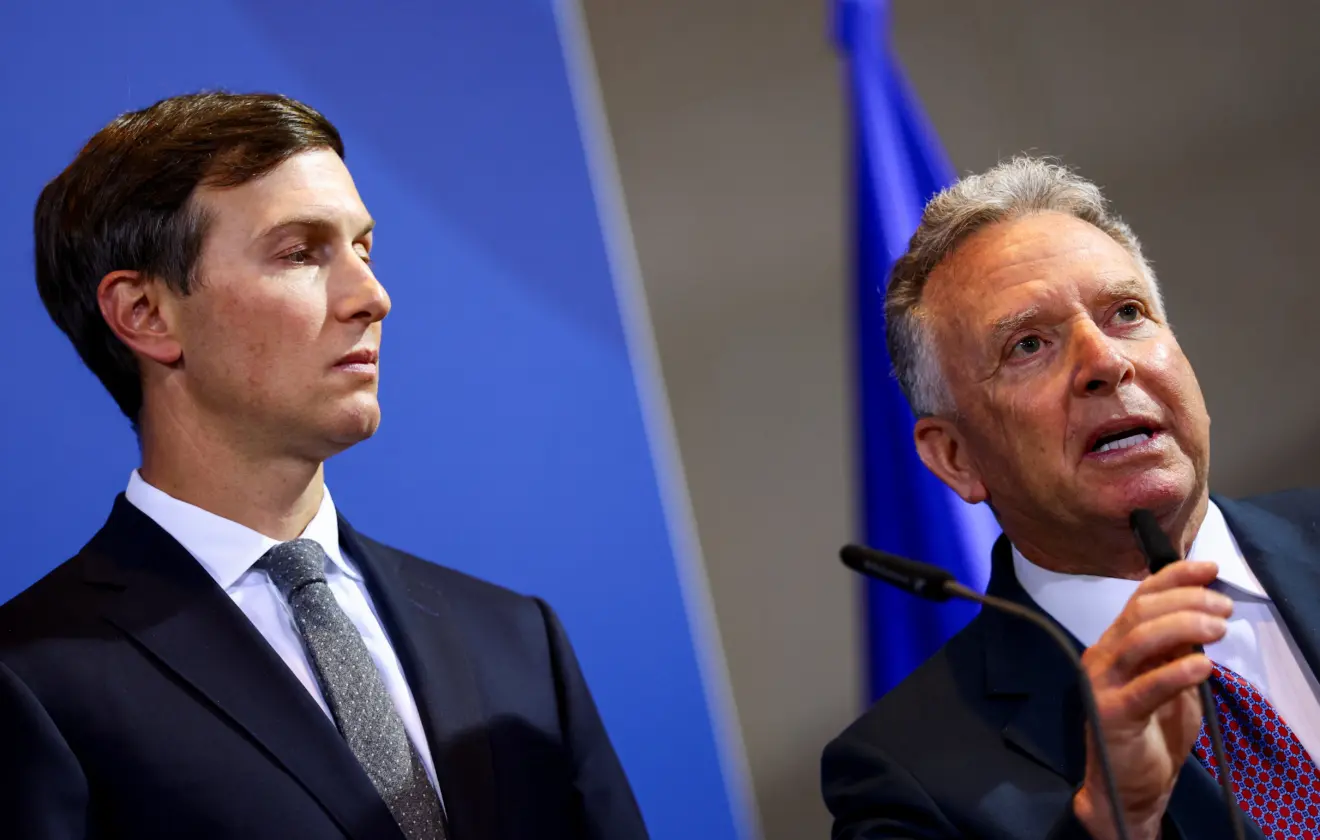
WASHINGTON, Nov 25 – The Trump administration has quietly shelved proposals to use Russia business deals as a reward for ending the war in Ukraine, the Financial Times reported on Wednesday. Moscow had shown little interest in the proposed ventures in energy and aviation, the newspaper said.
President Donald Trump’s envoys, Steve Witkoff and Jared Kushner, told European officials that corporate tie-ups were no longer a central part of the American pitch to Moscow, the newspaper said. It cited five officials who had been briefed on the change.
The White House did not immediately respond to a Reuters request for comment, which said it could not verify the report.
The shift marks a change of approach for Kushner, Trump’s son-in-law, who has been trying to broker a truce and sees business as central to restoring peace.
According to the Financial Times, Kushner had floated ideas for after the war, such as American companies investing in Russian oil projects and in ventures to produce titanium. In October, Reuters reported that senior Russian and American officials, including Kushner, had discussed bringing an American investor into the Nord Stream pipelines.
Those pipelines carried Russian gas to Germany under the Baltic Sea before Russia launched its full-scale invasion of Ukraine in 2022. They were badly damaged by underwater explosions later that year.
At first, Russian officials responded well to the American ideas, the newspaper said. But Moscow has since cooled on them.
The reason, according to the report, is that Russia is still focused on the terms of any peace deal. It insists that Ukraine give up territory and make other concessions that Kyiv considers unacceptable.
One official told the newspaper that the Russians had made it clear they were “not in the market for this kind of thing.”
The report comes at a busy time for diplomacy over the war.
Earlier this month, American, Russian and Ukrainian officials held talks in Abu Dhabi. And last week, Trump met Russian President Vladimir Putin and Chinese President Xi Jinping at a summit in Shenzhen, where the three leaders agreed to keep talking and avoid nuclear escalation.
Trump drew criticism at home and abroad after calling Putin a friend during that trip. On Sunday, his intelligence chief, Jay Clayton, said that Putin was not America’s friend when it came to Ukraine.
Putin has shown no sign of dropping his demand that Ukraine hand over all of its eastern Donbas region in return for peace. Russia now controls about a fifth of Ukraine’s territory.
Kyiv has rejected giving up land as the price of a ceasefire. Kyiv has instead pressed for strong security guarantees and more air defense to help it through the winter.
Witkoff and Kushner have also met European leaders as part of their efforts. They attended a recent summit of the so-called “Coalition of the Willing,” a group of countries that have pledged to support Ukraine’s security after any ceasefire.
The administration has used economic tools in other ways too.
In October, it temporarily lifted American sanctions on Russian fuel, which had been designed to cut off revenue for Moscow’s war effort. The move came after Russia agreed to supply diesel to world markets, as part of an effort to bring down fuel prices.
The Financial Times report did not say whether Russia’s business deals could return to the table later in the talks. It also did not say whether the United States plans to offer Moscow other incentives to end the fighting.
The war, now in its fifth year, continues on the front line in eastern Ukraine, with both sides also launching long-range drone strikes. Ukraine said this week that its sea drones had sunk a Russian warship at a port in Libya.