Phumzile Mlambo-Ngcuka, South Africa’s first woman deputy president, dies at 71
She broke new ground as South Africa's first woman deputy president, then led UN Women for eight years. President Cyril Ramaphosa called her a patriot.
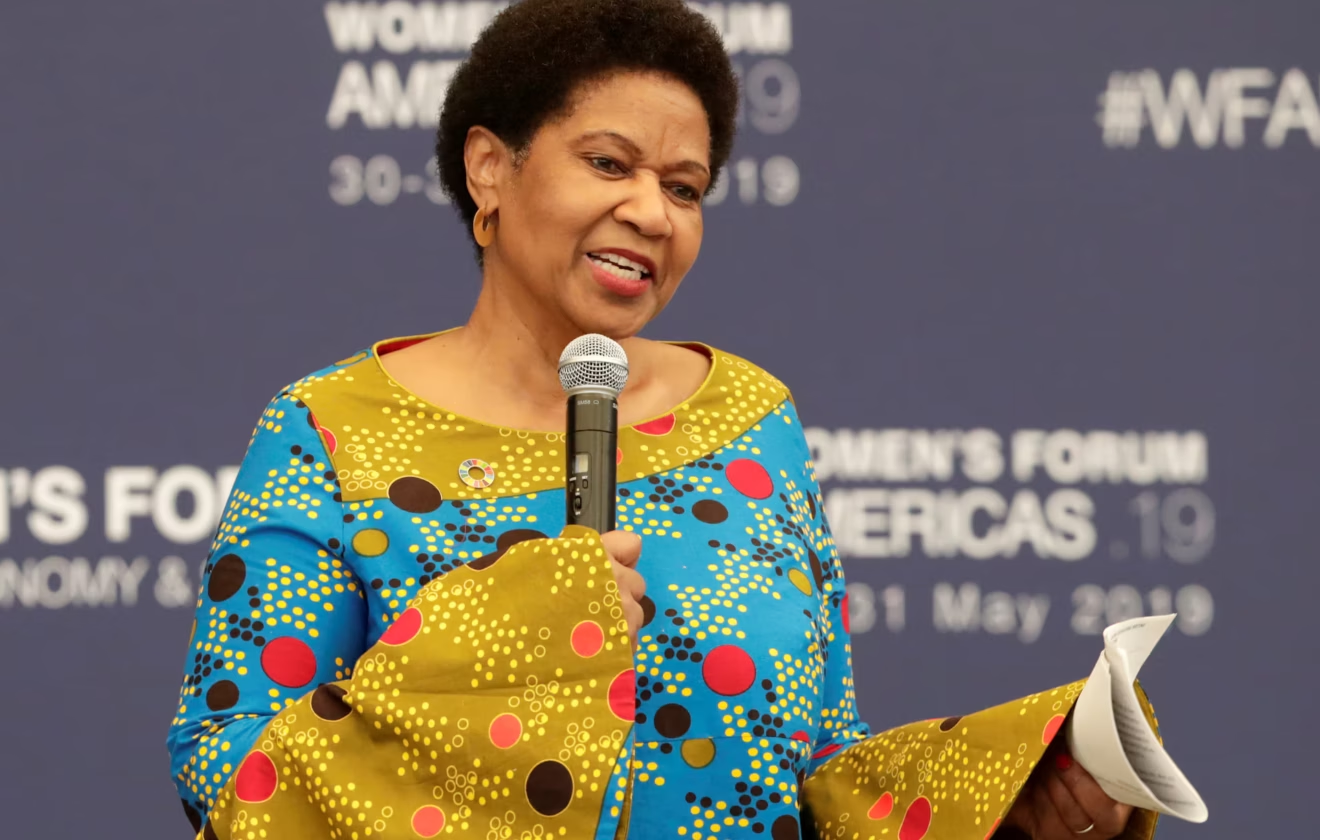
CAPE TOWN, Nov 21 – Phumzile Mlambo-Ngcuka, South Africa’s first woman deputy president and the former head of UN Women, has died at the age of 71, the presidency said late on Friday.
She died on Friday evening after complications from a medical procedure she had about two weeks ago, according to the presidency.
President Cyril Ramaphosa paid tribute to her. He called her a patriot who gave her life for women’s rights.
Ramaphosa spoke to the South African Broadcasting Corporation from Silicon Valley in California, where he is on a working visit. He said her work for women reached well beyond South Africa and Africa, and that she flew the flag for women around the world.
“Our hearts are sad and broken at the loss,” Ramaphosa said.
Her family also issued a statement. The Ngcuka and Mlambo families said they were heartbroken. They described her as a giant in South African public life and a global citizen, and thanked people at home and abroad for their messages of support.
Acting President Paul Mashatile was due to visit the family home in Sandton, in Johannesburg, on Saturday.
Phumzile Mlambo-Ngcuka was a teacher before she went into politics.
She was born in 1955 in Clermont, near Durban, in what is now KwaZulu-Natal province. She taught at Ohlange High School in the early 1980s. She then worked for the World Young Women’s Christian Association in Geneva, where she set up a program for young women.
At home, she was active in the fight against apartheid. She became the first president of the Natal Organisation of Women in 1983.
When South Africa held its first democratic election in 1994, she became a member of parliament. She chaired the committee on public service. She also sat in the Constitutional Assembly, which drafted the country’s new Constitution. That Constitution marks its 30th year in 2026.
She later served as deputy minister of trade and industry.
Then, from 1999 to 2005, she was minister of minerals and energy. In that job, she pushed to open the mining industry to more black South Africans and to women, as owners and as workers.
In 2005, she made history.
President Thabo Mbeki named her deputy president, the first woman to hold the post. She served until 2008. In the role, she led government efforts to cut poverty, with a focus on women. She also worked to widen access to skills training, and served as leader of government business in parliament.
She stepped down in September 2008, along with most of the cabinet, after the governing African National Congress recalled Mbeki.
She briefly joined the breakaway Congress of the People party in 2009. But she soon returned to the African National Congress.
She also kept working in education. She set up the Umlambo Foundation to support teachers and help pupils learn. And in 2013 she earned a doctorate from the University of Warwick in Britain. Her research focused on how mobile phones and other devices could help train teachers in poor countries.
That same year, she moved to the global stage.
In August 2013, she took office as executive director of UN Women, the United Nations body that leads work on gender equality. The job came with the rank of United Nations under-secretary-general.
She served two terms and left in August 2021. During those years, she pressed governments and civil groups to turn promises on equality into money and action.
Parliament’s leaders also mourned her.
Thoko Didiza, the Speaker of the National Assembly, and Refilwe Mtshweni-Tsipane, who chairs the National Council of Provinces, said they were deeply saddened. They described her as a brave and principled activist and a firm opponent of apartheid. They also praised her fight for justice and for the rights of women and girls.
They sent their condolences to her husband, Bulelani Ngcuka, a former national director of public prosecutions, and to her family.
The family will hold a prayer service at 2 p.m. on Sunday, Nov. 22, in Morningside, Sandton.
On Monday, the family will spend the day together in private. They have asked people not to visit the home that day.
Details of the memorial and the funeral will be announced later, after talks with the presidency.