Chuck Schumer Accuses Jensen Huang Of Breaking US Export Control Law
The Senate Democratic leader compared the chip shipments to selling rocket engines to the Soviets. Republicans also want answers on why Nvidia's board brought Huang back.
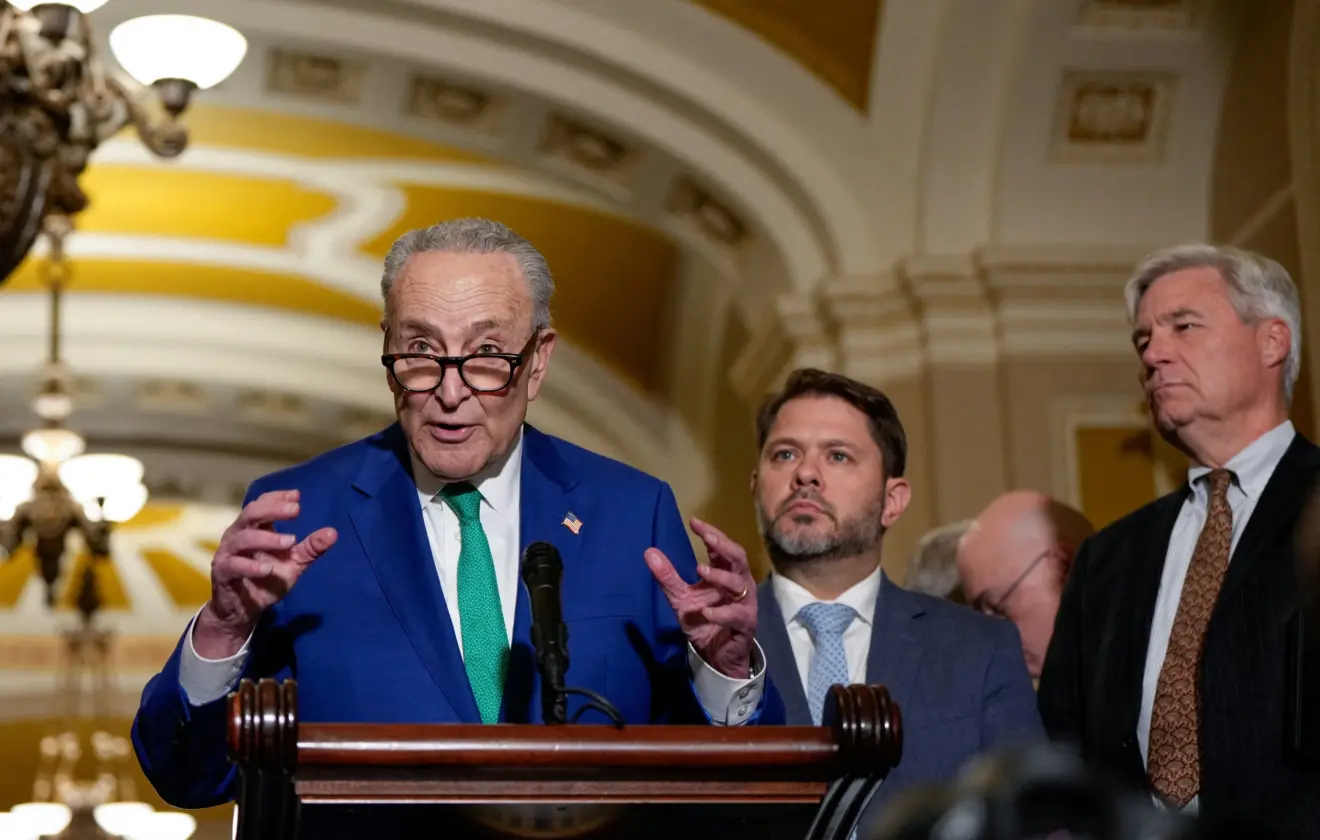
WASHINGTON, Nov 25 – Chuck Schumer has gone further than any other congressional leader so far, accusing Nvidia’s returning chief executive, Jensen Huang, of breaking the law by sending some of the world’s most advanced chips to China.
He raised this claim in his X post, though he failed to specify which shipments were involved. There was no response from Nvidia or the White House initially.
Schumer compared it to selling rocket engines to the Soviet Union in the middle of the space race, and he put much of the blame on the White House.
“This is an unfathomable failure of enforcement by the Trump administration,” Schumer said.
It is the sharpest attack yet on Huang, and it comes just a day after he got his job back.
Nvidia’s board brought him back on Monday, only 11 days after he quit over his relationship with Alice Huang.
President Donald Trump says he is the one who talked the board into it. He told the board that Huang was not a threat to national security, and said losing a mind like Huang’s would be the real danger in the race to lead in artificial intelligence.
That has not gone down well in Congress, on either side.
For months, lawmakers have been asking how Nvidia’s chips end up in China. Now they are also looking into whether Huang himself put the country at risk, and many of them want new limits on chip exports passed as soon as possible.
Some of the sharpest words came from Republicans.
Senator Kevin Cramer of North Dakota said Huang might need someone to keep an eye on him, to make sure he does not do anything that puts the United States at risk.
“We might even have to put a babysitter on Jensen Huang,” Cramer told CNBC.
Senator Dave McCormick of Pennsylvania said Congress must first determine what happened and then close the back door that allows China to obtain America’s most advanced chips. Senator John Curtis of Utah noted that just last week, the board had said it would not bring Huang back, and what changed.
In the House, Democrats directed their questions at Trump himself.
The top Democrats on four House committees sent him a letter on Tuesday seeking to know what he knew about Huang’s relationship, when he learned of it and what action he took. They also requested all records of contact between his administration and Nvidia’s board.
The four Democrats: Frank Pallone, Gregory Meeks, Jamie Raskin and Robert Garcia said Trump’s close ties to Huang and his refusal to recognize the risks had endangered the American people.
Schumer is not the only senator turning the issue into a campaign matter.
Chris Van Hollen of Maryland, who is challenging Schumer for leadership of the Democrats in the Senate, called Huang’s return evidence of “rot” in the administration’s technology policy. He pointed to Nvidia’s $25 million donation for Trump’s White House ballroom and to Trump’s holdings of Nvidia shares.
Some experts think the board went too fast.
Matt Pearl, a director at the Center for Strategic and International Studies, said a real investigation would normally take a year or more. Instead, the board merely took the word of high-ranking officials like Trump himself, he said.
“We haven’t had an investigation,” Pearl said.
He worries about what comes next, because if the president can wave away concerns about a man as powerful as Huang, he said, it gets harder for spy agencies to speak up the next time.
Huang will soon have to answer for himself.
He is set to give a closed-door briefing to three House committees on December 1. Two days later, on December 3, he is due to testify in public before the Senate Banking Committee.
Some Republicans want to hear from Commerce Secretary Howard Lutnick too. They say his department was slow to act against Megaspeed, the Singapore firm once run by Alice Huang that is suspected of moving Nvidia chips to China.
Megaspeed denies any allegations, and on Monday the United States said it would put the firm on a trade blacklist.
Senator Tom Cotton, the Republican who leads the intelligence committee, said the case was only the tip of the iceberg and that his Chip Security Act would pass one way or another.
Chuck Schumer wants a law from both parties that would cut off the flow of advanced chips and the tools to make them to China for good.