Democrats Set 12 Debates For 2028 Presidential Primary And Demand A Dark Money Pledge
Candidates must sign a pledge against dark money to qualify. Debates may run over two nights for a large field, and online creators will be part of the process.
WASHINGTON, Nov 24 – The Democratic National Committee has unveiled a framework for the 2028 presidential primary debates, scheduling 12 contests beginning in June 2027 — and barring candidates who refuse to pledge to denounce dark-money spending in the race.
The party said it was announcing the debate plans earlier than ever. Five debates will be held in 2027 and seven in 2028, with all of the debates in the early-voting states taking place in the election year itself.
The first two debates are due in June and July 2027, and the final one is planned for March 2028, although the committee said it reserves the right to change the schedule. Dates, locations and media partners for the opening debates will be announced in January.
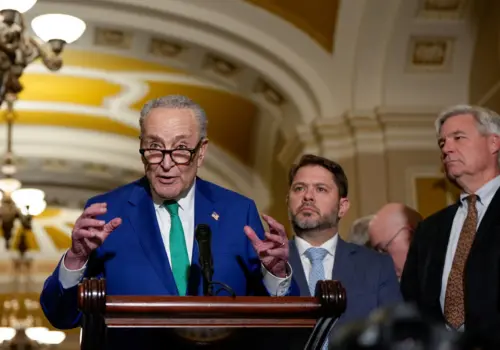
“Democrats are on offense after our historic victories in the midterms,” party chair Ken Martin said.
Martin said the process would keep the party united and strengthen its eventual nominee. Democrats won control of both chambers of Congress in this month’s midterm elections, and the party is now turning its attention to the race to succeed President Donald Trump.
A debate planning committee will be led by Minyon Moore, the party’s senior adviser for debates, and executive director Roger Lau. Its members include former staff from the 2020 campaigns of Joe Biden and Senators Bernie Sanders, Elizabeth Warren and Amy Klobuchar, as well as veterans of the campaigns of Barack Obama, Hillary Clinton and Kamala Harris.
Moore said she was honored to lead the effort and committed to a process that was fair and transparent and that would set the nominee up to win the general election.
The rules are strict.
To qualify, candidates need to sign a Fair Campaign Practices Pledge. It commits them to denounce dark money spending in the primary, a term that usually refers to political spending by groups that do not disclose their donors.
The pledge also bars campaigns from entering joint fundraising deals with any Democratic Party committee, or from approving advertising paid for by state, county or local party committees, unless they become the presumptive nominee. The party said committees at every level should remain neutral because their role is choosing convention delegates. Candidates may still attend and promote events held by party committees.
Martin has pushed for limits on dark money since he became chair. In August 2025, he introduced a resolution asking the party’s reform committee to find enforceable steps to curb unlimited corporate and dark money in the 2028 primary. Progressive Democrats have long complained that outside groups spend heavily against their candidates in primaries.
Candidates will also have to follow the party’s delegate selection rules. One of those rules bars them from campaigning in unapproved contests during the early window of the calendar. It also requires them to denounce any effort on their behalf.
There are limits on other debates as well. Candidates may take part in town halls and forums where only one of them is on stage at a time. But any event where two or more candidates share a stage and answer questions, in person or online, will count as an unsanctioned debate. Anyone who joins one will lose their place in future party debates.
A crowded field is expected.
Early debates may be split over two nights if too many candidates qualify, with the lineup for each night drawn at random and the two nights balanced. The total will be capped at 20 candidates across both nights.
As in 2020, candidates will qualify by meeting thresholds for polling and other measures of support, such as fundraising from small donors. They must also meet the legal requirements to run for president. The exact criteria for the first two debates will be released in January.
The party also said it wants as many people as possible to watch. To reach new audiences, it plans to bring online creators and influencers into the debate process.
The early window of the 2028 nominating calendar, composed of six states, was approved by the full party membership in August. States that break the calendar can lose delegates and face fines, and candidates who take part in their contests can be barred from party debates.
The Democratic National Committee said it would keep the 2028 Democratic presidential primary debates under review and adjust the process openly as the race develops.