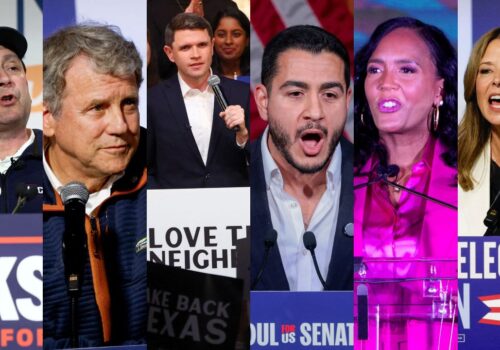
Abdul El-Sayed wins Michigan Senate race, becoming first Muslim elected to the Senate
The progressive doctor beat Trump-backed Mike Rogers after a campaign marked by attacks on his faith. He told supporters that America is big enough for everyone.
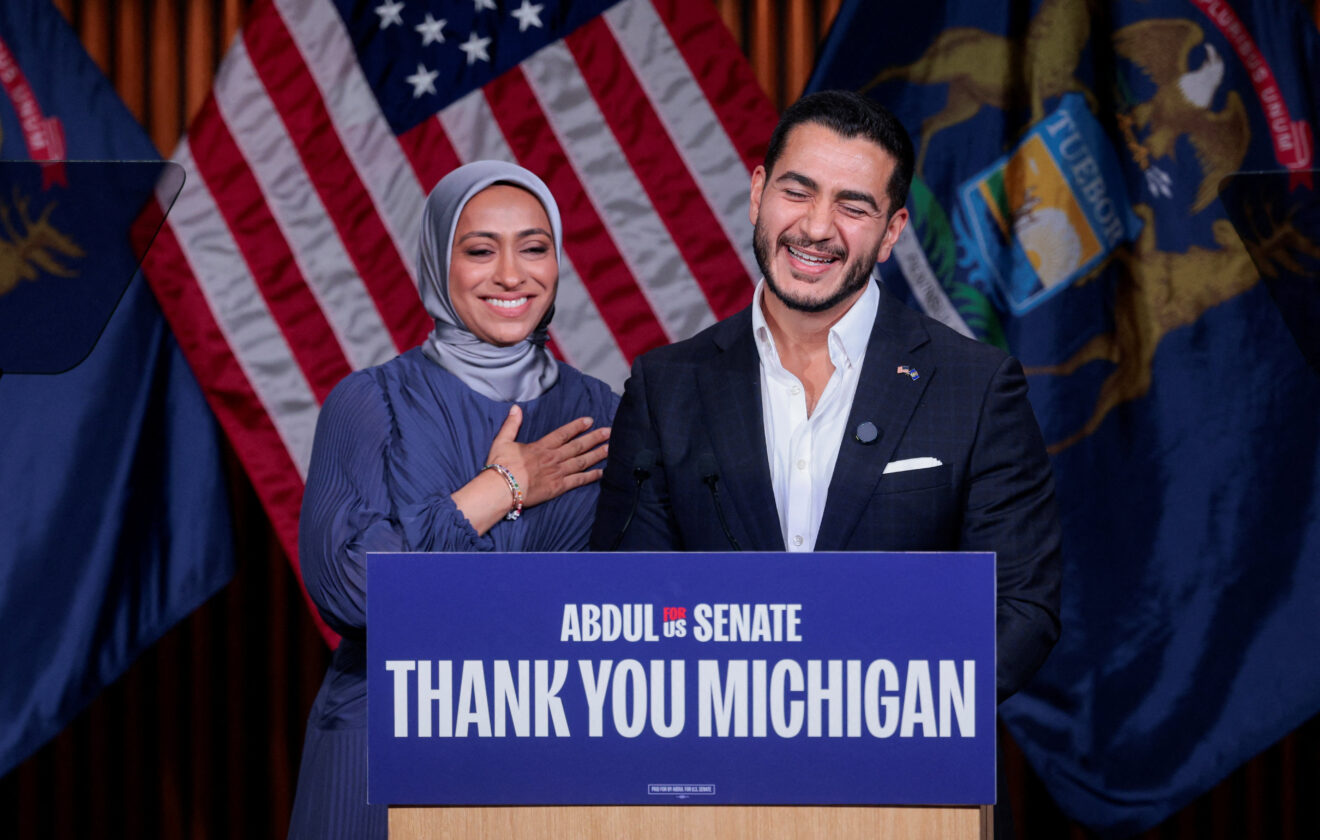
DETROIT, Nov. 4 — Democrat Abdul El-Sayed has won Michigan’s Senate race, defeating Republican Mike Rogers and making history as the first Muslim elected to the United States Senate.
The Associated Press projected El-Sayed the winner early on Wednesday. Other outlets, including Fox News and Decision Desk HQ, also projected his win.
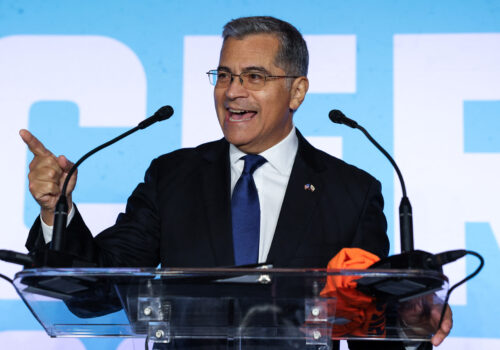
El-Sayed, 42, declared victory at the Michigan Democratic Party’s headquarters in Detroit before the major networks had called the race.
“I am so proud and honored to stand here as your Senator-elect,” he told supporters.
The win added to a strong night for his party. Democrats won control of the Senate on Tuesday, according to projections by CBS News and other networks.
El-Sayed is a doctor and a former public health official. He led the health department in Wayne County, which includes Detroit. He is Egyptian American and was born in Michigan.
He ran on lowering costs for working people. He backed Medicare for All, a plan for government health care for everyone, and called for an end to United States military aid to Israel. He calls himself a capitalist and rejects the label of socialist.
Earlier this year, he became the first progressive to win a statewide Democratic primary in a state that Trump carried in 2024. In that race, he beat Representative Haley Stevens, the choice of the party’s leaders.
The race was the target of huge spending. A super political action committee linked to the pro-Israel lobby group AIPAC spent about $30 million trying to stop him in the primary, a record for a single race. By mid-October, both parties had spent more than $220 million on ads in the general election, according to AdImpact.
El-Sayed faced a long run of attacks on his name and his faith. Trump and other Republicans repeatedly questioned his loyalty to the United States. They suggested, without evidence, that he sympathized with terrorists and that his election would put Americans at risk. Trump also called him a communist.
In his speech, El-Sayed spoke about those attacks. He said his opponents first pointed to his name and his faith, then tried to tie him to others, and then ran one of the ugliest campaigns he had ever seen.
But he said his name and his faith were not the reason people can’t afford gas, groceries or a visit to the doctor. He said his opponents chose to divide people because they had no answers on costs.
“We know that America is big enough for all of us,” El-Sayed said.
He thanked voters for welcoming him into their homes, churches and synagogues during a year and a half on the road. He also said American tax money should be spent at home on schools, health care and roads, and not on Israel’s war in Gaza, which he described in harsh terms.
He made no effort to reach across party lines. He said his campaign had offered hope, while Rogers’ campaign was a corporate-funded effort designed to mislead voters.
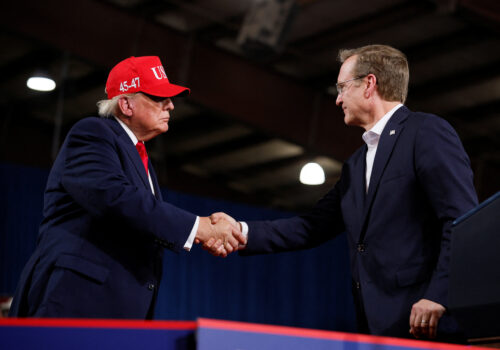
Rogers, a former member of Congress, ran as a close ally of Trump, who endorsed him. He narrowly lost the 2024 Senate race in Michigan to Democrat Elissa Slotkin by about 0.3 percentage points.
Rogers argued that El-Sayed’s views, including his support for universal health care, were outside the political mainstream. A Fox News poll in August found that 54 percent of Michigan voters considered El-Sayed’s positions too extreme. At the same time, 51 percent said Rogers was too closely aligned with Trump.
For most of the race, Rogers backed Trump’s tariffs and the war with Iran. In the final weeks, however, he broke with the president on both issues, calling for an end to the trade war with Canada and a swift conclusion to the conflict with Iran.
El-Sayed’s views on Israel both energized and divided parts of the Democratic base. Some Jewish voters expressed concern about his comments on Israel’s offensive in Gaza, while Arab American and Muslim voters, who make up a significant share of Michigan’s electorate, strongly supported him.
The two candidates were competing to replace Democratic Senator Gary Peters, who has held the seat since 2015 and chose not to run for reelection.
El-Sayed will be sworn in to the Senate in January.