Moscow Car Bomb Wounds Former Aide to Ukraine’s Azarov
It was the second car bomb in Russia in two days. Russian media say the former aide lost an arm, and investigators have opened a case.
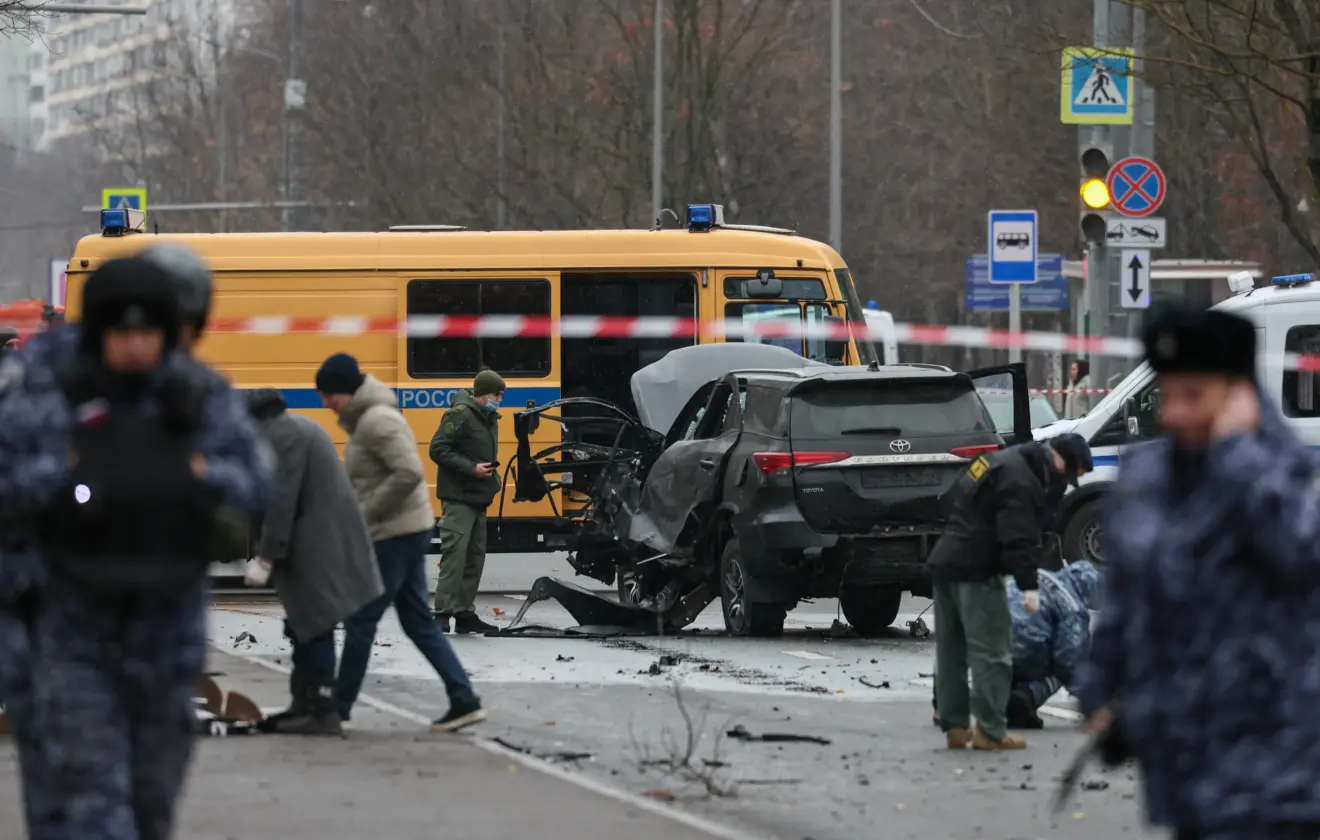
MOSCOW, Nov 13 – A Moscow car bomb wounded a former spokesman for a pro-Russian ex-prime minister of Ukraine on Friday, Russian investigators said. It was the second such blast in Russia in two days.
Sergei Zavorotniy was once a top aide to Mykola Azarov, who was Ukraine’s prime minister from 2010 to 2014. He was taken to the hospital after the car he was driving blew up on a street in Chertanovo, a district in the south of the Russian capital, the investigators said.
Russian media gave more detail. The television channel Ren TV and the Telegram channel 112 both said Zavorotniy lost his left arm in the blast. They said he was also being treated for a concussion, broken ribs and other wounds.
Another Telegram channel, Baza, posted a photo of a black car on a city street. Its windshield, doors and front bumper were smashed.
Russia’s Investigative Committee, which handles serious crimes, said it was looking into the attack. There was no immediate comment from Ukraine.
Moscow has blamed Kyiv for a string of past killings of senior military officers and of people linked to Russia. Ukrainian sources have claimed responsibility for some of the attacks and denied involvement in others.
Azarov told the Russian state news agency TASS that he knew nothing about the bombing, except that Zavorotniy had survived.
Azarov fled to Russia in 2014. That year, street protests in Kyiv, later known as the Maidan Revolution, forced out pro-Russian President Viktor Yanukovych. The protests began after Yanukovych backed away from a promise to build closer ties with the European Union. More than 100 protesters were killed as security forces cracked down, and both Yanukovych and Azarov left for Russia.
In 2019, a Ukrainian court sentenced Yanukovych to 13 years in prison in his absence for treason. Kyiv later put sanctions on him and on Azarov.
Zavorotniy had spoken out against those sanctions. In comments to the Russian newspaper RBC, he said they showed “a kind of Ukrainian-style McCarthyism.” He said Ukrainian officials were following orders from their backers abroad.
Before he worked for Azarov, Zavorotniy was a foreign reporter in Latin America in the Soviet era for the Moscow newspaper Komsomolskaya Pravda. Alexander Kots, a war reporter for the same paper, wrote on Friday that Zavorotniy was a historian of Latin America who wrote his doctoral thesis on Cuba.
Kots said Zavorotniy once spoke with Colombian writer Gabriel Garcia Marquez in a hotel lobby in Mexico and became close to the inner circle of the late Chilean military ruler Augusto Pinochet. After moving to Russia in 2014, he worked as a political commentator and wrote articles attacking Ukraine’s security services, Kots said.
Friday’s blast came a day after a member of the Russian military was killed when his car was blown up in St Petersburg.
That attack happened in the city’s Pushkinsky district. Video showed military police sealing off the area as forensic teams worked at the scene. A damaged dark blue SUV stood on a road covered in debris, next to what looked like an empty bus that had also been hit.
“Investigative authorities have opened a criminal case into the murder of a member of the armed forces,” the Investigative Committee said on Thursday.
The online newspaper Fontanka, which is known to have good contacts in law enforcement, said the man killed was a colonel. It said a 31-year-old suspect planted the bomb under his car after watching him for at least a month, and has since fled Russia. Citing an unnamed source, Fontanka said the bomb was brought into Russia by balloon from the Baltic states.
Officials have not confirmed who was killed or who the suspect is. Reuters could not verify Fontanka’s report.
Another soldier was killed in a car blast in the same district of St Petersburg on August 27. Car bombs have also gone off in Moscow and in Crimea, which Russia annexed from Ukraine in 2014, in recent months.
Ukraine did not comment on Thursday’s attack.