Xi Tells US To Do The Right Thing On Taiwan To Avoid Setbacks In Relations
Xi Jinping told Donald Trump that the United States must handle Taiwan correctly to avoid damaging ties. The two leaders also agreed to work on a plan for a stable relationship.
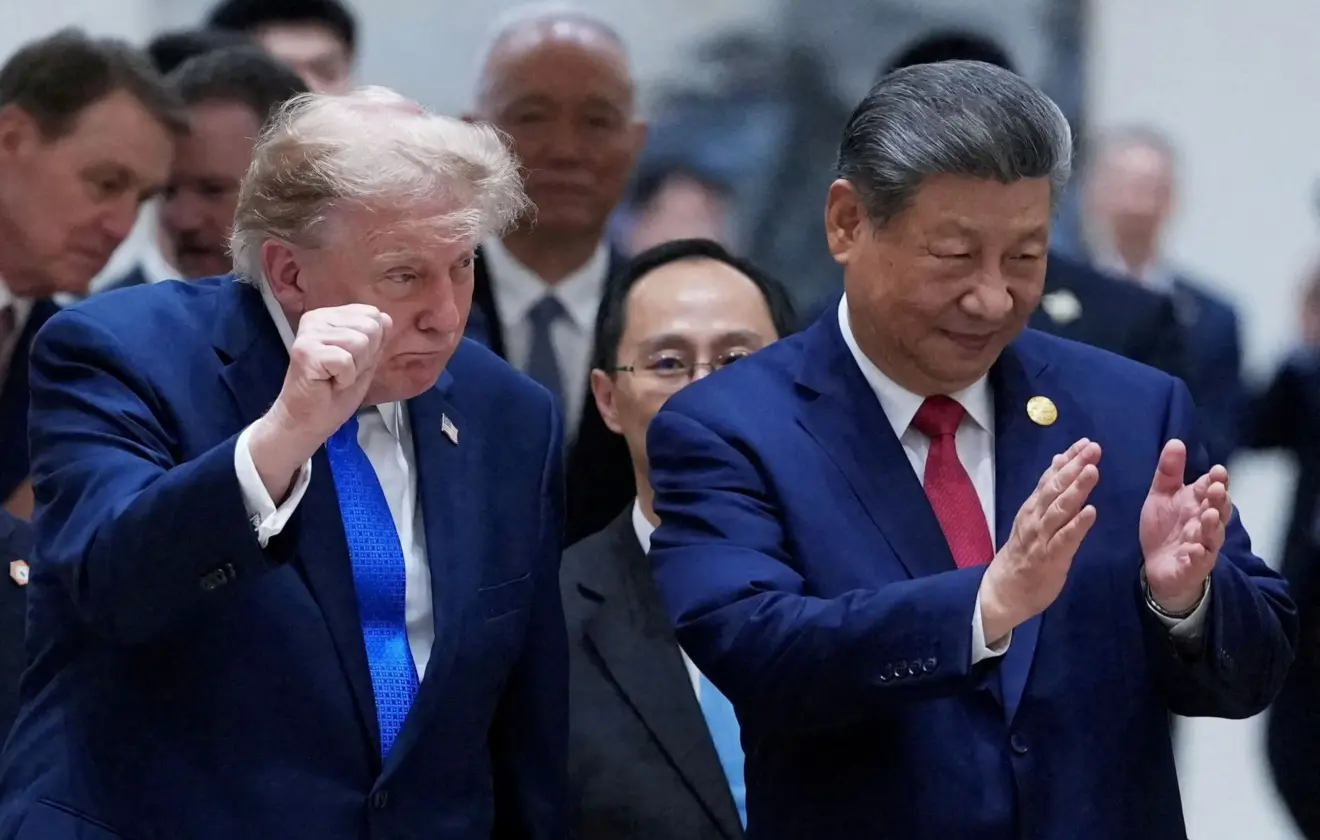
SHENZHEN, Nov 20 – Chinese President Xi Jinping told President Donald Trump on Thursday that the United States should do the right thing on Taiwan to avoid major setbacks in relations between the two countries, according to China’s state news agency, Xinhua.
The two leaders met in Shenzhen on the sidelines of the Asia-Pacific Economic Cooperation summit. It was their third meeting this year.
Xinhua described the talks as positive and constructive. It said the two leaders agreed to draw up an action plan for what Beijing calls a constructive and strategically stable relationship.
The comment on Taiwan in the Chinese readout was brief. Xinhua did not give more details.
It also made no mention of American arms sales to Taiwan, which Beijing has repeatedly called on Washington to stop.
China claims Taiwan, a self-governing democracy, as its own territory. Taipei rejects that claim. Beijing says Taiwan is the most important and sensitive issue in its relations with the United States, and its military operates around the island every day.
The United States is Taiwan’s most important international backer. But after meeting Xi in Beijing in May, Trump said he was holding back a new arms sale to Taipei, calling it a good bargaining chip.
Xi had already raised Taiwan as one of China’s red lines in the talks on Thursday. Later, at the three-way meeting with Trump and Russian President Vladimir Putin, Xi urged the three powers not to challenge each other’s red lines.
Last week, Xi said unification with Taiwan could not be stopped.
Apart from Taiwan, Xi struck an upbeat tone on relations with Washington.
He said the two countries had set out a new definition of their relationship, based on respect, fairness and reciprocity. He said ties have generally been stable and moving in the right direction, and that it is important to keep that going.
Xi said he looked forward to working with Trump to steer relations and make sure the big ship stays on the right course.
He said the two countries should “extend the list of cooperation and shorten the list of problems.”
Disagreements that cannot be resolved immediately should be managed carefully to prevent conflicts from escalating, Xi said.
He also called for closer communication between the two countries on artificial intelligence, saying they should work together to address safety risks and ensure the technology remains under human control.
Taiwan is a member of the forum, though it does not send its president to the summits to avoid political problems.
This year, its envoy was Stan Shih, the founder of computer maker Acer. Shih shook hands with both Trump and Putin on Thursday, when the leaders posed for the group photo before the summit formally began.
After returning to Taiwan on Thursday, Shih told reporters he had interacted with Trump and many other leaders, though he did not name them. He said he had thanked like-minded countries for their support in deepening cooperation with Taiwan.
Shih was joined in Shenzhen by Vincent Chao, deputy secretary-general of Taiwan’s National Security Council. It was a rare trip to China by a senior Taiwanese government official.
Taiwan had complained ahead of the summit about Chinese efforts to belittle its attendance. China said Taiwan’s participation must follow its one-China principle, a position Taipei rejects.
Earlier this week, Taiwan’s presidential office said it was in close contact with the United States ahead of Trump’s talks with Xi and Putin.
There were tensions relating to Taiwan during the summit week. Russian military planes approached the island on Tuesday and Thursday. According to Taiwan’s military, such actions have been undermining stability.
Japan has also clashed with China over Taiwan. Japanese Prime Minister Sanae Takaichi, who said last year that a Chinese attack on Taiwan could lead to a military response from Tokyo, said on Thursday that Japan’s position on Taiwan had not changed since 1972.
Trump and Xi are due to meet again at the Group of 20 summit in Florida in December.