European Commission Accused Of Sugarcoating Welfare Data To Release Egypt Loans
Leaked documents suggest Egypt cut the number of families on welfare programs while the European Commission said it had met targets to expand them. A European lawmaker is demanding answers.
BRUSSELS, Nov 20 – The European Commission has been accused of sugarcoating figures so it could release Egypt loans worth 2.5 billion euros, after leaked documents suggested Egypt cut the number of poor households on welfare programs instead of expanding them.
The claims were reported on Wednesday by The Guardian, based on leaked European Union documents and data that it said had been removed from an Egyptian government website.
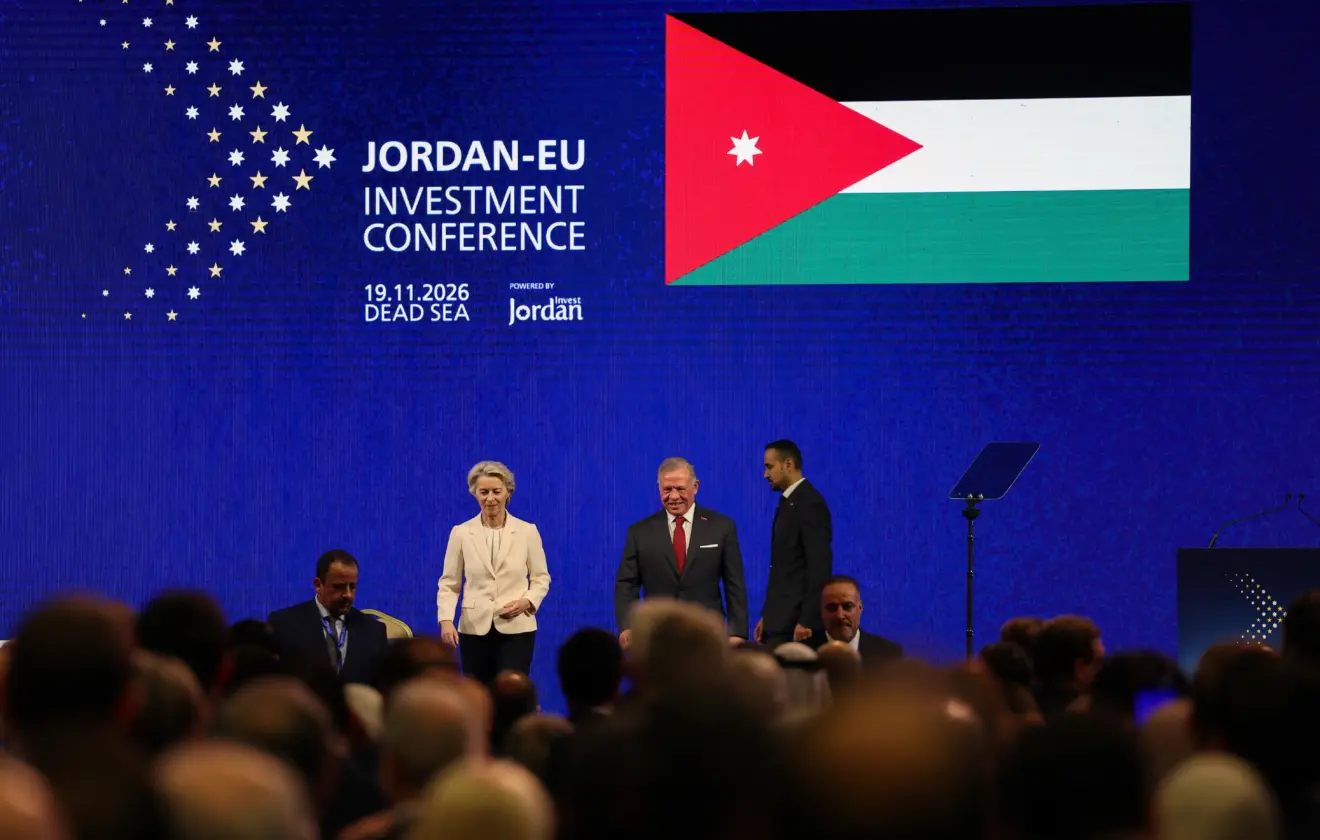
The loans are part of a 7.4 billion euro deal that Commission President Ursula von der Leyen promised Egyptian President Abdel Fattah al-Sisi during a high-profile visit to Cairo in 2024.
The three-year “strategic and comprehensive partnership” was meant to support Egypt’s weak economy, discourage migrants from heading to Europe and steady a region shaken by the October 7, 2023 attacks and Israel’s war in Gaza.
The focus is on 5 billion euros in so-called soft loans to Egypt. These loans come with easy repayment terms and are known as macro-financial assistance.
Such loans are meant only for countries that respect human rights and democracy. The bloc’s conditions on rights and democracy are vague. But the loans set much more specific demands for economic reforms.
According to the leaked documents, the Commission told European lawmakers that Egypt had met two targets to increase the number of poor people on welfare programs between 2024 and 2026. It described the first as “broadly fulfilled” and the second as “fulfilled.”
But the data points to a net drop of 85,734 households over that time, as Egyptian authorities removed people from the programs, The Guardian reported.
The two programs are Takaful and Karama.
Takaful, meaning “solidarity,” provides cash to poor families on the condition that they attend regular health checks and ensure their children go to school. Karama, meaning “dignity,” provides unconditional cash assistance to people with disabilities, older people, orphans, and widows.
To unlock the first 1 billion euros in loans, Egypt had to add 100,000 households to the two programs, bringing the total to 4.7 million.
The Commission described the target as “broadly fulfilled” in a leaked report to lawmakers. However, the same report showed a net decline of 62,281 households during that period. Officials said the drop was the result of a review of eligibility, which added some families but removed more.
To make the next payment worth €1.5 billion, Egypt needed to extend the program to cover an additional 60,000 families.
A second leaked report said the target was met because 442,118 families had been added. This time, the Commission did not report how many were removed.
Figures from Egypt’s Ministry of Social Solidarity, however, showed a net drop of 23,453 beneficiaries in the 11 months to June 2026, The Guardian said. The bloc announced the release of the 1.5 billion euro payment in July 2026.
If Egypt had expanded the programs as the conditions appeared to require, without removing anyone, about 245,000 more households, or roughly 909,000 people, would now be getting help, according to a rough estimate by The Guardian based on World Bank data.
Tineke Strik, a Dutch member of the European Parliament and a leading voice on relations with Egypt, said she would formally ask the Commission to explain.
She said the finding that the Commission was “seemingly sugarcoating Egypt’s performance is worrying.”
As Strik put it, “the Commission had been using the loans mainly as a way of getting the Egyptian cooperation on migration issues.” According to her, “the Commission had seen the conditions and the reporting back to the Parliament as a formal procedure.”
The Commission’s response to the claims was not included in the report.
So far, Egypt has received 3.5 billion euros in soft loans. A final payment of 1.5 billion euros is expected before the end of 2027.
The report comes as Egypt faces criticism over freedom of the press.
Six journalists, the entire newsroom of the fact-checking and investigative platform Matsadaash, have been jailed and allegedly tortured. Last month, one of the country’s last independent news outlets was shut down and its high-profile editor, Lina Attalah, was convicted.
Attalah is appealing that conviction. She is due in court this week to fight other charges, including publishing false news, for which she was sentenced to a year in prison without her knowledge while she was absent.
Egypt’s government did not comment in the report.