Senate battleground polls give Democrats the edge on eve of midterms
Democrats lead in most of the final Senate polls in states President Donald Trump has always carried. Late deciders lean Republican, though, and strategists in both parties say the outcome is still open.
WASHINGTON, Nov 2 – Democrats are ahead in most of the Senate battleground polls released a day before the United States midterm elections. The results give the party a path to a Senate majority in states that President Donald Trump has won every time he has been on the ballot.
The New York Times and Siena College released their last polls of the cycle, covering likely voters in seven states. The Times said Democrats have the edge in six of them.
Michigan shows the widest gap. Democrat Abdul El-Sayed leads Republican Mike Rogers by 53 percent to 42 percent.
In Texas, Democrat James Talarico is ahead of Republican Ken Paxton, 50 percent to 43 percent. In Maine, Democrat Troy Jackson has 51 percent, and Republican Senator Susan Collins has 45 percent.
Ohio and Kansas are both tied at 49 percent to 44 percent. In Ohio, former Senator Sherrod Brown leads Republican Senator Jon Husted, while in Kansas, Democrat Adam Hamilton leads Republican Senator Roger Marshall. Kansas has not sent a Democrat to the Senate since 1932, making Hamilton’s lead especially striking.
The closest contests are in Alaska and Iowa. In Alaska, Democrat Mary Peltola holds 48 percent support, compared with 46 percent for Republican Senator Dan Sullivan. In Iowa, Democrat Josh Turek leads Republican Ashley Hinson 48 percent to 47 percent, a margin well within the poll’s margin of error.
Republicans currently hold 53 of the Senate’s 100 seats. For Democrats to take control, they would need to flip four seats, since Vice President JD Vance could break a 50-50 tie in Republicans’ favor. Two years ago, such a result seemed highly unlikely: most of the seats on this year’s ballot are in states that lean strongly Republican.
| State | Democrat | Republican | Lead |
|---|---|---|---|
| Michigan | 53 | 42 | +11 |
| Texas | 50 | 43 | +7 |
| Maine | 51 | 45 | +6 |
| Ohio | 49 | 44 | +5 |
| Kansas | 49 | 44 | +5 |
| Alaska | 48 | 46 | +2 |
| Iowa | 48 | 47 | +1 |
Yet the Senate battleground polls point to a more difficult political climate for the president’s party. Only 38 percent of likely voters across the seven states said they approve of the job Trump is doing. Democrats also hold a nine-point advantage on the cost of living, which voters rank as the most pressing issue of the year.
Prices have risen across the board, and voters are particularly frustrated by gasoline costs, which increased sharply due to the war with Iran, according to the Times. That economic strain appears to be giving Democratic candidates an opening in states where their party has often struggled.
Democrats also lead when voters are asked which party would do what is best for ordinary people and which party they trust more to handle foreign wars. Immigration is the notable exception: Republicans lead or are tied with Democrats on the issue in Kansas, Ohio, Maine, Iowa, and Alaska.
There is some encouraging news for Republicans in the numbers as well. Voters who made up their minds within the past month favor Republican candidates by nine points, suggesting that late-deciding voters could still influence the outcome in several closely contested races.
And polls are not predictions. Strategists from both parties caution that turnout, campaign messaging, and last-minute events could still reshape the contests. With several races separated by only a few points, many outcomes remain possible as Election Day approaches.
According to the Times, Republicans have given up on only one seat, in North Carolina. There, former Governor Roy Cooper, a Democrat, is running for the open seat left by retiring Republican Senator Thom Tillis.
Republicans are also still fighting for Michigan. El-Sayed, an outspoken progressive, has spent recent days in a public feud with Representative Haley Stevens, whom he beat in the Democratic primary. Stevens endorsed Rogers on Sunday.
The race for the House of Representatives looks less uncertain. Polls show Democrats are favored to win the lower chamber, where they need to flip only a few seats. The party out of power almost always gains seats in a midterm.
Money is pouring into the midterm contests. Trump has raised nearly $450 million from his campaigns, while Elon Musk, the world’s richest man, has contributed more than $400 million to support Republicans in federal races.
Democrats have raised far more than Republicans through small online donations. Even so, the party has no comparable source of large-scale funding. Advertising spending in the midterm elections has already surpassed a record $11 billion.
Control of Congress will shape the final two years of Trump’s presidency. Republicans have controlled the White House and both chambers of Congress since his second inauguration, giving the party broad power to advance its agenda.
A Democratic majority in the House alone could stall much of the president’s legislative agenda. It would also give Democrats subpoena power, allowing them to investigate Trump, his administration, and his allies.
A Democratic Senate could go further by blocking Trump’s judicial nominees, including any future Supreme Court pick. It could also reject his choices for senior administration positions, including cabinet seats.
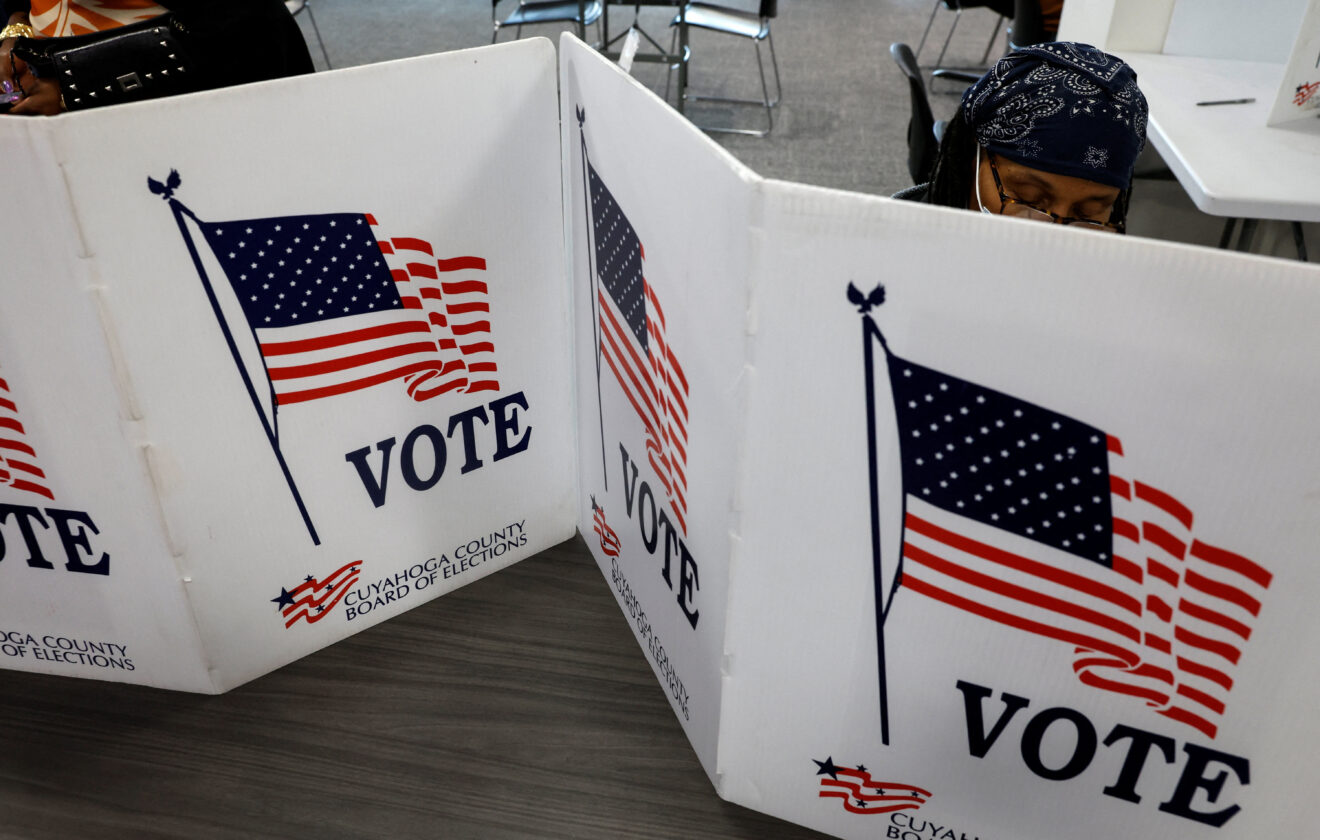
Voters will go to the polls on Tuesday, and the results will determine whether Republicans keep full control of Washington or Democrats gain the power to check the president.