Midterm elections begin with cost of living weighing on American voters
Control of both chambers of Congress is at stake on Tuesday. Polls show voters are unhappy about prices even though jobs and growth remain solid.
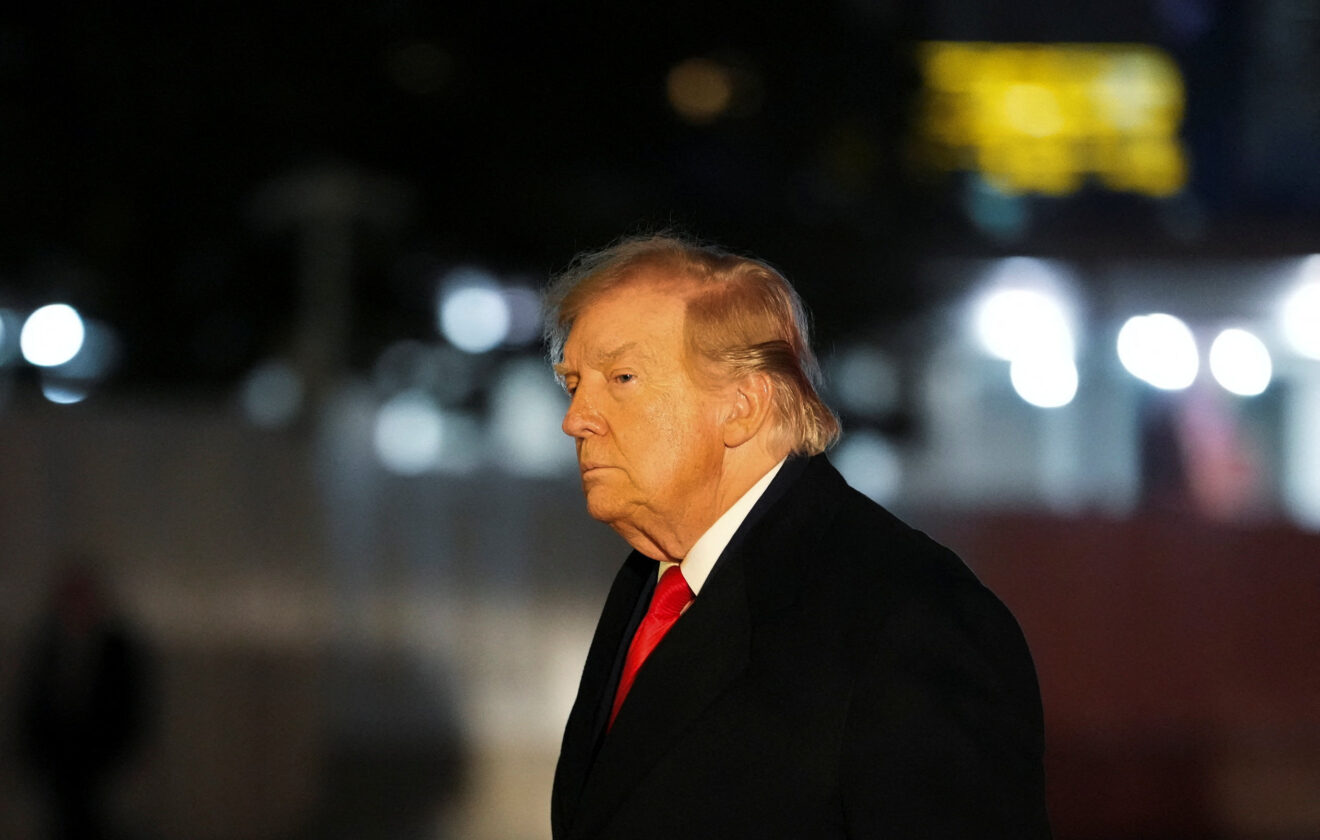
WASHINGTON, Nov 3 – Americans are voting on Tuesday in midterm elections widely seen as a verdict on President Donald Trump’s second term. Rising prices are at the top of many voters’ minds.
Control of both the Senate and the House of Representatives is at stake in Tuesday’s elections. Republicans currently hold majorities in both chambers.
Historically, the party occupying the White House tends to lose seats in midterm elections. Democrats are hoping that Trump’s declining popularity will help them win majorities in both chambers, giving them the power to check his agenda.
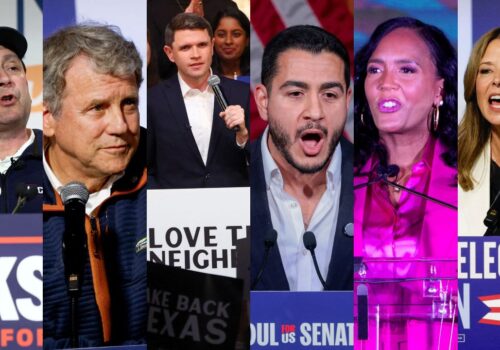
Polling indicates that Democrats are in a strong position to take the House. The Senate, however, presents a tougher challenge. Democrats need to flip four Republican-held seats and have focused their efforts on states including Ohio, Texas, and Maine.
The final New York Times/Siena College polls showed Democrats leading in most of seven key Senate contests. Those races include Texas and Kansas, two states that have not elected a Democrat to the Senate in decades.
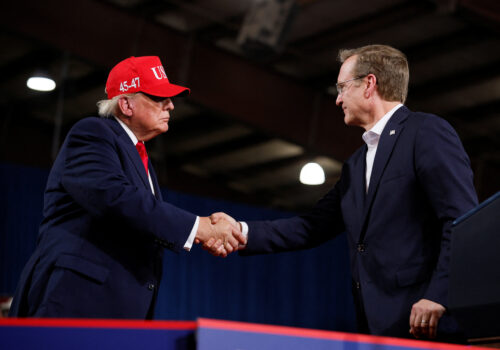
Although Trump is not on the ballot, he has dominated the campaign. He has held dozens of rallies and urged his supporters to vote as though his own name were on the ticket. Recent polls place his approval rating near record lows, roughly 33 to 37 percent.
Democrats have sought to keep the campaign focused on Trump, on what they describe as corruption involving the president and his family, and on the rising cost of living.
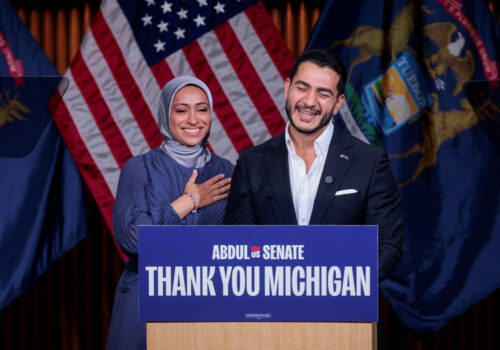
“Whatever they’re trying to distract you with, it’s because they’re picking your pocket,” Abdul El-Sayed, the Democratic Senate candidate in Michigan, told supporters on Monday.
For many voters, the economy remains the most important issue, and the public mood is increasingly negative. Rising prices, expensive housing, and higher fuel costs have weighed heavily on households, giving Democrats an opening to argue that Republican policies have failed to deliver relief.
Inflation has fallen well below its 2022 peak, but it remains significantly above the Federal Reserve’s 2 percent target. Consumers continue to feel the pressure when filling their gas tanks, paying utility bills, or dining out.
The war with Iran has intensified the problem. The United States and Israel launched attacks on Iran in February, and the ensuing conflict has driven up global oil prices. As a result, gasoline costs have risen for drivers, while diesel prices have also climbed, a burden for farmers, trucking companies, and businesses that depend on transportation.
Many voters also blame Trump’s tariffs on imported goods for keeping prices elevated. By raising the cost of foreign products, the tariffs have added pressure to household budgets and supply chains.
For much of Trump’s second term, wages grew faster than prices, giving many workers a modest improvement in purchasing power. That trend changed this year after the war began, as inflation picked up and wage growth slowed.
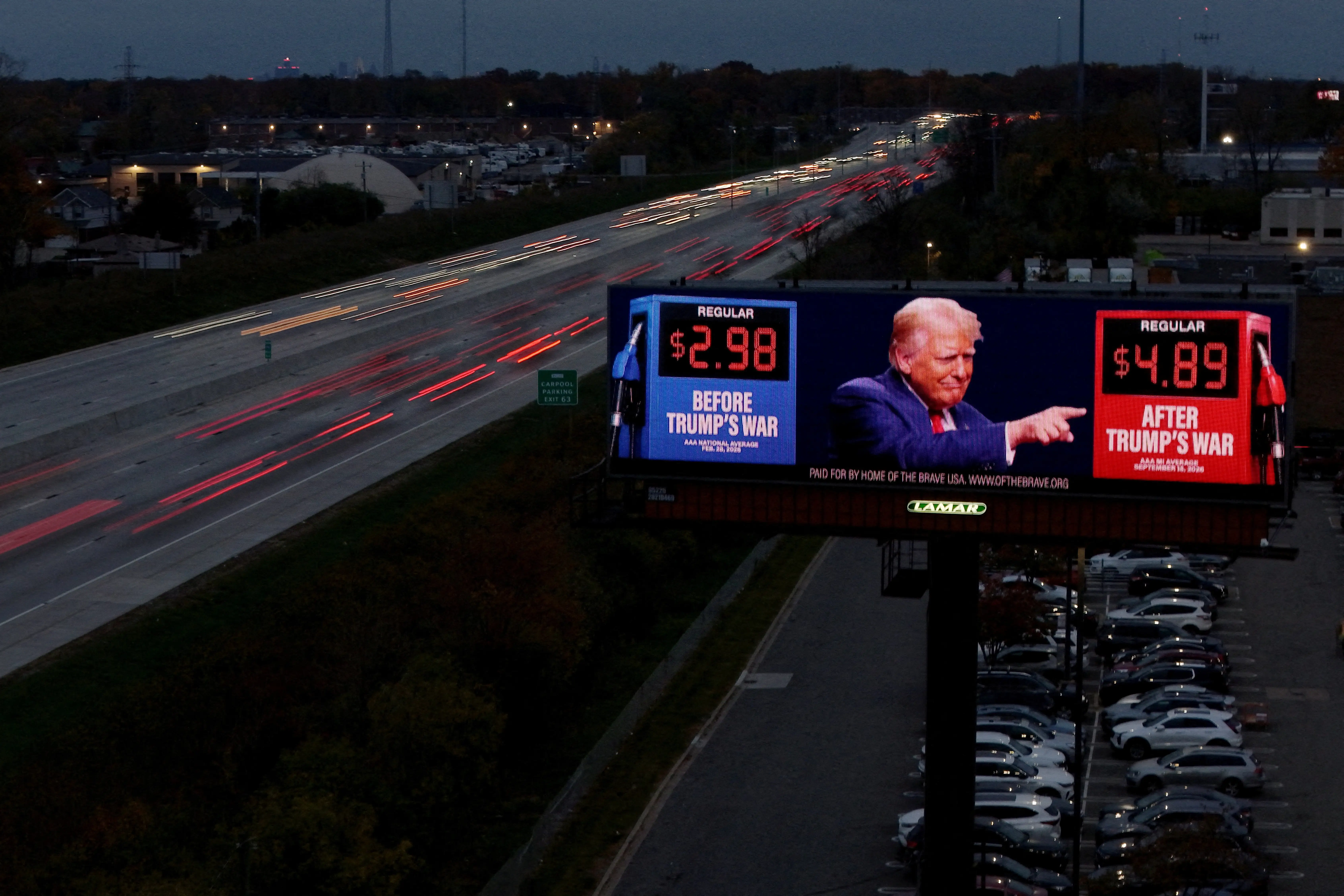
A drone view shows a billboard featuring US President Donald Trump and a sign referencing gasoline prices, ahead of the midterm elections, in Madison Heights, Michigan, US, November 2, 2026. REUTERS
Government data show that consumer prices and average hourly pay have each risen by about 5.5 percent since January 2025. On average, workers are neither better off nor worse off than they were when Trump took office.
Borrowing has also become more expensive. The Federal Reserve raised its key interest rate in September and is expected to raise it again in December. Fed Chair Kevin Warsh has described the increases as “monetary medicine” designed to bring inflation under control without triggering widespread job losses.
Still, higher interest rates affect more than inflation. They raise the cost of mortgages, car loans, credit card debt, and business borrowing, adding another layer of financial strain for households and companies already coping with elevated prices.
Mortgage rates on 30-year loans have risen above 7 percent. Along with a persistent shortage of homes on the market, this has put homeownership out of reach for many families.
Consumer surveys reflect the financial strain. The University of Michigan’s consumer sentiment index remains near a record low, although a separate measure from the Conference Board improved in October. Brian Jacobsen, chief economic strategist at Annex Wealth Management, said the Michigan survey feels more personal because it asks people directly how they are managing and how affordable daily life has become.
“Sentiment is the bigger driver of election outcomes,” Jacobsen said.
On paper, however, the broader economy still appears solid. The unemployment rate stood at 4.2 percent in September and has not risen above 4.5 percent in five years—the longest such stretch on record. The economy also grew at a 3.4 percent annual pace last quarter, its fastest rate of the year, with business investment rising sharply, driven largely by spending on artificial intelligence.
Stock markets have reached dozens of record highs this year, a point Trump frequently emphasizes at his rallies. Wealthier households, which hold most of the country’s stock market wealth, have continued spending.
Treasury Secretary Scott Bessent told CNBC last week that while surveys may appear bleak, actual consumer spending remains “quite strong.”
Still, some economists see warning signs. Weak earnings reports from major companies including Amazon and Intel have raised doubts about the durability of the artificial intelligence boom and contributed to a sharp decline in the Nasdaq Composite.
Torsten Slok, chief economist at Apollo Global Management, warned in October that a slowdown in artificial intelligence spending could weaken economic growth while oil prices, tariffs, and immigration restrictions push inflation higher.
Voters are also increasingly concerned about corruption. A recent Harris poll conducted for The Guardian found that 76 percent of Americans believe elected officials are more interested in enriching themselves than in helping ordinary people. That distrust adds another layer of frustration for voters already struggling with high prices, expensive housing, and rising borrowing costs.
Disclosures to the federal Office of Government Ethics show that Trump has earned about $2.2 billion since returning to the White House, including proceeds from a meme coin bearing his name.
Questions also remain over whether Trump will accept the election results if Republicans suffer losses. The Justice Department has filed several election-related lawsuits, including cases involving alleged noncitizen voting, which critics argue are intended to cast doubt on the legitimacy of the vote.
The department also plans to deploy a record 1,000 election monitors to polling places across the country. Critics have described the move as a form of voter intimidation, while administration officials say it is meant to protect election integrity.
Polls will begin closing in the first states on Tuesday evening, Eastern time. The results in key battleground states are expected to determine which party controls Congress and could shape the final two years of Trump’s presidency.