China Trade Talks May Favor Beijing After Trump Midterm Loss
Analysts say a weakened Trump may be more careful not to upset a fragile trade truce. But Beijing also faces a Congress keen to release a $14 billion arms package for Taiwan.
BEIJING, Nov 5 – Beijing may have gained an edge in China trade talks after President Donald Trump’s Republicans lost control of Congress in the midterm elections, analysts said. But China is unlikely to celebrate, because a future American president could take a much tougher line.
Voters angered by rising living costs, made worse by Trump’s trade wars with China and other countries, turned against his party on Tuesday. Democrats won both the Senate and the House of Representatives.
Some analysts said the defeat should make Trump more careful about upsetting a fragile trade truce with Beijing. That could give China an advantage when talks resume later this month.
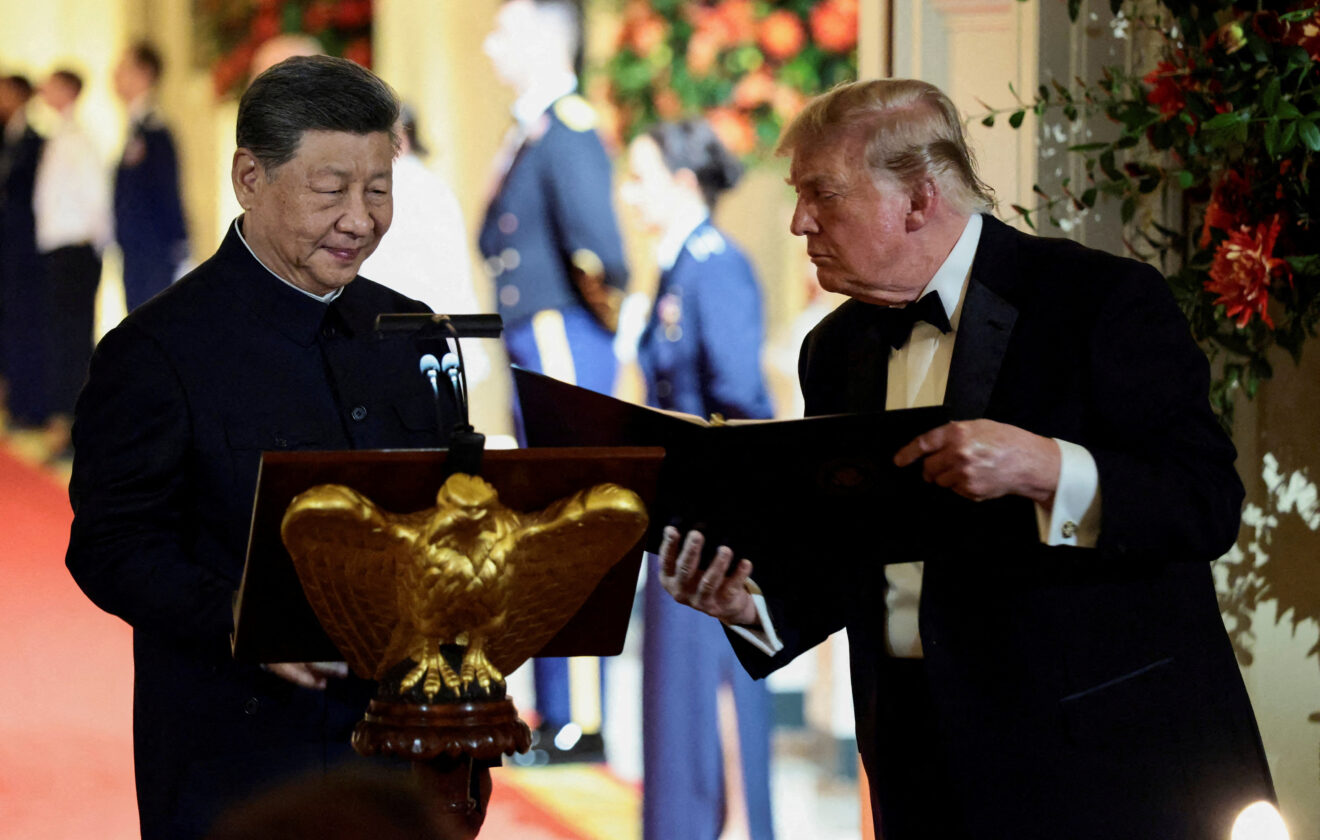
Trump is set to meet Chinese President Xi Jinping on the sidelines of the Asia-Pacific Economic Cooperation summit in Shenzhen later in November. The two are expected to meet again in Miami in December, at the summit of the Group of 20 major economies.
At stake is a trade truce that expires in January. The deal averted a major shock to the world economy last year.
Craig Singleton, a senior fellow at the Foundation for Defense of Democracies, a think tank in Washington, said Beijing could conclude that Trump now needs a deal more than China does. That could encourage Chinese negotiators to push harder for lower tariffs and other concessions.
But he warned that pushing too hard carries a risk. It could lead to a “miscalculation that unsettles the very stability Xi is trying to preserve,” Singleton said.
Wu Xinbo, a professor at Fudan University in Shanghai who advises China’s Foreign Ministry, said Trump may now be even less willing to disturb the steady relationship he has built with China.
Some Chinese analysts see the next two years as a chance for Beijing to prepare for harder times.
Shen Weizhong, a former official at China’s Foreign Ministry, said Chinese leaders know a new president could be very different from Trump. He now works for the Global Governance Institution, a think tank in Beijing.
Shen said, “Two more years of stability, that’s already a good thing for China.” He said the extra time would help China prepare for a possible showdown over Taiwan or another trade war.
Analysts said Beijing may use the time to strengthen its economy and expand trade ties with other countries before a new administration takes office in Washington.
Trump’s relationship with China has changed a lot since he returned to the White House in 2025. Soon after taking office, he put tariffs of more than 100 percent on Chinese goods. He said the trade gap between the two countries was “killing” the United States.
Since then, he has softened his tone. He has hosted Xi at two grand summits, in Beijing and in Washington, though they produced few concrete economic gains.
That warmth stands in contrast to former President Joe Biden. Biden often angered Beijing with his comments on human rights and with his pledge that the United States would defend Taiwan if China attacked it.
Some of Trump’s possible Republican successors, such as Secretary of State Marco Rubio, are also seen by analysts as more hawkish on China.
But the next two years may not be easy for Beijing either, other analysts said. One risk is that Trump, facing limits at home, could become more aggressive abroad in search of foreign policy wins.
Chim Lee, a senior China analyst at the Economist Intelligence Unit, said the main concern is unusual or unexpected moves by Trump that could affect China.
“The broad direction of US-China policy isn’t necessarily going to change,” Lee said.
The biggest worry is that the war with Iran could grow into a wider regional conflict. That could keep global oil prices high for a long time, threaten China’s energy supplies and disrupt Beijing’s ties in the Middle East, analysts said.
Trump may also ask China for help securing other wins before his term ends, such as ending the war between Russia and Ukraine or arranging another summit with North Korean leader Kim Jong Un. Beijing, which has close trade ties with both Russia and North Korea, could seek concessions in return, analysts said.
At the same time, China now faces a Congress that is far more focused on human rights, on Chinese investment in the United States and on a $14 billion package of weapons for Taiwan.
Trump has said he is holding back the Taiwan arms sale as a bargaining chip in his talks with Xi. Democrats may push him harder to release it. China claims Taiwan, which is democratically governed, as its own territory and has asked Washington to stop the arms sales. Taiwan’s government rejects Beijing’s claims.
Shen said China would react strongly if the arms package went ahead. He called it the number one risk for Beijing after the midterms