Rubio Denies Pause in Intelligence Sharing With Ukraine, Contradicting Zelenskyy
Secretary of State Marco Rubio says Washington never paused support, while the Ukrainian president says some sharing was briefly interrupted.
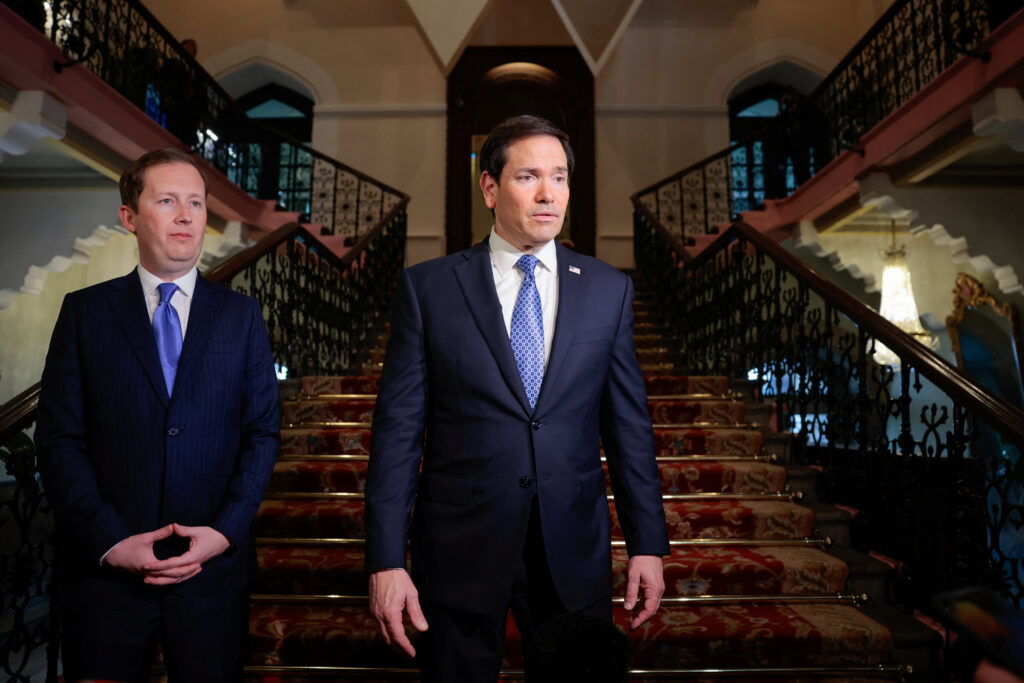
Secretary of State Marco Rubio denied on Monday, October 19, that the United States paused intelligence sharing with Ukraine, contradicting Ukrainian President Volodymyr Zelenskyy, who said Washington briefly halted some of the support before restoring it.
Speaking to reporters in Samarkand, Uzbekistan, after touring Registan Square, a historic complex of madrassas, Rubio said intelligence sharing was never interrupted. “I don’t know where he’s getting these things or why he’s saying these things to the press. You should go back and ask him. There’s been no pause,” he said.
Rubio is in Uzbekistan for talks with Central Asian officials. Speaking of Zelenskyy, he said the Ukrainian leader should concentrate on ending the war. “What he should be focused on, and what we want to be focused on, is bringing an end to this war,” Rubio said. He added that President Donald Trump wants Zelenskyy and Russian President Vladimir Putin to focus on ending the Russian invasion, which is now in its fifth year.
Zelenskyy gave a different account in an interview with the NBC program “Meet the Press” on Sunday, October 18. He said intelligence sharing had been interrupted but was later “de-blocked.” “We are very thankful for this,” he said. “Now it works.” Some reports put the length of the pause at three days.
Ukraine depends on American intelligence to detect the fast-moving ballistic missiles that Russia launches in waves against its cities. President Donald Trump said earlier this week that Washington continues to share intelligence. Ukrainian officials, however, said some Russian strikes occurred without warning, and raised questions about whether the information was flowing normally. Zelenskyy said Ukraine received no warning before five Russian ballistic missiles struck civilian infrastructure in the Kyiv region.
Kyiv leans heavily on American intelligence for early detection of the ballistic missiles that Moscow sends against Ukrainian cities in large salvos. Trump stated earlier this week that Washington still shares such information. Ukrainian officials countered that several Russian strikes landed without any alert, which casts doubt on whether intelligence flows as normal. Zelenskyy said no warning came before five Russian ballistic missiles hit civilian infrastructure in the Kyiv region.
Other disputes surfaced at the same time. Zelenskyy believes Washington was behind recent restrictions on Ukraine’s use of Starshield, a SpaceX-built system that Kyiv treats as vital for defense against Russian drones and missiles. American officials reject the claim. Both Trump and SpaceX chief executive Elon Musk rejected any role in the speed restrictions placed on the system.
Ties between the two capitals are strained. On Sunday, Trump posted on Truth Social that he was making “great progress” in negotiating peace, but he said Zelenskyy “doesn’t care” and “doesn’t want to end this war.” Zelenskyy answered that Ukraine “never wanted this war” and welcomed every attempt by its partners to end it with dignity.
Intelligence sharing has been a point of tension before. In March 2025, Washington briefly paused military aid and intelligence sharing with Ukraine after a tense meeting between Trump and Zelenskyy at the White House. Both resumed after talks between American and Ukrainian officials in Jeddah, Saudi Arabia.
Separately, Putin has proposed a summit with Chinese President Xi Jinping and Trump to discuss the war. No date or venue has been announced.