Regime Change Trump Sought In Iran Arrives In Washington Instead
Trump went to war hoping to topple the government in Tehran. Eight months later, voters angry about the war and fuel prices changed who holds power in Washington.
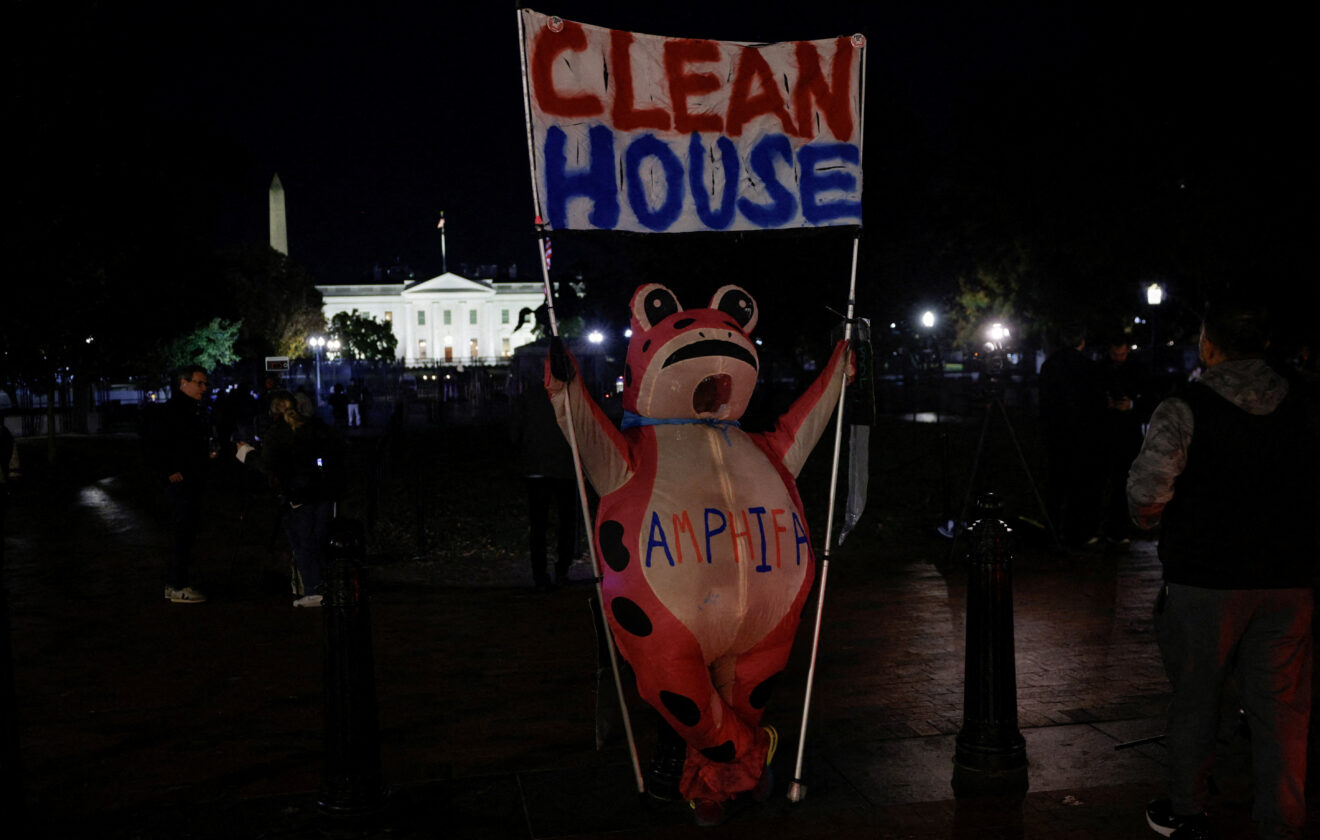
When President Donald Trump went to war with Iran in February, he talked about regime change in Tehran. Eight months later, it is power in Washington that has changed hands.
In Tuesday’s midterm elections, voters who were tired of the war and hit by high fuel prices handed Democrats control of both the Senate and the House of Representatives. Iran’s leaders still hold power.
“Iran succeeded in regime change in America,” a source close to a Gulf ally of the United States told Reuters, describing the first reaction in the region.
The result has set off finger-pointing inside the Republican Party and celebration in Tehran. It has also raised a hard question for the region: whether a weakened president will now look for a deal with Iran, or try to end the war on his own terms with more force.
A war that was meant to be short
The United States and Israel launched the war with joint strikes on February 28. The opening attacks killed Iran’s longtime supreme leader, Ayatollah Ali Khamenei. His son, Mojtaba Khamenei, replaced him.
Trump predicted a short conflict that could topple a government he called the “bully of the Middle East.” The strikes did heavy damage to Iran’s military and to its underground weapons stores.
But the war did not go the way he said it would. Iran fired missiles and drones at targets across the Gulf and at ships in the Strait of Hormuz. Before the war, about a fifth of the world’s traded oil and gas passed through that waterway.
A ceasefire in April failed to produce a peace deal. Since then, the conflict has turned into a stalemate, according to Reuters. Iran has recovered some of its buried weapons and kept up the threat to shipping. The United States keeps a naval blockade on Iranian ports, and thousands of United States troops remain in the waters off Iran.
The question of Iran’s nuclear program, one of the main reasons given for the war, is still unresolved. And the regime change that Trump spoke of at the start has not happened.
The price at home
For many Americans, the war showed up at the gas station.
Oil prices rose sharply after the strikes began, and fuel costs fed into the prices of food and other goods. Polls showed the cost of living as the top issue for voters in this year’s elections. Many blamed both the war and Trump’s tariffs.
On Tuesday, voters punished his party. Democrats won Senate seats in states such as Texas, Kansas, Iowa, North Carolina and South Carolina, places that Republicans have long counted on. They also passed the 218 seats needed to win the House.
Exit polls found that half of voters nationwide saw the election as a chance to rebuke the president. In a Reuters/Ipsos poll taken in the final days of the campaign, 55 percent of voters said the military action in Iran had not been worth the cost.
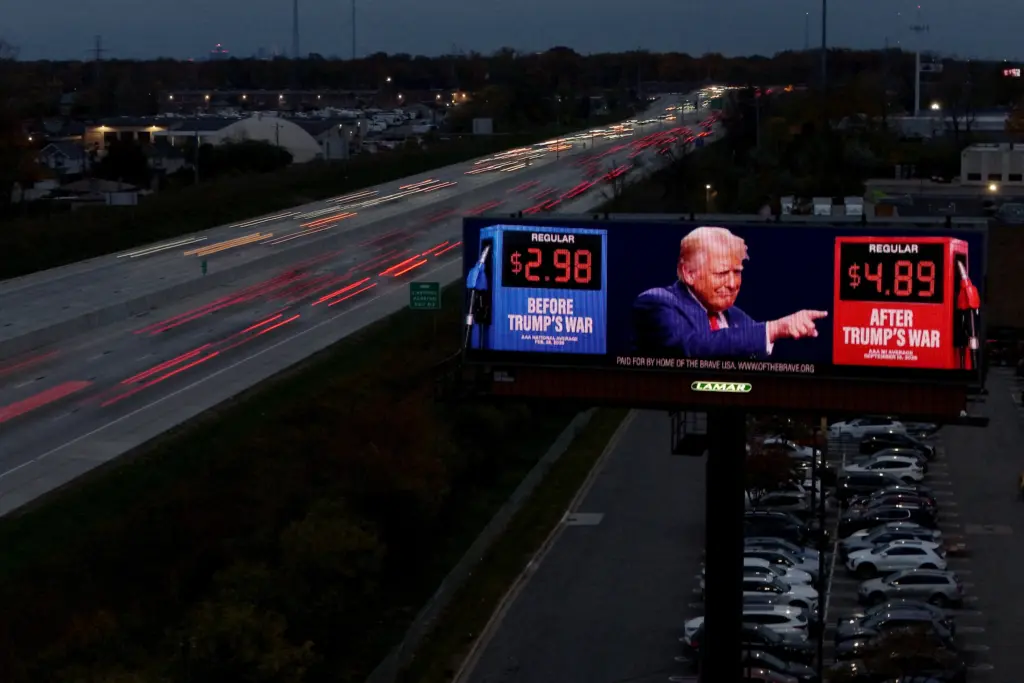
A drone view shows a billboard featuring US President Donald Trump and a sign referencing gasoline prices, Michigan, US, November 2, 2026. REUTERS
Vance breaks ranks
The sharpest reaction came from inside the administration.
On Wednesday, Vice President JD Vance distanced himself from the war in a post on X. He questioned whether it had been worth the cost and blamed it for the Republican losses.
“The reason we lost is the war,” Vance said.
He challenged anyone who disagreed to argue that losing the Senate for the next six years was worth it. He also said an earlier recommendation to end the war had been “sound advice.”
Vance is viewed as one of the frontrunners for the Republican presidential nomination in 2028. A person familiar with the matter told Reuters that his comments could be seen as the start of that campaign.
A White House official said most, if not all, senior White House staff were caught off guard by the post. Some officials and staff saw it as a public break with the president on foreign policy, a White House adviser said.
Vance tried to play down any split. He said Trump had also acknowledged that the war cost Republicans the election.
Trump defends the war.
Trump gave a more careful answer. He said it was “largely true” that the war was behind his party’s defeat, but described it as only one of several reasons.
Asked about Vance’s comments, Trump told reporters he thought they were good and that he knew how Vance felt. But he still defended the war.
“We stopped them from having a nuclear weapon,” Trump said. He told The Wall Street Journal that he did the right thing and would do it again.
Secretary of State Marco Rubio, another possible candidate, has not commented publicly since the elections.
The war’s backers include Defense Secretary Pete Hegseth, whom Trump has described as an early supporter of the conflict. Hegseth has faced strong criticism from members of Congress, and the election result has raised fresh questions about his future.
What comes next for the war
Trump has not ruled out more fighting.
Last week, Admiral Brad Cooper, the head of United States Central Command, briefed Trump on options for restarting major combat operations, according to two sources familiar with the matter. United States officials told Reuters that such a step is still under consideration.
But intelligence assessments in recent months have found that new strikes would not fundamentally change Iran’s position in talks or bring about regime change, according to a United States intelligence official and two other officials briefed on the findings.
Some sources familiar with the talks inside the administration said Trump could still decide to act. One said Trump has nothing left to lose politically now that the midterms are over.
Another source said renewed fighting was the most likely path. “He is planning to bomb Iran,” the source said, adding that Trump had held off because of the elections. All the sources spoke on condition of anonymity.
The United States carried out what officials called limited, defensive strikes on Iran’s Qeshm Island on Monday, the day before the vote. Iranian state media reported explosions on Qeshm and Hengam islands and near the port city of Bandar Abbas. Another aircraft carrier and thousands more troops are on their way to the region.
At the same time, talks are still going on. Vance has taken a bigger role in negotiations with Tehran in recent weeks. But Iran has given little sign that it will accept American demands, including that it cut uranium enrichment to zero.
Tehran claims victory
In Iran, leaders celebrated Trump’s setback but did not let their guard down.
Mohammad Bagher Qalibaf, the speaker of parliament and Iran’s chief negotiator, welcomed the result on X. “Americans said NO TO WAR, and we endorse this message,” Qalibaf wrote. He warned that if Washington ignored the vote, Iran’s answer would be a nightmare.
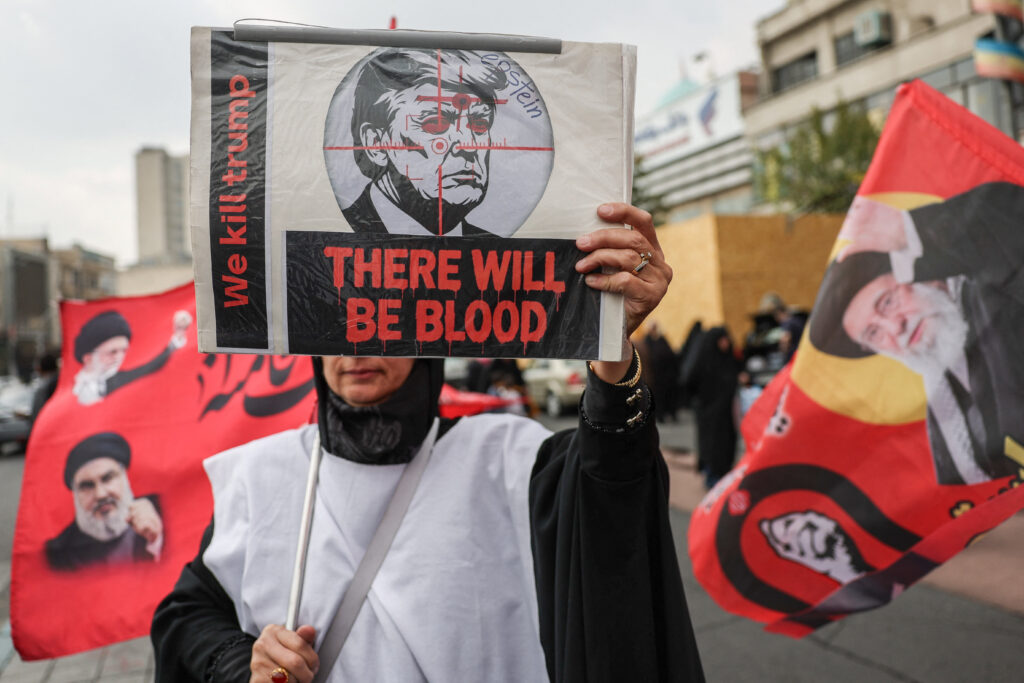
A protester holds a placard with an image depicting US President Donald Trump during an anti-US gathering in Tehran, Iran, November 3, 2026. Majid Asgaripour/WANA (West Asia News Agency) via REUTERS
Iran’s Foreign Ministry spokesperson also warned the United States against ignoring the message from its own voters.
But Supreme Leader Mojtaba Khamenei dismissed the possibility of any meaningful shift in American policy. He said anyone who hoped that shifts in Washington, or concessions to the United States, could end American hostility was badly mistaken. He also warned against any move toward giving in.
Two senior Iranian sources told Reuters that Tehran remains on high alert. They fear Trump could try to make up for his defeat with a military strike.
On Wednesday, thousands of people marched in Tehran at a government-organized rally marking the anniversary of the 1979 seizure of the United States Embassy. Protesters burned American and Israeli flags and chanted slogans against both countries. They carried effigies of Trump and of Israeli Prime Minister Benjamin Netanyahu.
Tehran’s mayor, Alireza Zakani, told the crowd that the United States and Israel had suffered a major defeat.
Two leaders under pressure
Trump is not the only leader of the war to face voters’ anger.
A week before the midterms, Israelis voted in their own election. Netanyahu’s right-wing bloc won 53 of the 120 seats in the Knesset, eight short of a majority, leaving him fighting to hold on to power.
Analysts in the Gulf warned that two weakened leaders, each tied to the outcome of the war, may come to see escalation as a way out of their political troubles.
The view from the Gulf
Gulf states want the war to end, but not at any price.
Ebtesam al-Ketbi, president of the Emirates Policy Center in Abu Dhabi, said the result raises the stakes for Washington. She said it would “make a settlement more urgent for Trump, but no easier for Iran.”
Much depends on how Tehran reads the moment, she said. If Iran sees that Trump needs a deal, but not just any deal, a real chance to end the war could open up. But if it sees the result as a sign of American weakness, it could push Trump toward new strikes.
She said any deal that ignores freedom of shipping through Hormuz, lets Iran charge tolls or set conditions on ships, or leaves Gulf states open to attack would only set up the next crisis.
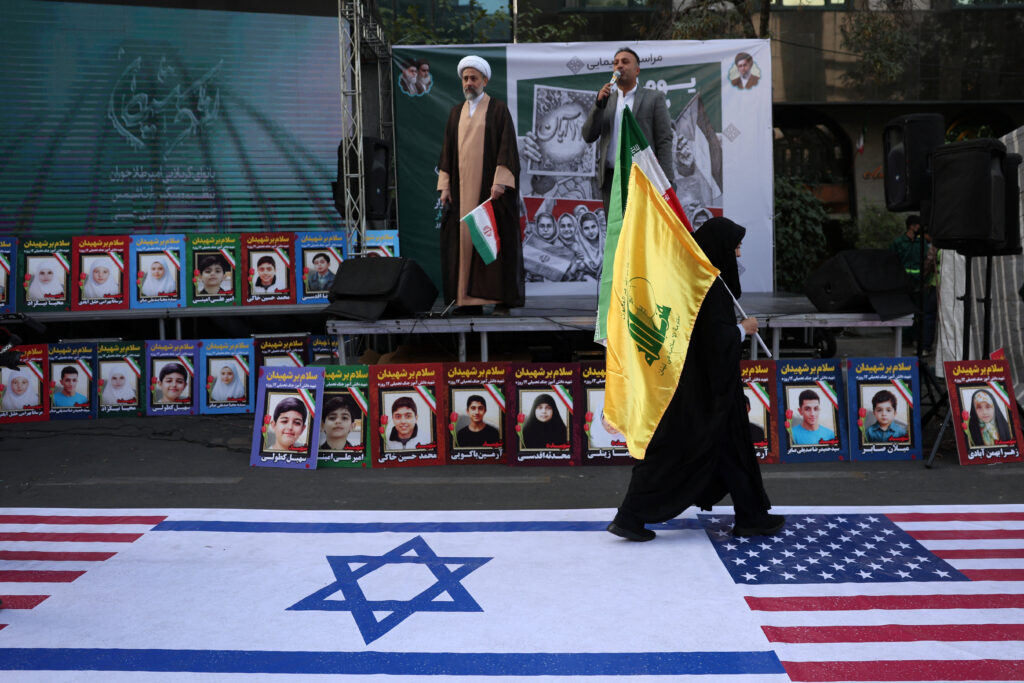
A woman steps on US and Israeli flags during the 47th anniversary of the US expulsion from Iran, in Tehran, November 4, 2026. Majid Asgaripour/WANA (West Asia News Agency) via REUTERS
Two sources close to Gulf governments said a full-scale assault now looks less likely, because a Democratic Congress can put limits on Trump’s military options. Limited strikes on nuclear sites could give Washington a way to declare its goals met and draw a line under the war, they said. China has also stepped up efforts to broker a settlement.
Others are less hopeful. Abdulaziz Sager, chairman of the Gulf Research Center in Saudi Arabia, said defeat could make Trump more willing to strike. With no more elections ahead of him, Sager said, Trump may see a fight with Iran as a chance to “finish the job” and secure his legacy.
Emirati analyst Abdulkhaleq Abdulla said the bigger risk now comes from Tehran. He said Iran’s leaders might wrongly conclude that Trump is weak and Netanyahu is finished, and raise the stakes.
An official from Iran-backed Hezbollah in Lebanon said the threat of war has not passed.
“The chances of escalation and de-escalation may be equal,” the official said.
Gulf governments also have concerns beyond the war, according to a source close to their thinking. They expect the new Congress to look into business dealings between their own companies and the Trump family.
Democrats set their agenda.
Senior Democrats say they will focus on lower prices, holding the administration to account and ending the war in Iran.
Hakeem Jeffries, who is likely to be the next Speaker of the House, said the chamber would no longer act like a “wholly owned subsidiary of the Trump administration.”
Once the new Congress is seated in January, Democrats are expected to investigate the administration, the Trump family and its allies. Two Senate races, in Mississippi and Alaska, were still uncalled on Thursday.
Markets bet on peace.
Oil traders saw the result as a sign that the war may be winding down.
Oil prices fell more than 8 percent on Wednesday after Vance blamed the war’s impact on fuel prices for the Republican defeat. Prices dropped below $100 a barrel, reaching their lowest level in two months.
In Asian trading on Thursday afternoon, Brent crude was down 0.9 percent at $93.74 a barrel, while U.S. crude fell nearly 1.5 percent to $86.83.
Iranian state television said on Wednesday that four oil tankers caught fire after striking mines on what it described as unauthorized routes through the Strait of Hormuz.