Bank of England interest rates rise to 4% in first hike for more than three years
The central bank expects inflation to reach almost 5% next year, more than double its target. Governor Andrew Bailey said the rise is unlikely to be the last unless the Middle East conflict ends
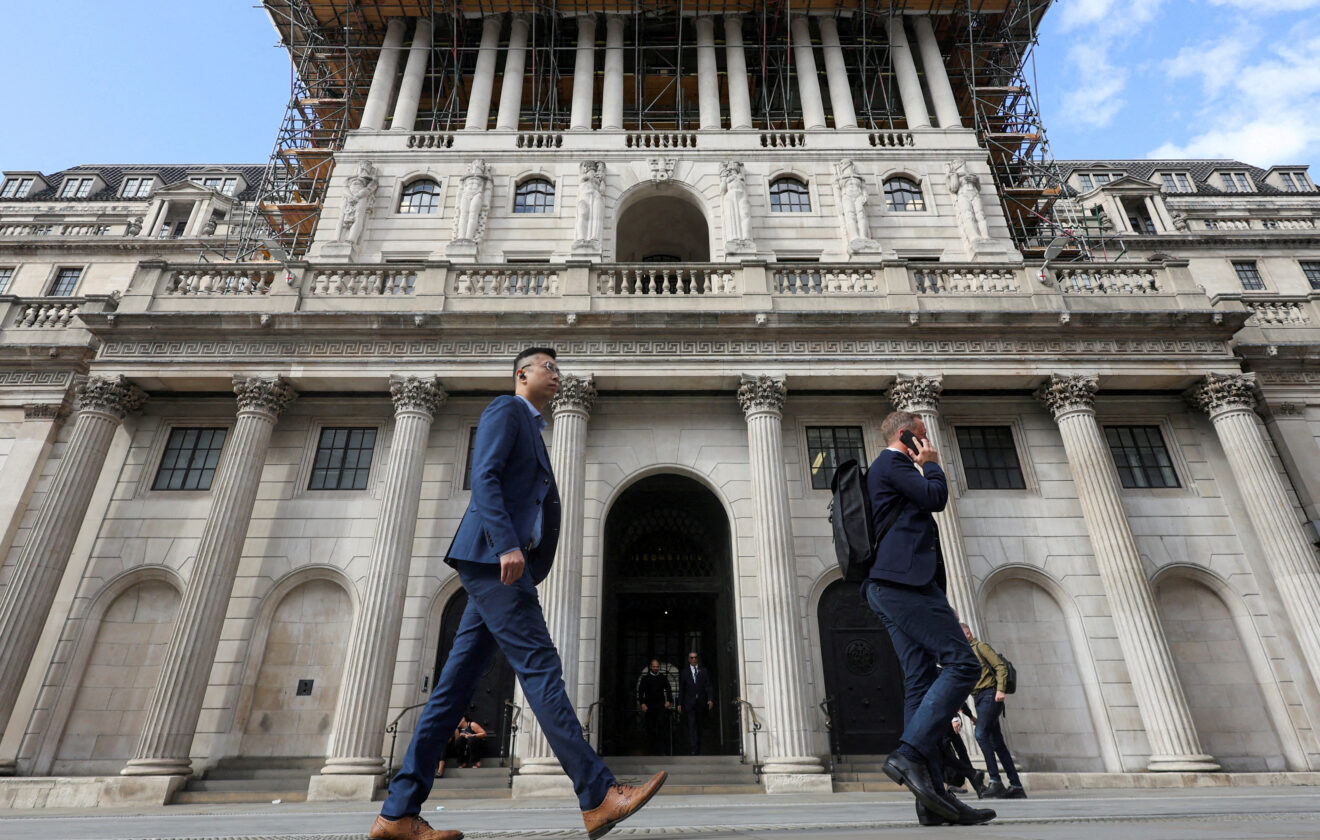
LONDON, Nov 5 – The Bank of England raised interest rates on Thursday for the first time in more than three years. It warned that at least one more increase was likely if the war between the United States and Iran goes on.
Its Monetary Policy Committee voted 8-1 to lift the main rate to 4 percent from 3.75 percent. It was the first rise since August 2023.
Marches began in mid-morning in the southern cities of Marseille and Lyon, as well as in the western city of Nantes. The main march in Paris was set to begin at Place de la République at 2 p.m. local time.
In Paris, high school students and other protesters clashed with riot police on Thursday morning after blocking a street with rubbish bins.
It is a blow for the new prime minister, Andy Burnham, who has tried to ease the pressure of living costs on households. It also comes just a week after Chancellor John Healey’s first budget promised families some breathing space from the squeeze caused by the conflict.
Governor Andrew Bailey said the rise should not be seen as the first in a long string of increases. But he said that unless the conflict in the Middle East is resolved, “neither does it seem likely to be the last increase.”
The bank said there was little sign so far of faster price increases outside sectors directly affected by higher energy costs. However, it said the pressure building from months of high energy prices meant it needed to act now.
The vote did not split the way many expected. A Reuters poll had predicted that one member would vote to keep rates on hold. Instead, the only dissenting member wanted a bigger rise.
Catherine Mann voted for a half-point increase, to 4.25 percent. Last month, she said the bank had been slow to show markets it had inflation under control.
In the minutes of the meeting, Mann said she was worried that inflation could jump in ways that are hard to predict. Consumer price inflation rose to 3.5 percent in September, its highest level since October 2025. She said that could cause people to lose confidence in the central bank.
Other members also hinted at more rises to come. Deputy Governor Clare Lombardelli said another increase would likely be needed soon. Megan Greene, an outside member, and Chief Economist Huw Pill spoke of the need for further tightening and more increases.
But two members, Swati Dhingra and Alan Taylor, said they would need stronger evidence that higher energy costs were spreading to wages and other prices before backing more rises.
Bailey himself said he could see the case for another increase unless there was news that eased inflationary pressures.
In earlier months, Bailey had argued that the bank could take its time. It entered the conflict with higher interest rates than other central banks, and before the war began in February, investors had expected the bank to cut rates this year rather than raise them.
Other major central banks, including the Federal Reserve, the European Central Bank and the Bank of Japan, have already started raising rates in response to soaring inflation.
Financial markets expect three more quarter-point rises in 2027, more than most economists think is likely. Bailey said markets were pricing in the risk of another sharp jump in energy prices, while economists were basing their forecasts on the single most likely path.
Oil has been the main driver. The price of Brent crude has been above $100 a barrel for most of the past two months, as the war and the closure of the Strait of Hormuz cut supplies. Prices fell sharply this week after Democrats won control of the United States Congress, as traders bet the war could wind down.
The bank also raised its economic growth forecasts. It now expects the economy to grow 1.6 percent this year and 1.3 percent next year, notably stronger than the government’s budget watchdog, the Office for Budget Responsibility, predicted last week.
It said some of that strength came from spending on artificial intelligence. Healey’s budget would also give a small, temporary boost, it said.
But it now sees inflation peaking at an average of 4.8 percent in the second quarter of next year. If oil prices rose to around $130 a barrel, inflation could hit 6.2 percent in the third quarter of 2027, the bank said.
Under its main forecast, inflation would not return to 2 percent until the third quarter of 2028. That is six months later than the bank predicted in July, during a lull in the conflict.
After inflation and taxes, the income that British households earn from work will fall both this year and next, the bank said.
It said Healey’s budget would lower inflation by a quarter of a percentage point at its peak. But inflation would rise again later, when the budget’s temporary help with living costs runs out.