Gadi Eisenkot Gets The Mandate To Form Israel’s Next Government
Israel’s president handed the first chance to form a government to the former army chief. But Eisenkot’s bloc is short of a majority, and Netanyahu is not giving up.
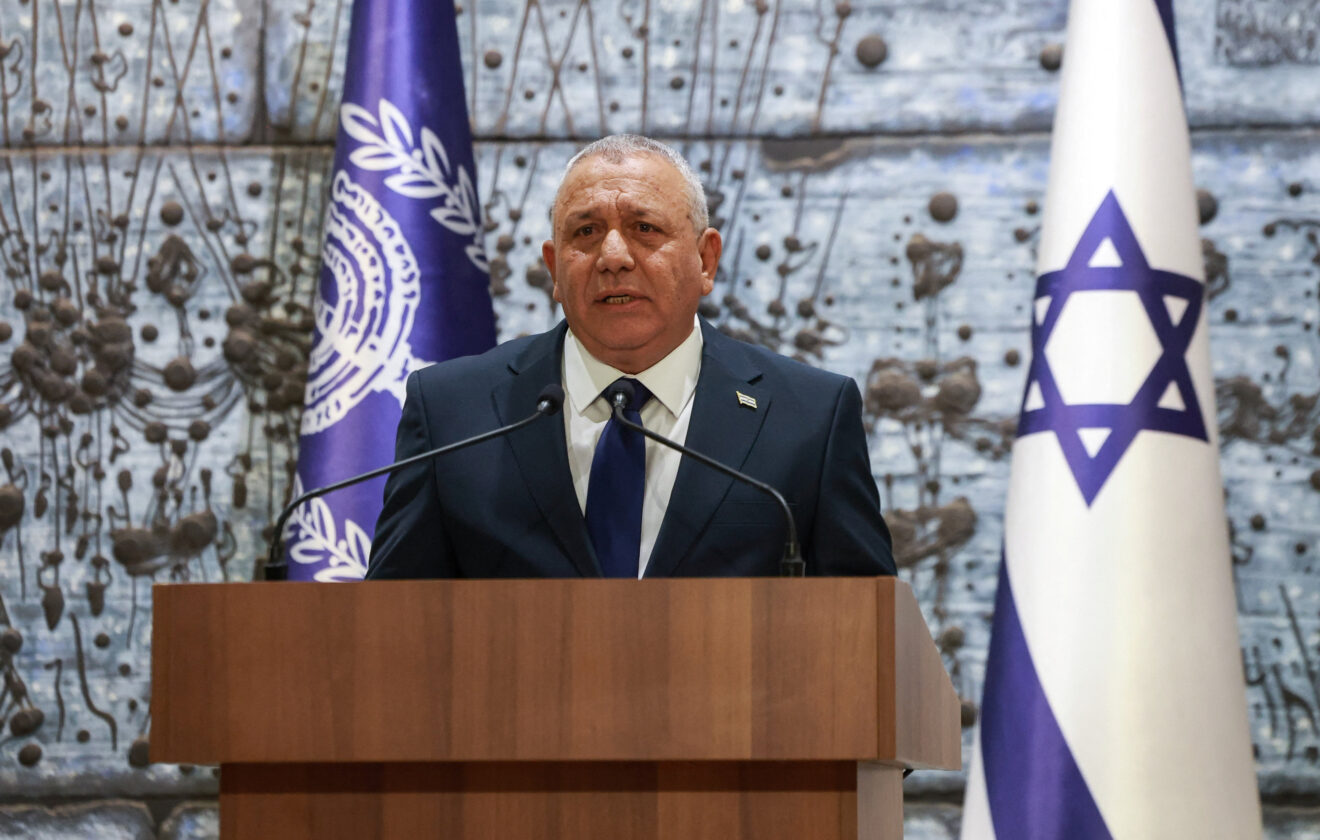
JERUSALEM, Nov 10 – Gadi Eisenkot, the strongest rival of Prime Minister Benjamin Netanyahu, has been given the mandate to try to form Israel’s next government. The move follows an election last month that left neither man with a clear path to power.
President Isaac Herzog handed him the task at a ceremony at his residence in Jerusalem on Sunday. In Tel Aviv, people took to the streets on both sides of the divide. On Saturday evening, Netanyahu supporters held up a huge Likud party banner that read “Right or Palestine.”
Eisenkot, 66, leads the Yashar party. He is a former army chief. He swapped his usual black clothes for a suit and tie for the ceremony.
“We are in a state of emergency, approaching a point of no return,” Eisenkot said.
He said Israel needs a national emergency government. And he said that will take creative and unusual political steps.
Now the clock is running. Eisenkot has 28 days to find the 61 votes he needs in the 120-seat Knesset, Israel’s parliament. If he falls short, Herzog can give him 14 more days. After that, the president can hand the task to someone else.
The numbers are hard. In the October 27 vote, Eisenkot’s broad opposition bloc won 48 seats. Netanyahu’s camp won 53. So neither side has a majority.
But Eisenkot had more backing in talks with the president. Parties with 67 lawmakers recommended him, while 46 backed Netanyahu. That support included both Arab-majority lists, which made record gains in the vote and could now decide who governs.
Herzog said Likud is still the largest single party. But he said that did not mean its leader had to get the first chance.
Eisenkot has three main paths to power, and none of them is easy.
He could strike a power-sharing deal with Netanyahu. He could lean on support from the Arab-led parties. Or he could make a deal with the ultra-Orthodox parties.
Each one comes with problems. Several members of his own bloc oppose relying on Arab parties. The more conservative Yisrael Beiteinu party has said it will not sit in a government with them. Eisenkot himself has set conditions for any Arab party, including that it recognize Israel as a Jewish state and call Hamas a terrorist group.
The ultra-Orthodox parties want their community to stay free from military service. But Eisenkot and his partners made equal service a core promise of their campaign. The ultra-Orthodox party Shas has already rejected reports that it might join him.
On Sunday, Eisenkot reached out to Netanyahu’s Likud and to the far-right party of Finance Minister Bezalel Smotrich. He said his door is open. But he made clear that he would be the one to lead.
Netanyahu is fighting to keep his job. He is Israel’s longest-serving prime minister. His religious and nationalist coalition lost its majority, but it is still the largest bloc.
On Saturday night, he called for a “national unity” government with Eisenkot. It is not clear the two men could agree on how to share power. Such deals in Israel are often fragile and tend to fall apart.
Netanyahu has also said the election was “stolen” by Arab parties, which got large numbers of their voters to the polls. He has offered little to no evidence for that claim. He has said any alliance with Arab parties would be a betrayal.
The Shin Bet security agency is looking into possible foreign meddling in the vote. But the Central Elections Committee and Herzog both say the result is valid. They say that even if wrongdoing is found, it did not change the outcome in any big way.
Eisenkot also addressed Israel’s growing isolation on the international stage. He said that even the country’s closest allies are now calling for their relationships with Israel to be reassessed. Netanyahu remains subject to an arrest warrant issued by the International Criminal Court.
In the United States, Israel’s closest ally, Democrats won the midterm elections last week. Some of them have called for limits on support for Israel after the war in Gaza and the war with Iran.
Eisenkot has vowed to heal the deep rifts that grew under Netanyahu, whose time in office saw Israel move sharply to the right. He has promised to crack down on extremist settlers in the West Bank who attack Palestinians. He has called recent attacks “Jewish terror.”
Still, he opposes a Palestinian state. He has vowed to end Hamas rule in Gaza and destroy its armed wing.
He was army chief from 2015 to 2019. During the 2006 war with Hezbollah, he came up with what is known as the Dahiya doctrine. It calls for the use of massive force against civilian sites in areas controlled by the Lebanese group.
If no one can form a government, Israel will go back to the polls. It held five elections between 2019 and 2022 because of repeated deadlocks.