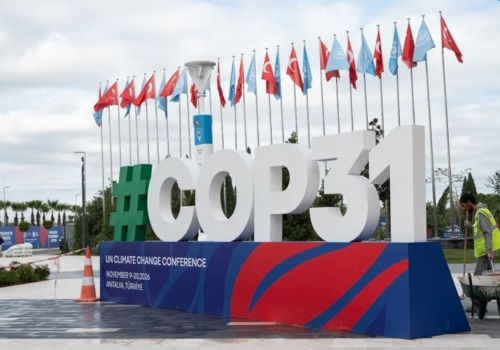
COP31 Key Players to Watch at the Antalya Climate Talks
A split presidency, a missing United States and a handful of big leaders are shaping this year’s climate summit. Here is who is in the room and what they want.
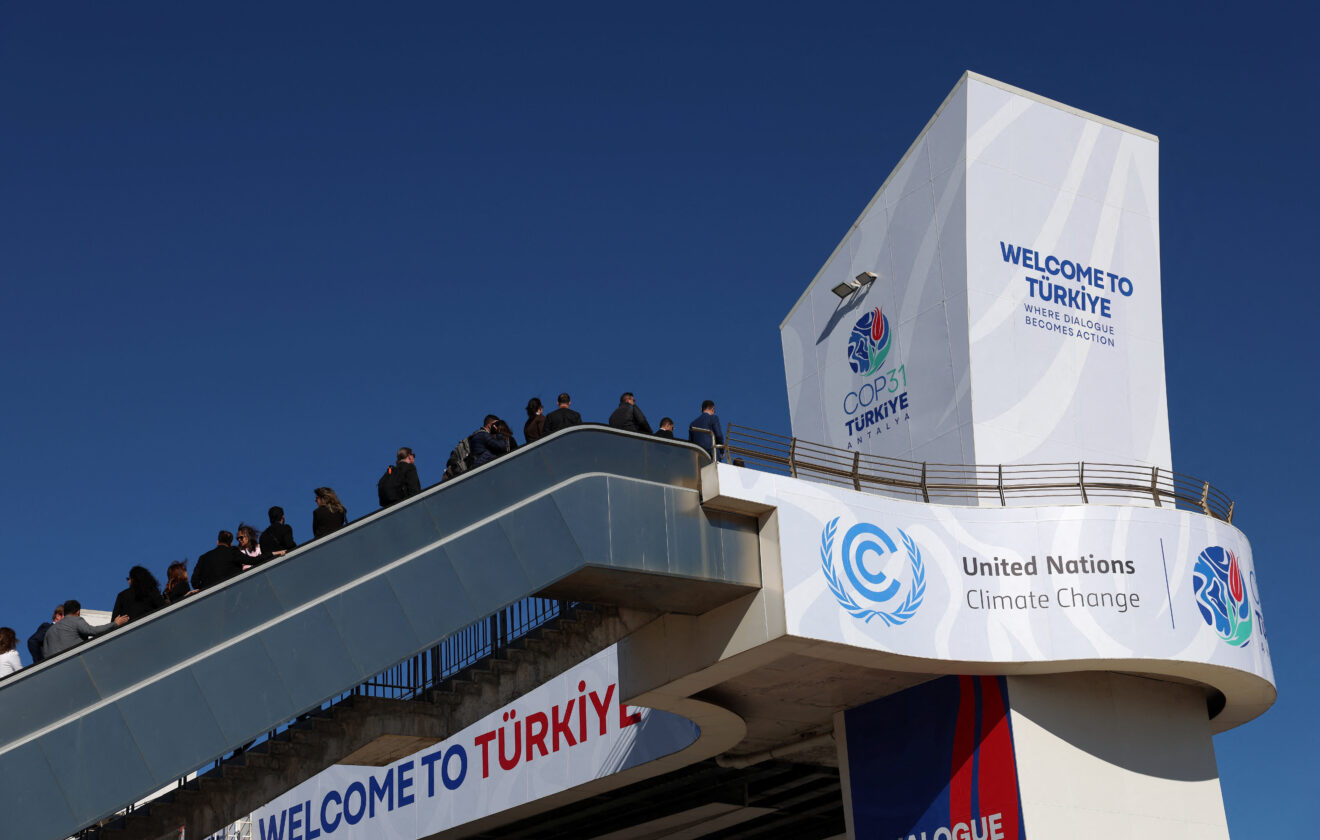
ANTALYA, Turkey, Nov 10- The key players for COP31 are now in place as the United Nations climate summit begins in Antalya, following a long and contentious dispute over who would host the event. The talks will run until November 20, with world leaders gathering on November 11 and 12.
Here is who matters, and what each side wants.
Australia: running the talks
Australia had sought to host the summit for years. Prime Minister Anthony Albanese made it a central pledge in 2021, before coming to power. However, Australia had to wait for its turn to submit a bid, and its candidacy later came into conflict with Turkey’s. Under the final arrangement, Australia will lead the negotiations, while Turkey will host the event.
Some observers believe the dispute has left a lingering sense of frustration. Australian media have given the summit less attention than previous host countries did. Albanese is scheduled to address the leaders’ segment, but he is not expected to remain for the full duration of the conference.
Climate and Energy Minister Chris Bowen has taken on the new role of “president of negotiations.” He will oversee the day-to-day running of the talks. His domestic portfolio also includes responsibility for energy supply, requiring him to balance support for fossil fuels with his advocacy for renewable energy.
Australia remains one of the world’s largest exporters of fossil fuels. At the same time, it has invested heavily in renewable energy. Solar power has expanded so rapidly that consumers are sometimes offered free electricity during periods of high generation.
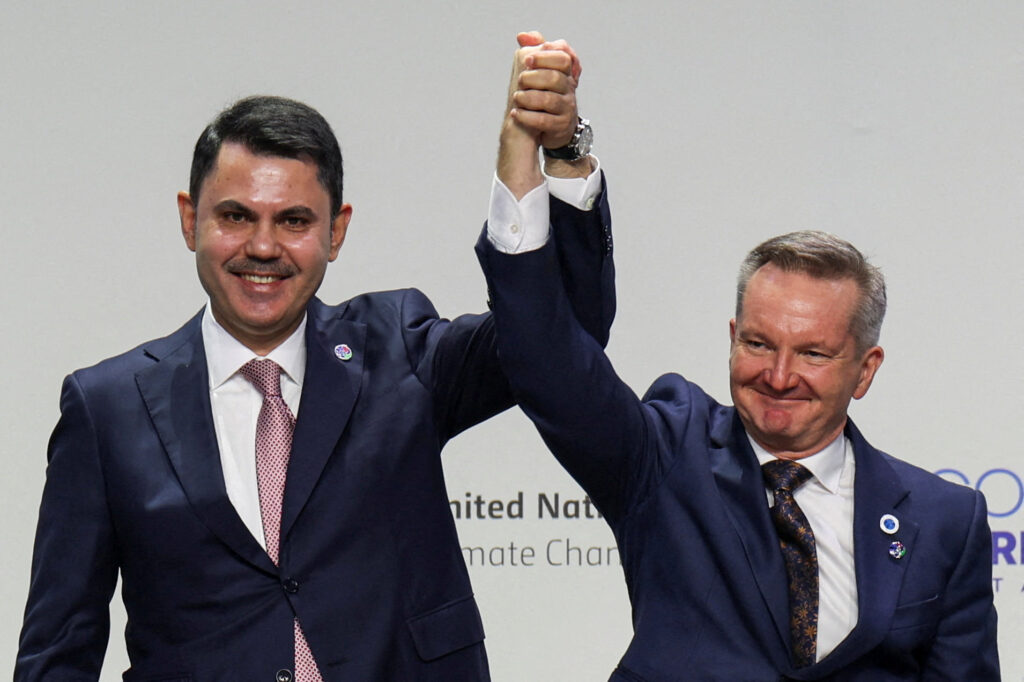
COP31 President Murat Kurum of Turkey with Chris Bowen, Australian President, in COP31 in Antalya, November 9, via Reuters
The country now faces the challenge of reconciling its role as a major fossil fuel exporter with its growing commitment to clean energy. Its leadership at COP31 will be closely watched by climate advocates, who want to see whether Australia can translate its domestic renewable expansion into stronger international action.
Turkey: the host
Turkey’s Environment Minister Murat Kurum is serving as the summit president. Turkey also controls the “action agenda,” a set of voluntary commitments that countries can choose to join.
President Recep Tayyip Erdogan showed limited interest in climate issues before Turkey bid to host the summit. He is now using the action agenda to promote a cause championed by his wife, Emine Erdogan, who has called for an end to “throwaway culture” and greater investment in recycling. Even so, some Turkish landfill sites continue to release significant amounts of methane, a potent greenhouse gas.
Fatih Birol, executive director of the International Energy Agency, is reportedly among the advisers behind this year’s focus on electrification. The approach involves replacing fossil fuels with electric power for heating, transportation, and industrial processes.
The past several climate summits were held in Egypt, the United Arab Emirates, and Azerbaijan. As a result, Arab states—many of them major oil producers—have had a prominent voice in recent negotiations.
That influence has drawn criticism from climate advocates, who argue that fossil-fuel-producing nations have too much power over the pace of the global energy transition. Others counter that oil- and gas-rich countries must be part of the solution, since their financial resources and infrastructure will be essential to funding the shift toward cleaner energy.
This year’s summit will test whether that balance can be struck. Delegates are expected to debate how quickly countries can phase out fossil fuels while ensuring that developing economies receive the investment and technology needed to transition without undermining growth or energy security.
Brazil: bringing the road maps
Brazilian President Luiz Inacio Lula da Silva, who recently won a fourth term, will travel to Antalya for his first overseas trip since the election.
He is bringing two road maps to the summit. The first outlines a pathway for countries to move away from fossil fuels, while the second aims to halt and reverse deforestation. Neither plan is legally binding, and neither includes firm deadlines. However, both set out practical steps that governments can take to accelerate climate action.
The road maps reflect Brazil’s growing role in global climate diplomacy. As home to much of the Amazon rainforest, Brazil has positioned itself as a key voice in efforts to protect forests and reduce emissions. Lula has argued that protecting the Amazon is not only vital for Brazil but also essential for the stability of the global climate.
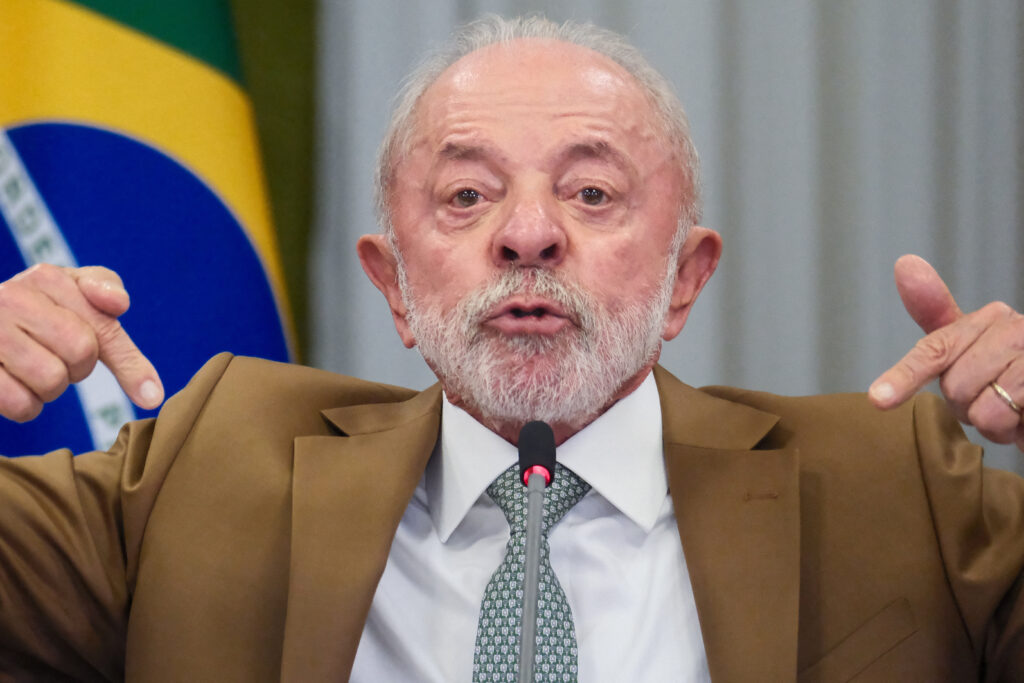
Brazilian President Luiz Inacio Lula da Silva in Brasilia, Brazil, November 6, 2026. REUTERS
His presence at the summit is likely to add momentum to discussions on deforestation, climate finance, and the transition away from fossil fuels. It will also give him an early opportunity to promote Brazil’s agenda on the international stage following his re-election.
Analysts say the road maps could help shape the direction of future climate negotiations, even without binding commitments. By offering a clear framework for action, Brazil hopes to encourage governments to adopt more ambitious policies at home while building support for stronger international cooperation.
The focus on forests is particularly significant. Deforestation remains one of the largest sources of carbon emissions, and the Amazon plays a critical role in regulating rainfall and storing carbon across South America. Brazil’s ability to curb forest loss will therefore be closely watched by scientists, investors, and climate campaigners.
Lula is also expected to press wealthy nations to deliver more funding for developing countries. Many governments argue that they cannot afford both economic growth and climate action without greater financial support, technology transfer, and debt relief.
China: the biggest emitter
President Xi Jinping will not attend the summit. Nevertheless, China’s decisions will have a major influence on the planet’s climate future.
China is responsible for nearly one-third of global greenhouse gas emissions each year, much of which stems from the fossil fuels that have powered its rapid economic growth over the past 25 years. At the same time, it has invested heavily in renewable energy, reshaping the global energy market. China maintains close ties with oil-producing nations such as Russia and Saudi Arabia, yet many of its largest export markets are countries pursuing a clean-energy transition.
India: Balancing coal and clean power
Prime Minister Narendra Modi will also be absent. India now has the third-largest renewable energy capacity in the world, but coal still accounts for roughly 70% of its electricity generation.
Earlier this year, India considered bidding to host the COP33 summit in 2028. It withdrew its bid in April without giving a reason. Environment Minister Bhupender Yadav will lead the country’s delegation.
India’s position reflects a difficult balancing act. The country needs rapid economic growth to lift millions out of poverty, but it also faces severe heat waves, water shortages, and flooding linked to climate change. Its negotiators are expected to argue that wealthy nations must provide more financing and technology if developing economies are to cut emissions without slowing development.
United States: Largely absent
No official United States delegation is expected to attend. President Donald Trump has withdrawn from the Paris Agreement and is also preparing to leave the United Nations climate treaty. Once that withdrawal takes effect, the United States will no longer be able to participate formally in the negotiations.
Some Democratic lawmakers, state governors, and business leaders may attend in a personal capacity.
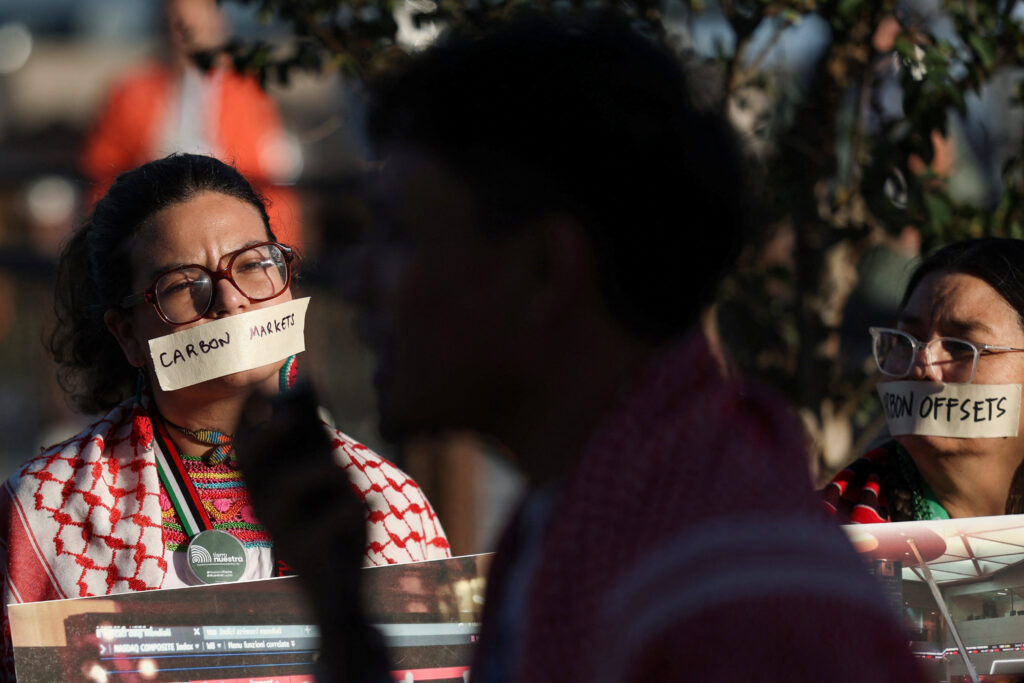
Demonstrators take part in a protest organized by the Global Forest Coalition on COP31 in Antalya, Turkey, November 9, 2026. REUTERS
Their presence could signal continued support for climate action at the state and local level, even as the federal government steps back from international commitments.
Britain: A new leadership test
British Prime Minister Andy Burnham will attend the summit for the first time. He faced criticism earlier this year for saying little about climate change during a period of record-breaking heat. He later reaffirmed Britain’s target of reaching net-zero emissions by 2050, but also approved the Jackdaw gas field.
Foreign Secretary Ed Miliband is expected to accompany him. Miliband was widely praised last year for helping Brazil salvage an agreement in the final hours of COP30. Energy Secretary Miatta Fahnbulleh will lead Britain’s delegation during the final days of the talks.
From December, Britain will assume the presidency of the Group of 20 major economies, giving it an additional platform to advance its climate agenda. Its ability to build consensus among wealthy and developing nations will be closely watched.
Europe: A shifting approach
The European Union has weakened several of its green policies in recent years as far-right parties have gained political ground. European Commission President Ursula von der Leyen will attend the summit. She described this summer’s record heat as a “summer of truth.”
Climate Commissioner Wopke Hoekstra will lead the bloc during the final stage of negotiations. He is expected to focus in part on Europe’s economic and technological competition with China.
Europe’s approach will matter because the bloc remains one of the largest sources of climate finance and one of the biggest markets for clean technology. Any weakening of its environmental rules could make it harder to persuade other countries to adopt ambitious targets.
United Nations: A final summit for Guterres
This will be the final climate summit for United Nations Secretary-General Antonio Guterres, whose successor has not yet been chosen.
Simon Stiell, executive secretary of the United Nations climate body, will oversee the negotiations. This year, he will also need to navigate the complexities of a summit with two co-hosts.
Guterres has repeatedly warned that the world is running out of time to limit global warming. His final summit is likely to be marked by calls for faster action, greater financing, and stronger political leadership.
Saudi Arabia: The principal holdout
Saudi Arabia has not announced in advance who will lead its delegation. The country has a long history of slowing progress in climate negotiations. At COP30, it blocked even an indirect reference to the commitment to transition away from fossil fuels until the final moments of the talks.
Saudi Arabia has also led a small group of countries—including China, India, Russia, and Kenya—that seeks to delay the next major United Nations report on climate science, which is due in 2028.
Its influence remains significant because of its role as one of the world’s largest oil exporters. Riyadh argues that the global economy still depends on fossil fuels and that an abrupt transition could destabilize energy markets. Climate advocates counter that delay will only make the eventual transition more expensive and dangerous.
The positions of these major players will help determine whether COP31 produces meaningful progress or becomes another round of difficult negotiations over money, fossil fuels, and the pace of the global energy transition.