EU Leaders Back Zelenskyy at Brussels Summit as Trump Criticizes Ukraine’s Refinery Strikes
European governments express support for Kyiv while Washington questions attacks on Russian oil facilities.
European Union leaders closed ranks behind Ukrainian President Volodymyr Zelenskyy at a Brussels summit on Friday. Ukraine is bracing for another winter of Russian bombardment, and its most important ally, the United States, is publicly criticizing how it fights back.
The summit’s second day opened hours after President Donald Trump called Ukraine’s strikes on Russian refineries a “disgrace.” In an interview, he said the attacks do nothing but push up world oil prices. Trump, who faces midterm elections in November, has blamed the strikes for raising energy costs that could hurt him at the ballot box.
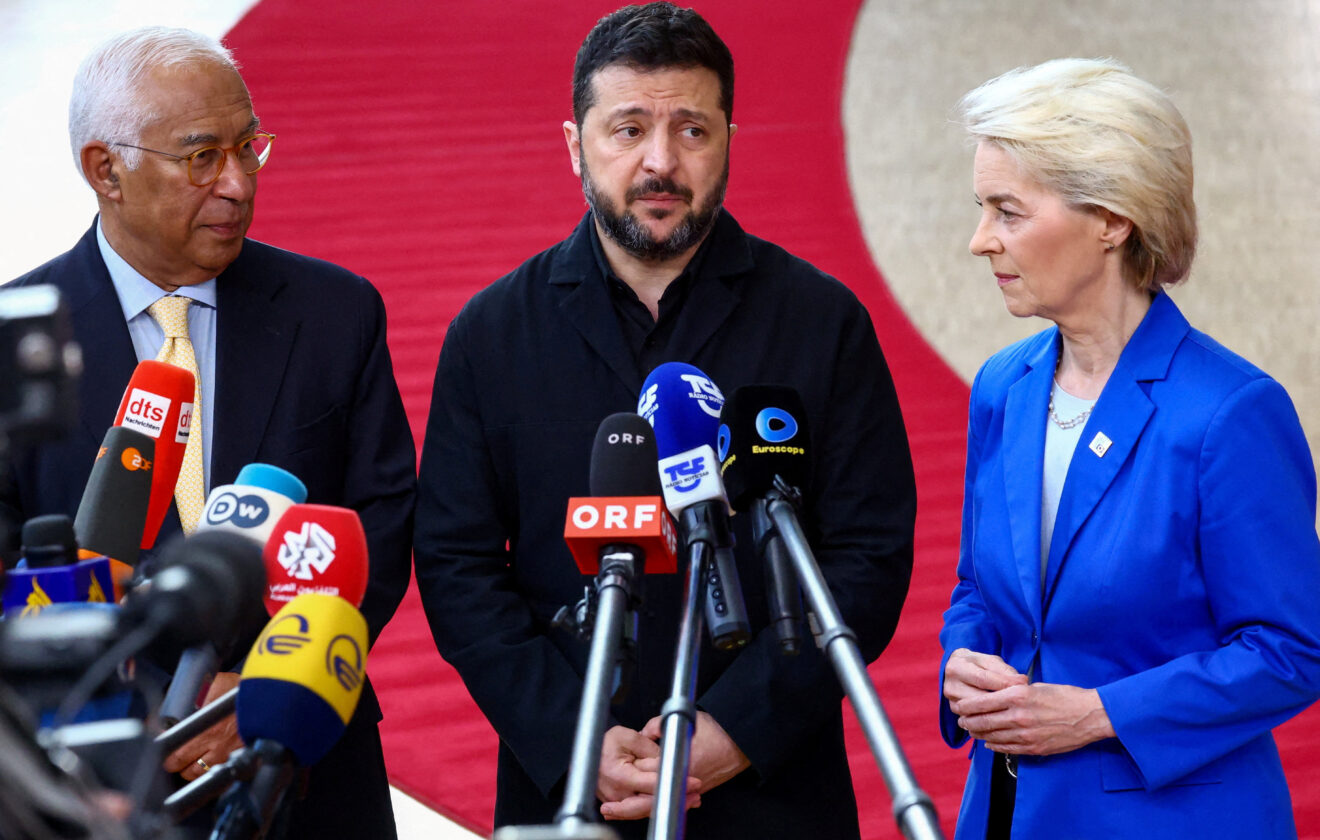
Arriving at the summit, Ukrainian President Volodymyr Zelenskyy greeted several leaders with hugs before addressing the press. He stated that while Ukraine wants the war to end as quickly as possible, there is no indication that Moscow is prepared to negotiate. Consequently, he stressed that Kyiv must prepare for the coming cold season, explaining that Ukraine’s proposed “winter package” addresses air defense, financial backing, and energy infrastructure. He plans to outline Ukraine’s specific requirements for the remainder of this year and into 2027.
This diplomatic push comes after a brief and confusing truce. On Sunday, U.S. President Donald Trump announced that Russia and Ukraine had agreed to halt strikes on each other’s energy infrastructure, an assertion that caught Ukrainian officials by surprise. Kyiv temporarily paused its attacks on Russian oil refineries for roughly three days. However, by Thursday, Zelenskyy declared the truce over due to ongoing Russian bombardment, after which Ukrainian forces struck a refinery southeast of Moscow that supplies fuel to the capital.
In response, the Kremlin claimed the strike undermined American diplomatic efforts and said that the boundaries of the ceasefire were never formally defined, though President Vladimir Putin insisted the damage was insignificant. Meanwhile, Dutch Prime Minister Rob Jetten criticized Trump’s rhetoric, arguing that supporting Ukraine’s defense remains vital to U.S. strategic interests.
Doubts about American backing
Many leaders arrived worried that Washington could scale back intelligence sharing and weapons support. Those fears sharpened over Starshield, the military version of the Starlink satellite network that Ukraine relies on for battlefield communications and drone operations. A Ukrainian defense ministry source said the receivers operated only at speeds up to 100 miles per hour (160 kph), which restricts their use in combat
Accounts of the cause differ. A U.S. official denied that Trump ordered a deliberate slowdown, and Trump said this week that intelligence sharing continues. Other officials said the order to restrict the system came from the White House. EU foreign policy chief Kaja Kallas said Europe has no ready replacement for Starlink in the short term, although governments and companies are working on longer-term options. A senior Ukrainian official said work is also under way on European alternatives to U.S.-made air defenses.
Who will pay
The funding gap was the hardest topic. Estonian Prime Minister Kristen Michal said the EU will probably have to provide a new loan to cover Ukraine’s budget shortfall next year, and warned that this winter will be as difficult as the last. Zelenskyy said earlier this month that Ukraine and its European partners agreed on a plan to close a $27 billion gap in military spending for this year, allowing Kyiv to order the drones it needs in early 2027. Even so, Ukraine’s finance minister, Sergii Marchenko, said an unfunded budget gap of $32.6 billion remains for next year, not counting about $40 billion in military supplies expected from allies.
The leaders were not fully aligned. Jetten said he was unhappy with how few countries have offered new financial support. Austrian Chancellor Christian Stocker urged caution on far-reaching commitments and said the many figures in circulation needed explanation, including where the shortfall comes from.
Pressure from several directions
On the ground, the pressure continued. Russian drone strikes on Kharkiv killed three people, and attacks elsewhere left hundreds of thousands without power. On the eve of the summit, Russia moved to place the local assets of French, German, Swedish, and Dutch companies under temporary management, in retaliation for the EU’s backing of Kyiv.
Soaring energy prices since the onset of the conflict in Iran have exposed deep divisions among member states, while a U.S. deal to purchase Russian diesel drew criticism from both Ukraine and European allies. Nevertheless, the bloc maintained a firm stance on sanctions. European Commission President Ursula von der Leyen emphasized that restrictions on Russia will not ease until the war ends, with Kallas confirming that a new sanctions package is currently under discussion.