China Holds Area Denial Drills in Western Pacific, Taiwan Says
Taiwan’s defense minister says a Chinese carrier group is training to keep outside forces away. Beijing calls the voyage a routine yearly exercise.
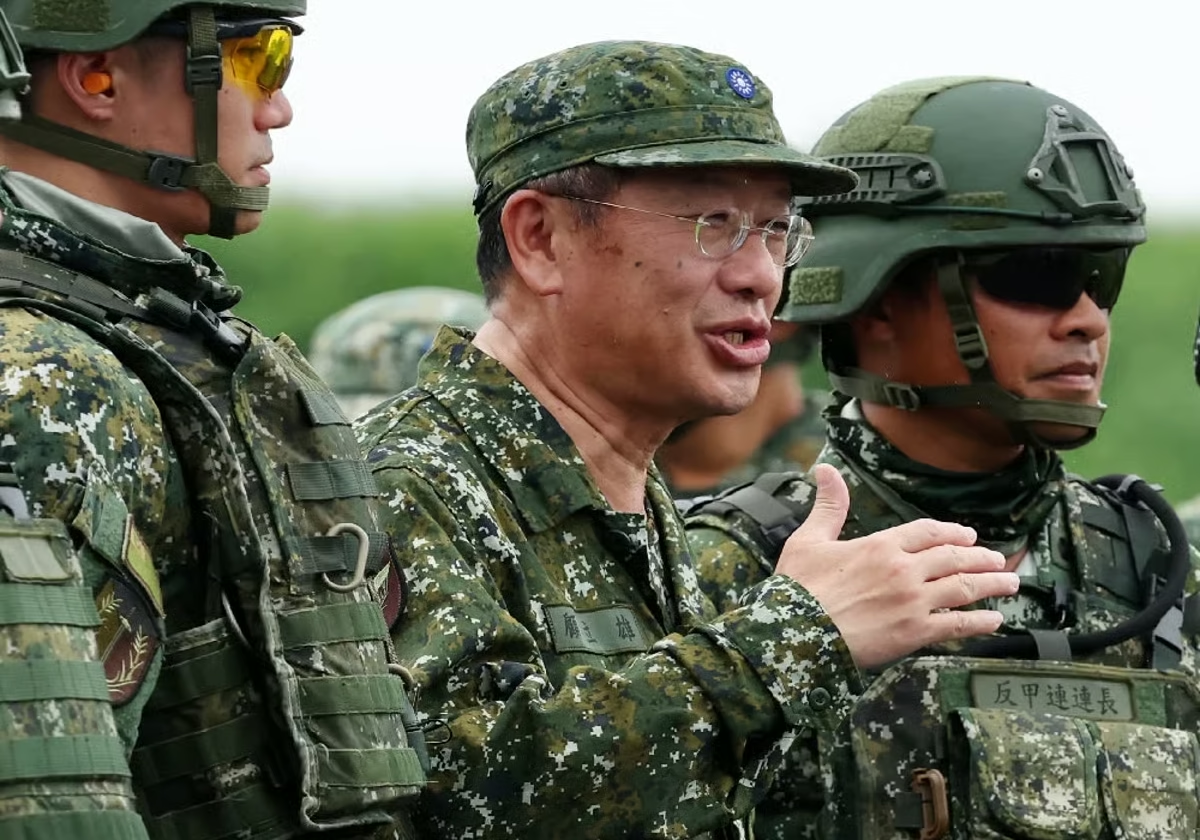
TAIPEI, Nov 10 – Taiwan’s defense minister warned that China was conducting drills focused on area denial, deploying its aircraft carrier and naval vessels in the Western Pacific. The warning comes amid a rise in Chinese military activity around the island.
Wellington Koo spoke to reporters at Taiwan’s parliament: “China has indeed conducted area denial drills in the Western Pacific,” Koo said.
He said the drills involve the Liaoning carrier group and other naval training units.
Area denial is a component of a broader military strategy known as anti-access and area denial, or A2/AD. It is designed to prevent an outside force from entering a conflict zone. For Taiwan, this could mean preventing the United States or its allies from intervening if China were to attack the island.
China’s defense ministry did not immediately respond to a request for comment. However, last month it described the Liaoning’s deployment to the Western Pacific as a routine annual exercise. It said the purpose was to test the carrier’s ability to conduct operations far from Chinese shores and stressed that the activity was not directed at any particular country.
China regards Taiwan, which has its own democratically elected government, as part of its territory. It regularly sends warplanes and naval vessels into the airspace and waters surrounding the island.
In recent weeks, that activity has intensified.
Last week, Joseph Wu, head of Taiwan’s National Security Council, said on social media that more than 100 Chinese navy and coast guard vessels had been deployed off Taiwan, in the South China Sea, and farther into the Pacific.
Taiwan’s defense ministry also reported a significant increase in the number of Chinese air force aircraft operating near the island last week. Despite the heightened activity, China has not formally announced any military exercises.
The Chinese navy said on October 14 that the Liaoning group would head to the Western Pacific for training. Since then, Chinese ships have passed close to Japan, the Philippines and Taiwan one after another, South Korean media reported. All three have raised their alert levels.
It is the carrier’s first extended deployment in approximately four months. In May and June, the Liaoning spent more than 40 days conducting drills in the South China Sea and the Western Pacific.
Koo said Taiwan’s military is closely monitoring China’s activities. He described the show of force as an attempt to undermine peace and stability in the Indo-Pacific region. Taiwan, he said, will use its intelligence and surveillance capabilities and share information with allies to monitor the exercises and respond accordingly.
The timing is significant. Next week, leaders will gather in the Chinese city of Shenzhen for the Asia-Pacific Economic Cooperation summit, where President Donald Trump is expected to meet Chinese President Xi Jinping. The two leaders previously met in May.
Taiwan is also scheduled to hold local elections at the end of this month.
China has previously conducted military exercises around major diplomatic events. In May, the Liaoning began long-range flights and live-fire exercises in the Western Pacific just days after the last meeting between Trump and Xi, according to South Korean media reports.
Beijing’s aircraft carriers have also been operating farther from Chinese shores. In 2025, the Liaoning and the Shandong conducted simultaneous operations in the Western Pacific for the first time. Taiwanese officials said at the time that the scope of those exercises went well beyond area-denial operations or the defense of China’s coastline.
China has never ruled out using force to bring Taiwan under its control. But it says it would prefer what it calls “peaceful reunification.”
Taiwan’s government rejects Beijing’s claims. It says only the people of Taiwan can decide their future.