Thousands Rally in Delhi Demanding Election Chief Gyanesh Kumar Resign Over Voter Lists
Rahul Gandhi called the voter roll purge an act of treason. The government dismissed the rally as orchestrated drama, and the Election Commission denies any bias.
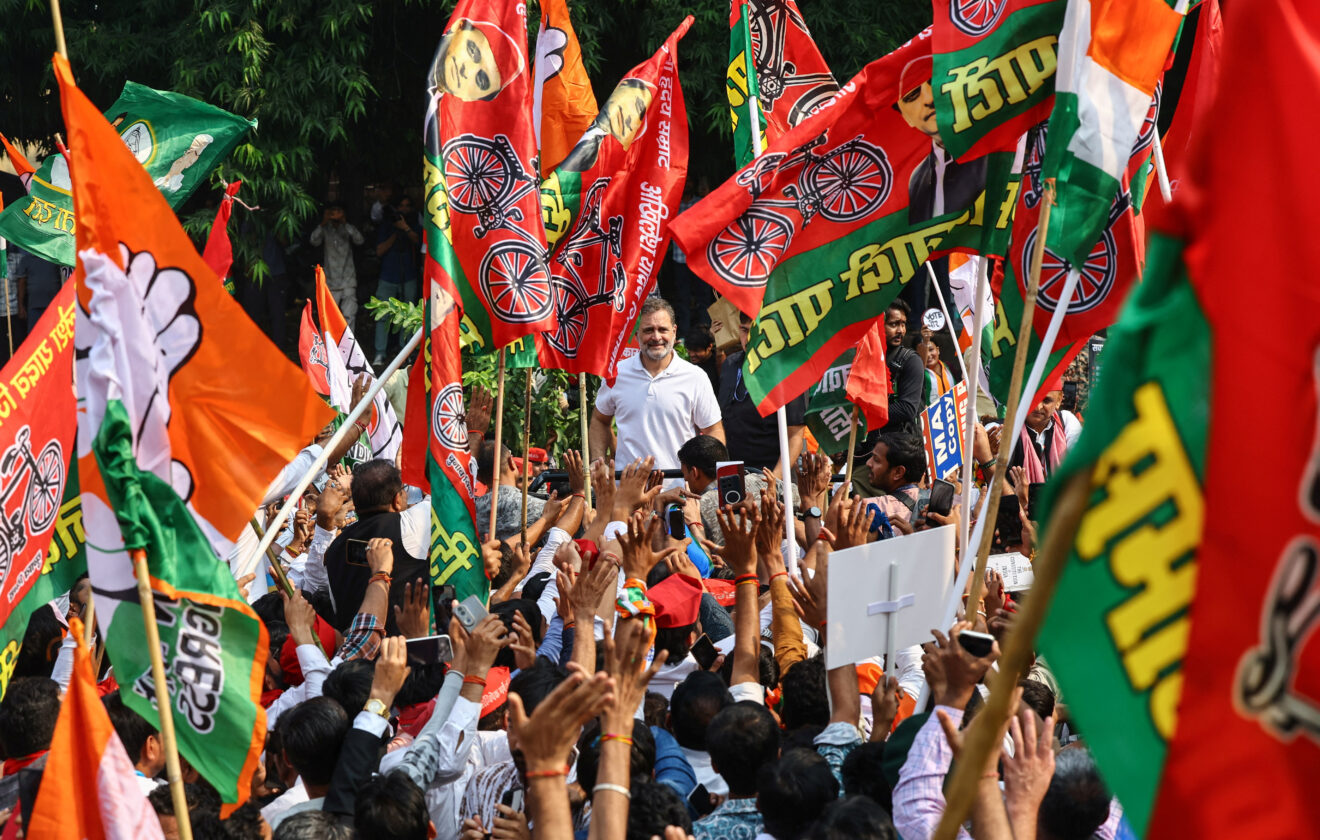
NEW DELHI, Nov 2 – Thousands of people marched through central Delhi on Sunday to call for the resignation of India’s chief election commissioner, Gyanesh Kumar. They say a revision of voter lists has been used to help Prime Minister Narendra Modi’s party.
The march started at Connaught Place and ended at Ramlila Maidan, a large ground in the old part of the city. Opposition leaders rode at the front in an open jeep. Rahul Gandhi attended alongside his mother, Sonia Gandhi, and his sister, Priyanka Gandhi Vadra. So was Akhilesh Yadav of the Samajwadi Party. All of them belong to the opposition group known as the INDIA bloc.
Warnings about road closures had been issued the day before. On Sunday, hundreds of police officers were deployed around the stadium, many carrying batons and shields, while riot-control vans were stationed nearby. Members of the crowd waved national flags alongside party banners.
Rahul Gandhi spoke from the stage. He said Gyanesh Kumar would have to leave his job, and that this would be the first step in getting the country back on track. He said the cuts to the voter lists had taken away the voice of every citizen.
“This is an act of betrayal against the nation. This is treason,” he said. Indian media reported that he also told the crowd the election chief would go to jail.
He repeated the opposition’s accusation of “vote chori,” a Hindi phrase meaning “vote theft.” He claimed that some names had been wrongly removed from voter lists, while others had been improperly added.
The process at the center of the dispute is known as the Special Intensive Revision. So far, it has resulted in more than 130 million names being struck from the voter rolls—more than the entire population of Japan. Opposition parties allege that Muslims and other minority communities have been disproportionately affected, arguing that these groups are less likely to support Narendra Modi’s Bharatiya Janata Party.
The Election Commission rejects that characterization. It says the revision is intended only to remove duplicate and ineligible entries, insists that it does not favor any political party, and maintains that anyone removed in error can apply to have their name restored.
Reena Mahto was among the protesters. A member of the Congress Party’s student wing, she said four members of her family were removed from the rolls after records indicated they had moved. But, she said, they had never moved: they still live in the same house in Chhattisgarh. She demanded that someone be held accountable for the error.
Dinesh Singh said he does not support any party. He said he came because of his children. He wants them to know that people stood up for their future, he said.
The government did not hold back. Health Minister Jagat Prakash Nadda called the rally a “carefully orchestrated drama.” Speaking to the news agency ANI, he said it was not about respect for democracy. He called it a plan to throw the country into chaos.
Home Minister Amit Shah also mocked Rahul Gandhi on Sunday, according to Indian media reports. The Bharatiya Janata Party argues that the opposition is damaging democracy by attacking a lawful process.
Estimates of the crowd size differ. Reuters reported that thousands of people attended, while some opposition leaders claimed the turnout was far larger.
Rahul Gandhi has made these claims before. In August 2025, he said the Election Commission was helping the ruling party with flawed voter lists. He said his party had spent six months collecting evidence. The commission rejected that, and asked him to put the claims in writing under the election rules.
The current protests began in late September, following an Indian Express report that Gyanesh Kumar’s two deputies had raised concerns within the commission. Their worries focused on the revision of voter lists, the voter registration process, and the commission’s computer systems.
Since then, there have been protests almost every day. Opposition parties have joined them. So have student groups and a youth group that calls itself the Cockroach Janta Party.
The protests represent the most serious political challenge Narendra Modi has faced since becoming prime minister in 2014. For now, his government is not in immediate danger: it retains a parliamentary majority with the support of its coalition partners, and the next national election is not due until 2029.
Still, the unrest has exposed deep public anger and put sustained pressure on Modi’s administration. The opposition has vowed to keep the protests going until Gyanesh Kumar steps down, but he has shown no indication that he intends to resign. That standoff could prolong the crisis, testing both the government’s political resilience and its ability to manage growing discontent across the country.