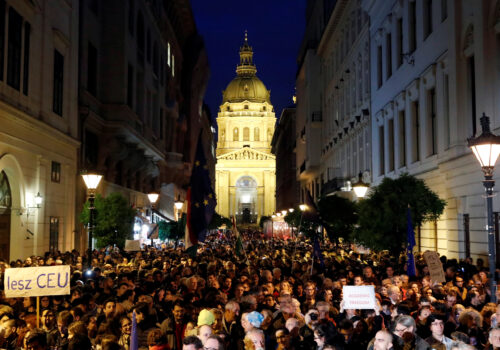
Italy Antisemitism Law Passes Amid Free Speech Dispute
Italy’s parliament has passed a law to fight antisemitism. The opposition says it could curb criticism of Israel, but the government says free speech is safe.
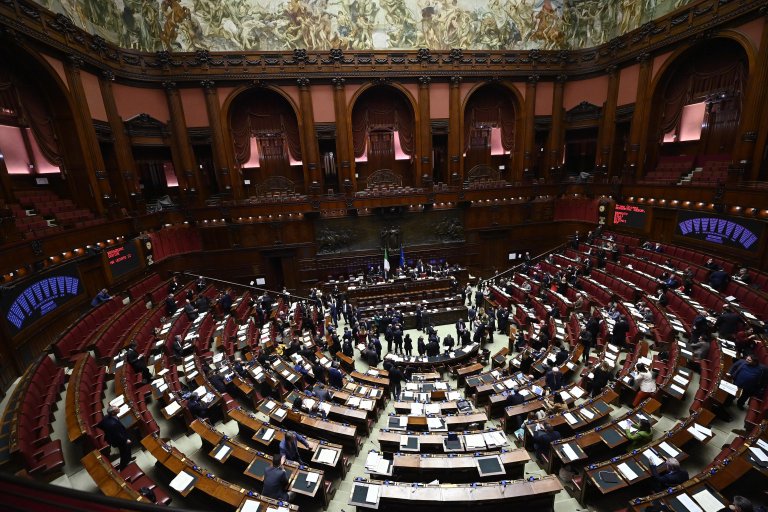
ROME, Nov 18 – Italy has a new antisemitism law. Parliament gave it final approval late on Tuesday, but critics warn that part of it could be used to silence criticism of Israel and those who speak up for Palestinians.
The lower house passed the bill by 147 votes to 93.
At the heart of the dispute is one definition. The law adopts the meaning of antisemitism set out by the International Holocaust Remembrance Alliance.
That definition lists some kinds of criticism of Israel as examples of antisemitism. The law sets no fines. It sets no criminal penalties either.
Prime Minister Giorgia Meloni’s center-right government says the law is needed. It says Jews in Italy face more violence and more discrimination, and that the country must respond.
But the opposition sees it differently.
“The right is exploiting the antisemitism bill to stifle criticism,” said Angelo Bonelli, co-leader of the Green and Left Alliance.
Opposition parties have many times asked the government to change the definition. It didn’t. The ruling coalition said the law won’t limit debate on Israel, and that political criticism will stay fully protected.
Paolo Emilio Russo, of the ruling Forza Italia party, said no one has ever tried to limit free speech or criticism.
“No one has ever sought to limit freedom of expression and criticism,” Russo said. He called free speech a cornerstone of Italy’s democracy.
Italy’s main Jewish group was pleased with the vote.
Livia Ottolenghi heads the Union of Italian Jewish Communities. She said the law would strengthen what she called the democratic antibodies of Italian society.
“The fight against antisemitism is not a partisan battle,” Ottolenghi said in a statement. It’s a fight for all of society, she said, and it shouldn’t depend on which side people are on.
Most of the left voted no. Still, the vote showed cracks.
A small group of lawmakers from the Democratic Party, the main opposition party, didn’t vote at all. Their leaders had told them to vote against the bill. They abstained anyway.
The Democratic Party has condemned the violence in Gaza. But it has spoken less forcefully than its allies. Two of them, the Five Star Movement and the Green and Left Alliance, have accused Israel of genocide. Israel rejects that.
The law comes after a wave of activism in Italy over Gaza.
Support for Palestinians has grown fast since the war began, after the Hamas-led attacks on Israel on October 7, 2023. Left-wing parties have mostly backed the protests.
Meloni’s government has accused some protesters of stirring up trouble; those who back the law point to a rise in attacks on Jews.
In 2025, Italy’s Antisemitism Observatory recorded 963 antisemitic incidents, nearly four times the number recorded in 2022. The observatory is part of Milan’s Jewish Contemporary Documentation Center, which tracks such incidents around the country.
Gadi Luzzatto Voghera, the center’s director, said a growing share of incidents now involve physical harm. People have been pushed, spat at and slapped, he said.
The center recorded 18 such cases in 2025. In the first six months of this year, it counted 10.
The alliance’s definition is used by many governments and organisations across the world. However, rights groups and some scholars have criticised it, arguing that its examples blur the line between hatred of Jews and legitimate criticism of Israel.
Italy isn’t alone in this debate. In France, a proposed law against antisemitism has also stirred a fight over free speech this year.
On Tuesday, the Senate passed the bill by a majority, clearing the way for it to become law. The legislation will now move forward for implementation following the approval of both chambers.
The vote marks a significant step in the legislative process. With the Senate’s backing, the bill is set to be formally enacted as a law.