Xi Jinping Says Taiwan “Reunification” Must Happen, Saying History Cannot Be Stopped
China’s leader made no mention of force in a speech marking Sun Yat-sen’s birthday. Taiwan said the words were the same as before.
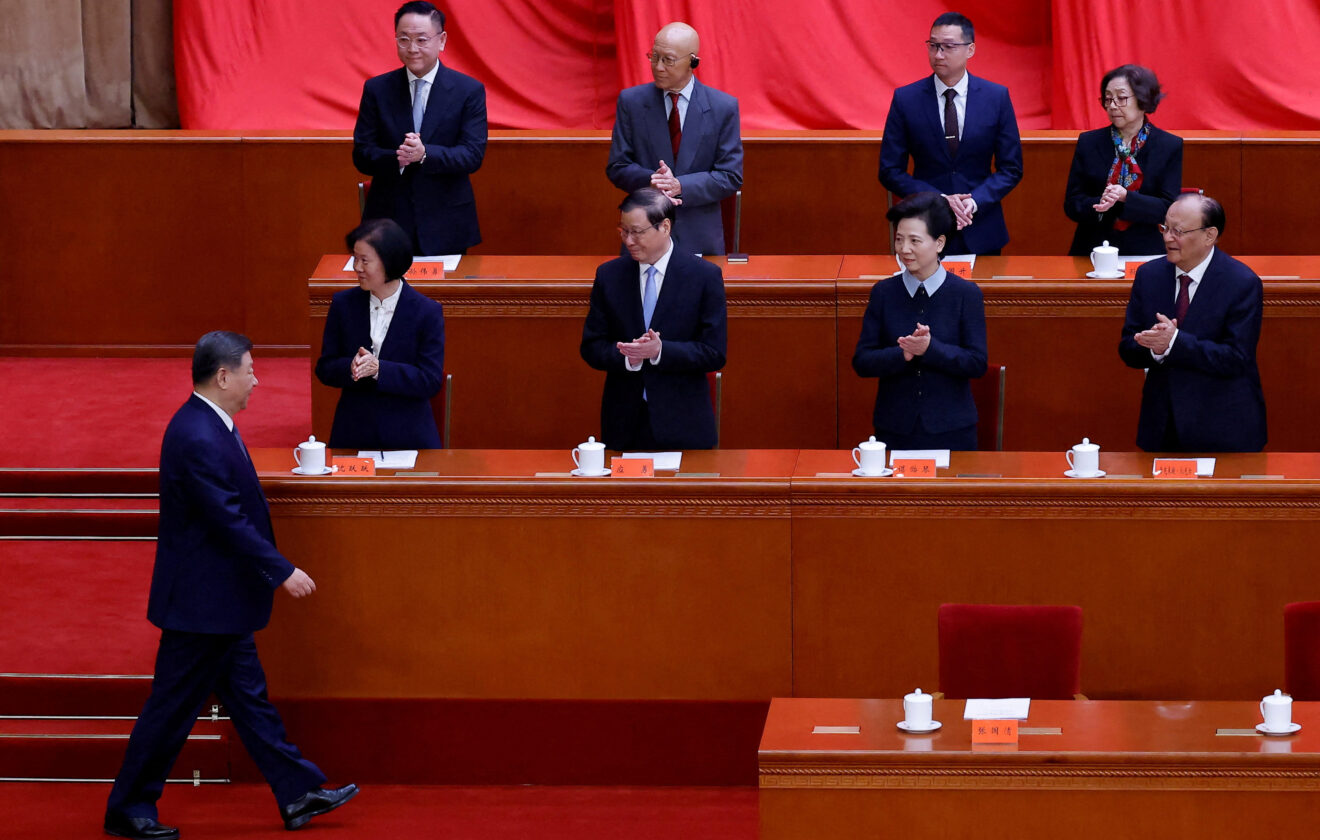
BEIJING, Nov 12 – Chinese President Xi Jinping said on Thursday that Taiwan’s “reunification” with China must happen and will happen, because the tide of history cannot be stopped. In his remarks on Xi Jinping’s Taiwan policy, he called for a peaceful path and made no mention of force.
But Taipei quickly turned him down.
Xi spoke at the Great Hall of the People in Beijing, at an event to mark the 160th birthday of Sun Yat-sen. Sun helped lead the 1911 revolt that ended China’s last imperial dynasty and set up the Republic of China.
Xi said settling the Taiwan question is an “unwavering historical mission” of the Communist Party and “The tide of history cannot be stopped.”
He said the full reunification of the motherland must be realized, and that it will be.
Xi said China remains committed to “peaceful reunification” and its “one country, two systems” model, under which Taiwan would retain a degree of self-rule under Beijing. No major political party in Taiwan supports the proposal.
He said China was willing to hold talks with Taiwan, provided it accepted the “one-China principle,” Beijing’s position that both sides of the Taiwan Strait belong to one country.
He also called on all Chinese people, including those in Taiwan, to unite against what he described as separatist forces seeking Taiwan’s independence.
Taiwan’s government rejected the proposal. Its Mainland Affairs Council said neither the government nor the people of Taiwan could accept “one country, two systems,” adding that the model would ultimately mean submitting to the Communist Party’s authoritarian rule.
Council spokesman Liang Wen-chieh said Xi’s remarks on unification were nothing new.
“It isn’t much different from the past,” Liang said.
China regards Taiwan, which has its own democratic government, as part of its territory. Taiwan rejects that claim. President Lai Ching-te says only the people of Taiwan can decide their future. Beijing calls Lai a “separatist” and refuses to engage with him.
Xi did not discuss the use of force on Thursday. But China has never ruled it out, and its military remains active around the island every day.
On Thursday, Taiwan’s defense ministry said it had spotted 29 Chinese military aircraft, including J-16 fighter jets and drones, around the island. It said they were on a “joint combat readiness patrol” with Chinese warships.
Earlier this week, Taiwan’s defense minister said China was holding drills in the Western Pacific with its Liaoning aircraft carrier group. He said they were meant to keep outside forces from coming to Taiwan’s aid.
The timing of Xi’s speech matters. Next week, he is due to meet President Donald Trump again at the Asia-Pacific Economic Cooperation summit in the Chinese city of Shenzhen. And Taiwan holds local elections in two weeks.
Sun Yat-sen is a rare figure claimed by both sides.
In Taiwan, he is officially the “father of the nation.” His picture hangs in the presidential office. But his political ideas, known as the “Three Principles of the People,” are no longer required reading for schoolchildren.
In Beijing, he is hailed as a national hero and patriot, and as a forerunner of the 1949 communist revolution. That revolution forced the defeated Republic of China government to flee to Taiwan, where it still is today.
Xi called Sun a “great pioneer of China’s democratic revolution.” He said Sun always stood for the unity of the country, and firmly opposed anything that would split the nation.
Taiwan last month urged its people to avoid Chinese events marking the anniversary. It said Beijing had a distorted view of Sun Yat-sen and his legacy.
Lai and his Democratic Progressive Party stress that Taiwan has its own identity. They have also taken a tougher line with Beijing over the Republic of China’s place in history.
Taiwan has been especially angered by Beijing’s efforts to claim credit for the Allied win in World War Two. Taipei says it was the Republic of China government that fought with the Allies, since the People’s Republic of China did not yet exist.