Putin’s Nuclear Briefcase Seen On Camera At APEC In China
A Russian officer carrying the briefcase used to authorize a nuclear strike was filmed near Vladimir Putin in Shenzhen. The device travels with Putin at all times but is rarely seen.
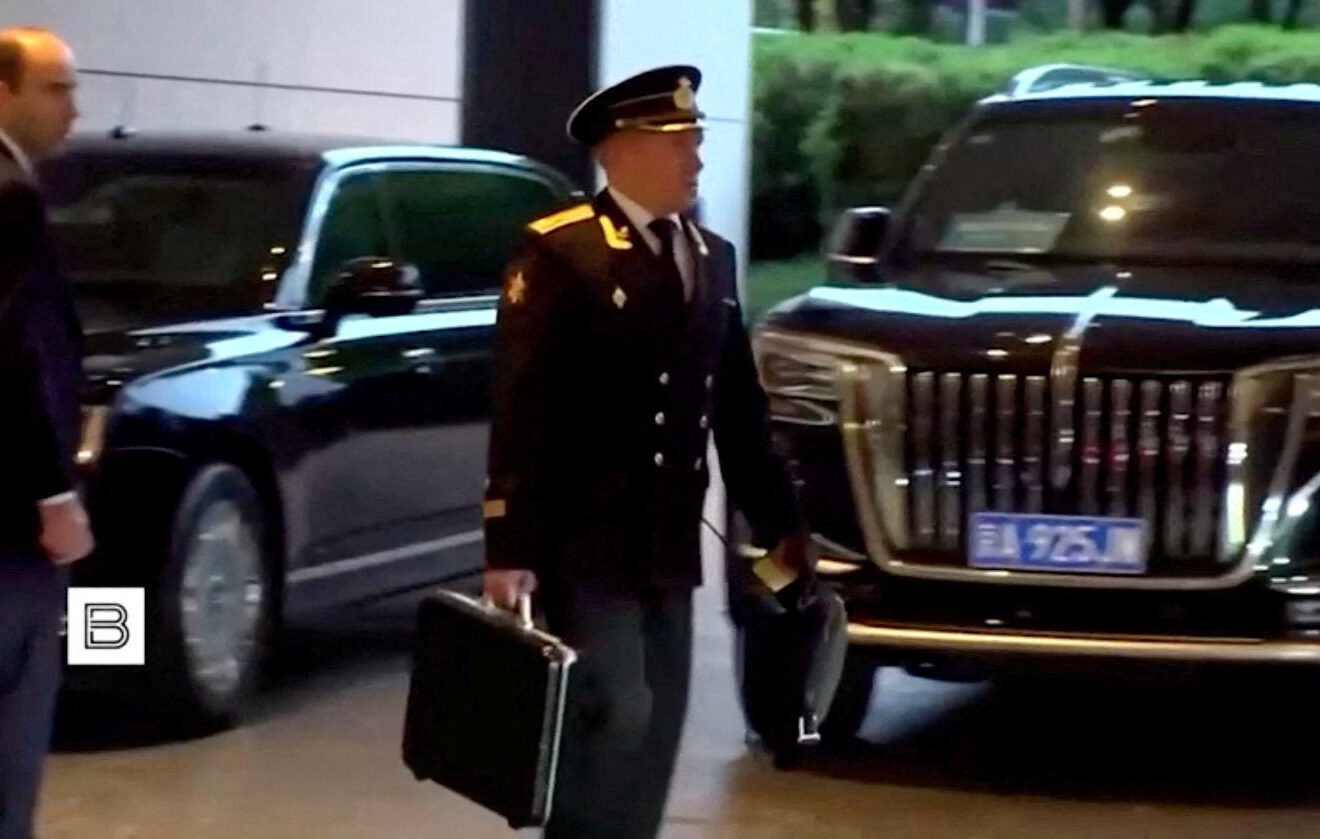
SHENZHEN, Nov 19 – Russian President Vladimir Putin’s nuclear briefcase was seen on camera this week at the Asia-Pacific Economic Cooperation summit in Shenzhen, a rare sight during a summit where nuclear weapons topped the agenda.
The briefcase was filmed on Wednesday, carried by a member of Putin’s security team, ahead of the summit in southern China.
Russian state television aired footage in which a journalist approached a naval officer and asked whether the briefcase he was carrying was the nuclear briefcase. The officer confirmed that it was, and CBS News later shared the clip.
The device, known as the Cheget, enables President Vladimir Putin to maintain command and control over Russia’s nuclear forces from wherever he is. Fox News described its on-camera appearance as rare, noting that the briefcase reportedly accompanies Putin at all times but is seldom publicly visible.
The Cheget is part of Russia’s nuclear-command system, linking the president to military leadership so he can authorize a nuclear launch while away from Moscow. The United States has a comparable system, commonly referred to as the “nuclear football,” which accompanies the U.S. president.
The sighting came during a week in which nuclear weapons were the main topic of discussion.
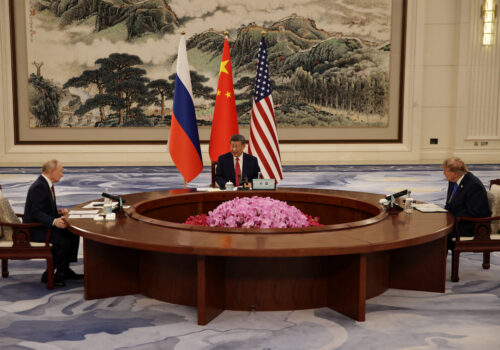
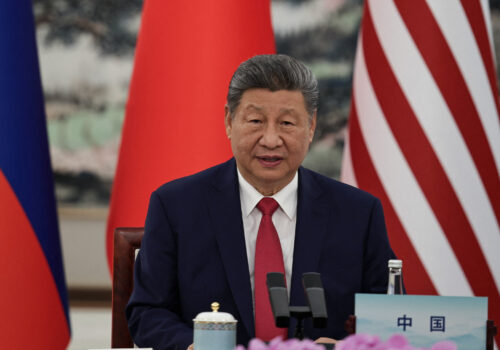
On Thursday, Putin met President Donald Trump and Chinese President Xi Jinping for their first-ever three-way talks. The three countries hold the world’s largest nuclear arsenals.
Trump said they were uniquely placed to discuss cutting their stockpiles, but admitted that giving up such weapons is not easy. Xi called for nuclear weapons to be fully banned and destroyed over time, and said every effort must be made to prevent nuclear war.
After the meeting, China and Russia released a joint peace declaration, which they said was agreed by all three leaders. Its fourth point said that a nuclear war cannot be won and must not be fought. It also said the three countries will hold talks on reducing nuclear risks and stopping the spread of nuclear weapons.
But the declaration did not pledge to cut arsenals. China has long refused to join arms talks, saying the United States and Russia, which have far larger stockpiles, should cut first.
The last nuclear arms treaty between Russia and the United States expired in February.
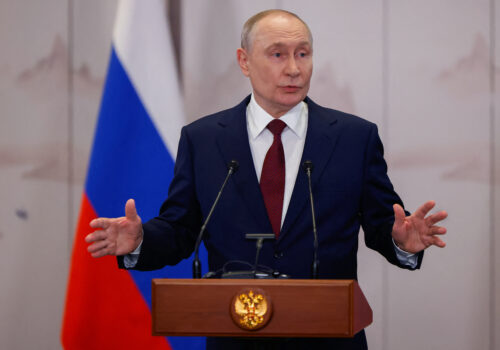
Earlier in the week, Putin told the summit that the world needs unity and dialogue at a time when military and political tensions are rising.
He said what is needed is “unity rather than division,” and partnership rather than isolation. He also said Western sanctions on Russia had failed.
In Kyiv, Ukraine’s Foreign Minister Andriy Sybiga told reporters he hoped Xi and Trump would press Russia to end the war.
Ukraine did not take part in the talks in Shenzhen. Kyiv and its European allies have warned against any deal made without them.
Xi, for his part, told Trump at their meeting on Thursday that he looked forward to in-depth talks on major issues in relations between China and the United States. He said he wanted to build a constructive, stable and lasting relationship between the two countries.
Putin’s presence at the summit was his first in-person appearance at the forum’s leaders’ meeting since 2017. Western leaders shunned him since he ordered the full-scale invasion of Ukraine in 2022.
On Thursday, Australian Prime Minister Anthony Albanese told Putin directly at the summit to end the war.
Russia has also used the week to show its military reach. On Tuesday, Russian strategic bombers flew past Japan and Taiwan before landing in Vietnam, in what experts called Moscow’s biggest air deployment in East Asia in more than a decade.
As he left the three-way meeting, Putin told Xi that no one had expected the talks to go so well.