Eisenkot Says Netanyahu Is Fueling a Racist Campaign Against Israel’s Arab Citizens
Gadi Eisenkot has accused Benjamin Netanyahu of stirring hostility toward Israel’s Arab minority. Arab parties could decide whether Eisenkot can form a government.
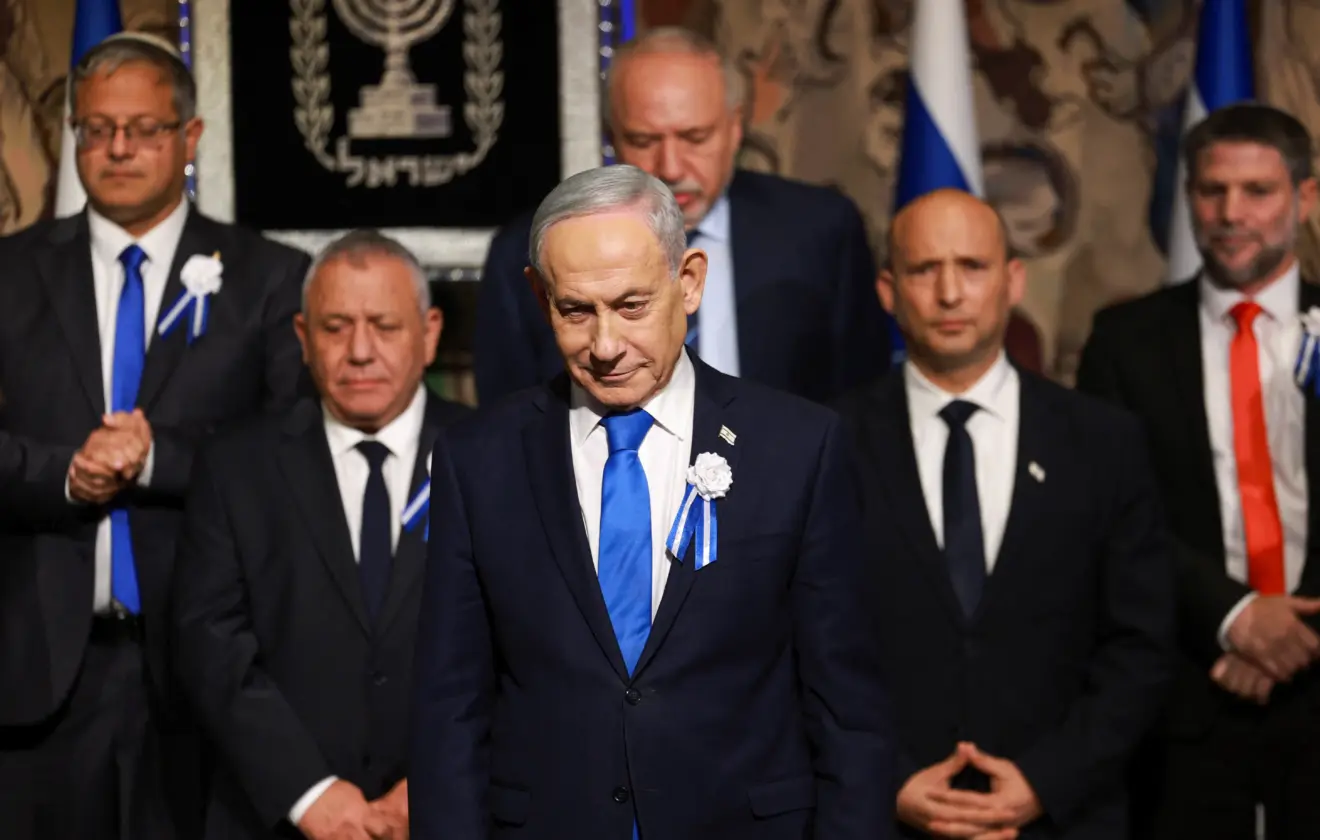
JERUSALEM, Nov 14 – The rivalry between Eisenkot and Netanyahu intensified on Friday, when Israeli prime ministerial hopeful Gadi Eisenkot accused caretaker Prime Minister Benjamin Netanyahu of fueling a racist campaign against the country’s Arab minority.
Eisenkot spoke out after Netanyahu tried to cast doubt on the legitimacy of Arab lawmakers by linking them to Hamas. It was a rare case of a leading Jewish politician in Israel taking a firm public stand in defense of Arab citizens, who make up more than 20% of the population.
“Arab citizens of Israel are an integral part of the Israeli story,” Eisenkot wrote on the social media platform X.
He said Arab citizens have faced an aggressive campaign to strip them of legitimacy, driven by the outgoing prime minister and those around him for political gain. He added that efforts to push them to the margins and vilify them as a group violate the basic principles of civic responsibility.
Eisenkot said it is reasonable to disagree with Arab party leaders, and even to strongly criticize some of them. But he said it is unacceptable to attack an entire community, and he would not allow it.
The dispute comes at a key moment in Israeli politics. Two Arab-majority parties, Ra’am and the Joint List, won a combined 19 seats in last month’s election. That is close to a sixth of the 120 seats in the Knesset, Israel’s parliament, and could make them kingmakers as Eisenkot tries to build a coalition.
President Isaac Herzog asked Eisenkot to form a new government on Sunday. The decision followed talks in which most parties, including both Arab lists, recommended him for the job.
Netanyahu and his allies have repeatedly criticized Arab party leaders for refusing to call Hamas a “terror group” after it attacked Israel on October 7, 2023.
All leaders of the Arab parties have condemned that attack. Arab citizens of Israel, who are descendants of Palestinians who stayed in what became Israel in 1948, were among those killed.
Netanyahu has also repeatedly claimed that Arab-majority parties committed electoral fraud. Israel’s electoral authorities have rejected those claims.
In a speech at the swearing-in of the new Knesset, Netanyahu complained that the two Arab lists refuse to recognize Israel as a Jewish state. Ra’am’s leader, Mansour Abbas, has in fact done so in the past.
Netanyahu also claimed that the Arab parties want to set up either an “Islamic state” or a Palestinian nationalist state.
At the same ceremony, National Security Minister Itamar Ben Gvir heckled Joint List leader Yousef Jabareen as he took his oath of allegiance. Ben Gvir accused Jabareen of having “pledged allegiance to Hamas.”
Eisenkot’s comments mark a shift in tone from his campaign. Before the vote, members of his Yashar party reportedly urged him to rule out a government with Ra’am, and Eisenkot obliged, according to the Israeli outlet +972 Magazine.
Netanyahu’s Likud party also made the Arab parties a main theme of its campaign. Numerous Likud campaign ads have warned: “Eisenkot and Liberman will establish a left-wing government with Yair Golan and the Arab parties.”
Alem is inside Eisenkot’s own camp. Avigdor Lieberman, one of his right-wing allies, has said he will quit the coalition if Arab citizens are part of it.
Israel has seen an Arab party join a government once before. After the 2021 election, Ra’am emerged as a potential kingmaker, and its support was crucial to the formation of the short-lived Bennett-Yair Lapid government.
Abbas has signaled that he is open to working with Eisenkot. Before the vote, Abbas showed a willingness to join Eisenkot’s government if the Israeli candidate is elected, based on the condition that internal security matters will be handled by the Arab party, according to one analyst.
The Joint List has set its own terms. Jabareen has listed four demands that any coalition seeking its support would have to meet.
Eisenkot now has 28 days to form a government. If he fails, he can ask for a 14-day extension.
If he still falls short after that, the mandate would pass to another lawmaker, most likely Netanyahu.