Bangladesh Loses $254 Million In Garment Orders To India And Asian Rivals
Labour unrest and rising costs pushed global fashion brands to move about $254 million in orders from Bangladesh, mostly to India, factory owners told Reuters.
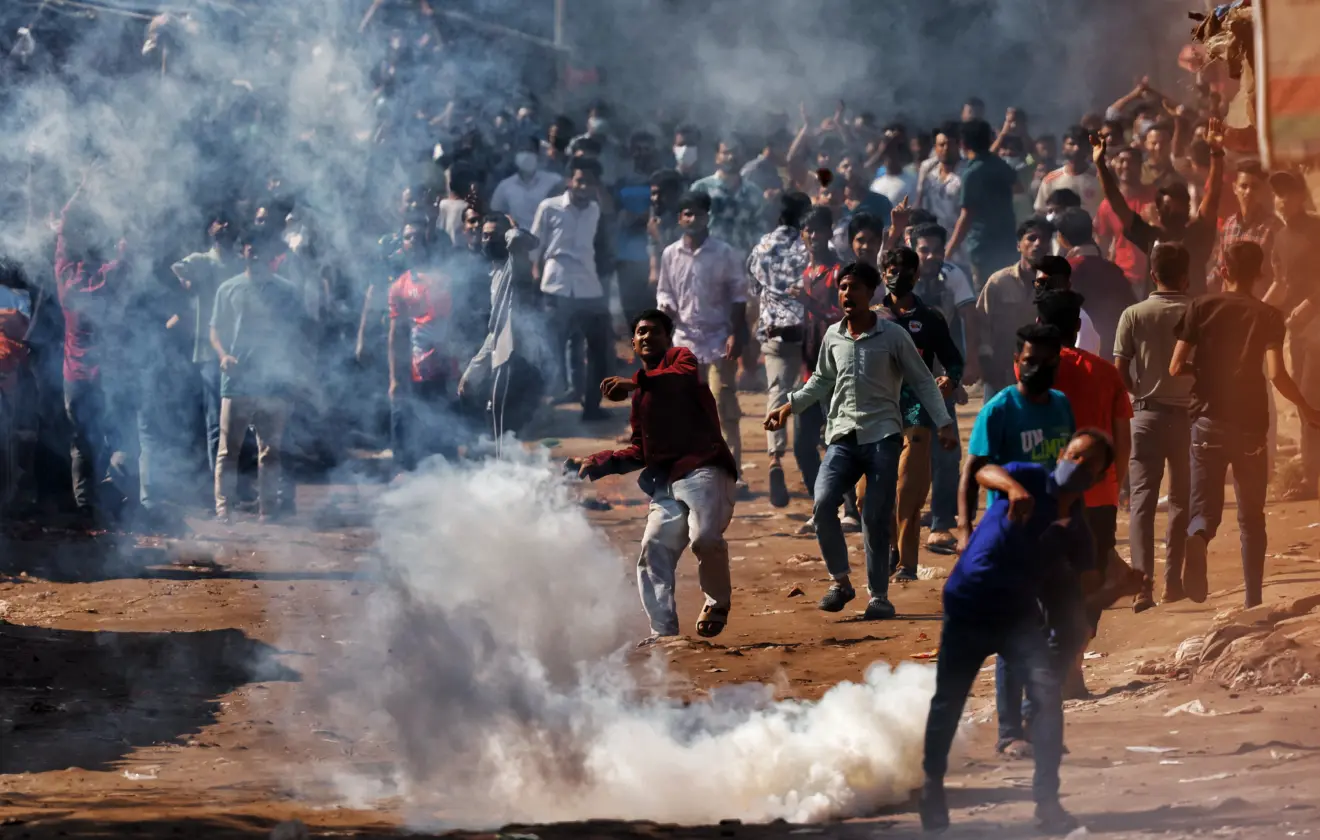
DHAKA, Nov 26 – Global fashion brands including Zara and H&M moved about $254 million worth of orders out of Bangladesh in the first 18 days of November, most of it to India, as labour unrest halted production and rising costs chipped away at the country’s long-held price advantage, three factory owners told Reuters.
The diverted orders amount to nearly a tenth of the brands’ monthly business in Bangladesh and were placed instead with other Asian manufacturing centres between Nov. 1 and 18, the owners said. They warned that the shift could outlast the current turmoil, dealing a lasting blow to the industry at the heart of the country’s economy.
Speaking on condition of anonymity because of concerns about their relationships with international buyers, the owners said Zara, H&M, Marks & Spencer, Celio and other global brands had redirected work, with India taking the largest share.
Inditex, the owner of Zara, declined to comment. Marks & Spencer, H&M and Celio did not respond to requests for comment.
The stakes for Bangladesh are high. Garments account for more than 80% of the country’s export earnings and nearly 40% of its manufacturing jobs, and Bangladesh ranks as the world’s second-largest apparel exporter after China. The Bangladesh Garment Manufacturers and Exporters Association (BGMEA) estimates that the protests have already caused more than $400 million in lost production.
Industry leaders say the low-cost model that built that position is under strain from higher wages, energy shortages and political uncertainty, pushing brands to spread their sourcing more widely.
Those pressures sharpened on Wednesday, when the government approved a 36% rise in the minimum wage for garment workers.
It was the smallest increase in forty years and failed to meet the demands of the workers who wanted their salaries to be more than doubled.
Abdur Rahman Tarafder, secretary of the Ministry of Labour and Employment, called the increase “satisfactory” and said he hoped garment workers would return to work from Saturday.
Manufacturers say the rise will still narrow the gap between Bangladeshi and Indian labour costs. Union groups counter that pay in Bangladesh remains low by the standards of the global clothing industry.
M. Mohiuddin Chowdhury, a director of the BGMEA, said manufacturers were being squeezed from several directions, with wages, utilities and raw materials all becoming more expensive.
“The wage increase has added to costs at a time when buyers are demanding lower prices and competition from rival sourcing countries is intensifying,” he said.
Energy supply has compounded the problem. Persistent shortages, worsened by the crisis in the Middle East, have disrupted production and forced some factories to rely on more expensive backup power.
While India has gained the most, buyers are also looking to Vietnam, Cambodia and Indonesia to reduce supply-chain risk and secure more reliable deliveries, industry leaders said.
Speed has become a decisive factor. Chowdhury said brands were increasingly choosing suppliers on delivery times rather than price. “Price becomes secondary when brands are under pressure to meet strict delivery deadlines,” he said.
According to Chowdhury, rival hubs can usually finish production and deliver within 60 to 90 days, compared with roughly 120 days in Bangladesh. India can offer buyers about a week’s advantage, while Vietnam and Cambodia can shorten lead times by up to 15 days.
The unrest has also left factories struggling to catch up. Manufacturers around Dhaka have lost an estimated 20 to 25 production days, and some are weighing overtime shifts and expensive air freight to honour existing contracts.
For some exporters, the loss of new business is already visible. Khan Monirul Alam, managing director of Alps Apparels Group, which mainly supplies European brands, said most of his buyers had stopped placing orders since the start of November.
“They are telling us our orders have been shifted, postponed or cancelled and that they have already found alternative solutions,” Alam said.
BGMEA President Mahmud Hasan Khan declined to identify the brands involved. He said temporarily shifting some orders elsewhere would allow the industry to retain global customers while limiting financial losses.
Factory owners, however, said their greater fear was that loss of current orders may be followed by an even more severe recession. In business, buyers reconsider where they source clothing. Political tension over the possible return of former Prime Minister Sheikh Hasina to Dhaka from India has added to concerns about further disruption.
The prospect of gains for India moved markets. Shares in Indian textile companies rose after the Reuters report, with Gokaldas Exports climbing as much as 11 percent and Trident gaining about 5 percent. Welspun Living, KPR Mill and Vardhman Textiles each rose around 2 percent.
Industry leaders in Bangladesh said restoring stability and keeping production running without interruption would be essential to retaining international buyers. Chowdhury cautioned that business shifted elsewhere during periods of instability might not return even after conditions improve.
“Brands have options. They will not wait for us if instability persists,” he said.