Canada Limits International Students While Carney Seeks Top Researchers
New student arrivals in Canada fell 80 percent in the first seven months of 2026. Universities fear the message of closed doors will drive away researchers too.
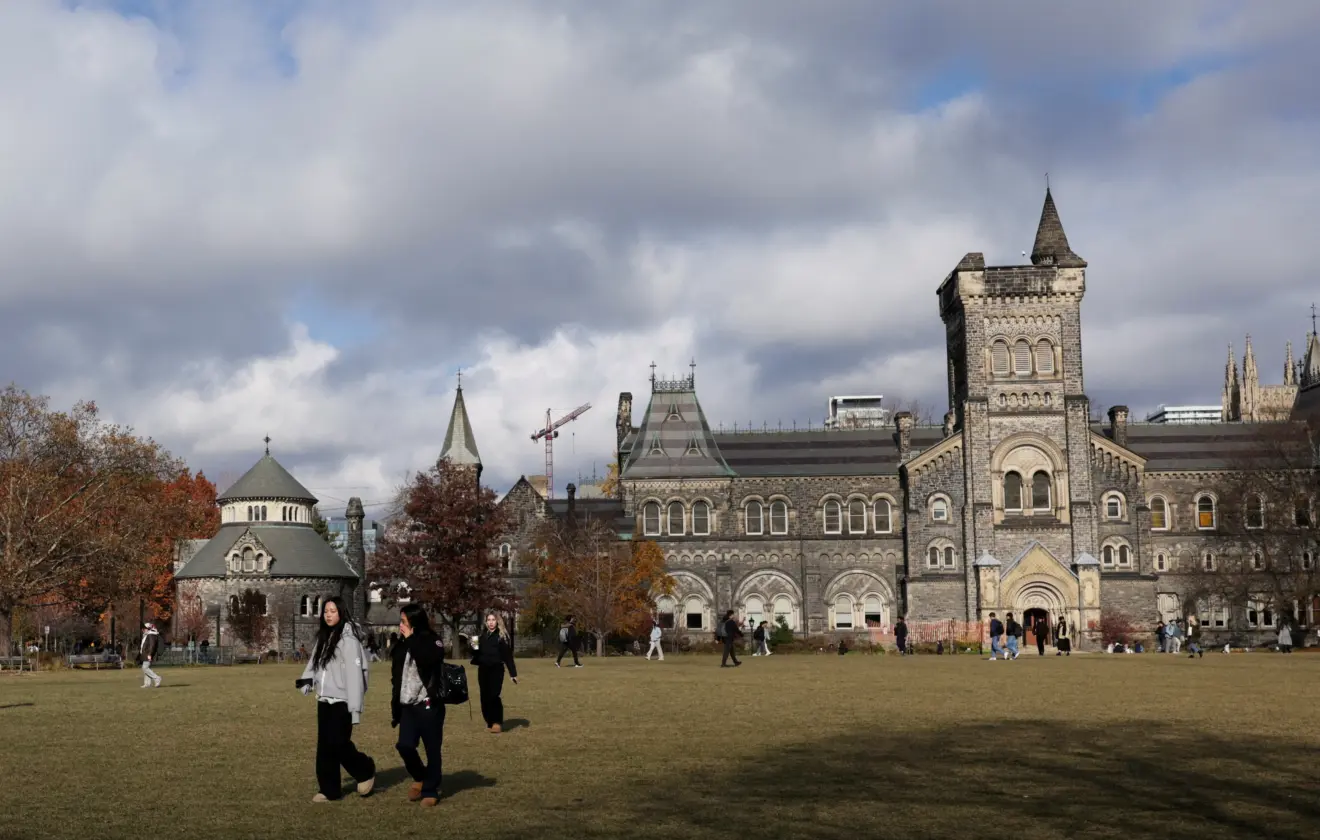
TORONTO, Nov 26 – Canadian universities are trying to show that they still want international students, after government cuts to study permits drove away applicants and hit college budgets hard.
The decline in fee income has already forced public colleges and polytechnics to cut staff and programs. Universities warn that it could also undermine Prime Minister Mark Carney’s 1.7 billion Canadian dollar plan to attract leading research talent to the country.
Canada’s latest immigration plan aims to admit 150,000 new international students a year over the next three years. That is far below the 292,830 new students who arrived in 2024. The government says the cuts are intended to ease pressure on housing and public services.
“These study permit caps really tarnished Canada’s brand,” said Joseph Wong, vice-president international at the University of Toronto.
Wong, who has made three recruiting trips to India over the past two years, said the caps created the impression that Canada was closing its doors to foreign students.
Carney’s government hopes to attract international researchers who, for decades, have chosen universities in the United States, where research budgets are larger. Since President Donald Trump returned to office last year, his administration has cut, or threatened to cut, funding for some American universities.
Robert Asselin, chief executive of the U15 Group, which represents Canada’s leading research universities, said Ottawa has exempted graduate students from some of the limits starting this year. But he warned that shifting rules could still deter talent more broadly.
He said Canada is in a race with other countries to attract the best students, and that it will lose talent if it falls behind.
“If we don’t attract these high-quality students, they will go elsewhere,” Asselin said.
Canada has committed more than 625 million Canadian dollars to new research funding programs aimed at attracting researchers, according to the Natural Sciences and Engineering Research Council of Canada. More recipients are expected to be named in early 2027.
Council spokesperson Hans Parmar said in a statement that the programs show Canada remains an attractive place for leading researchers, while also supporting a planned and sustainable approach to immigration.
He said researchers recruited under the plan would have access to existing economic immigration programs, including faster routes to permanent residency for some highly skilled workers.
Canada began cutting the number of study permits under former Prime Minister Justin Trudeau, partly in response to fraud the government found in student visa applications.
India has been the biggest source of international students in Canada over the past decade. But Canada rejected most study permit applications from Indian students in August 2025, Reuters reported last year.
Wong said his latest trip to India showed how hard it is now to persuade students there that Canada is still open to them.
The University of British Columbia said frequent policy changes have left students unsure about choosing Canada. Spokesperson Thandi Fletcher said since 2023, federal changes have affected enrollment across the country. So have global economic problems, rising political tensions and stiffer competition, she said.
Colleges have been hit hardest. At Humber Polytechnic, one of the largest publicly funded colleges in Canada, international enrollment for the 2025-26 academic year has fallen to about a third of its 2023-24 level, according to spokesperson Andrew Leopold.
The college faces a revenue shortfall of 40 million Canadian dollars, and it has canceled programs and offered staff voluntary exit packages.
Across Ontario, colleges have suspended hundreds of programs since the first cap was announced in January 2024, and thousands of jobs have been lost, according to Canadian media reports.
Colleges had leaned heavily on international students for years. Those students pay much higher fees than Canadian students, and that income helped fill the gap in public funding and tuition freezes in some provinces.
The country’s universities have generally been hit less hard than colleges. Still, international enrollment at universities fell by about 17 percent between the 2023-24 and 2025-26 academic years, according to figures reported by Global News. Colleges saw a drop of about 42 percent.
Immigration, Refugees and Citizenship Canada said new international student arrivals between January and July 2026 were down 80 percent from the same period in 2024.
“With fewer opportunities available, we’re being more selective,” the ministry said