Sánchez Says He Will Defy Polls As Spain Election Campaign Ends
Pedro Sánchez says internal data shows his Socialists leading ahead of Sunday's Spain election, though published polls favoured a PP-Vox coalition.
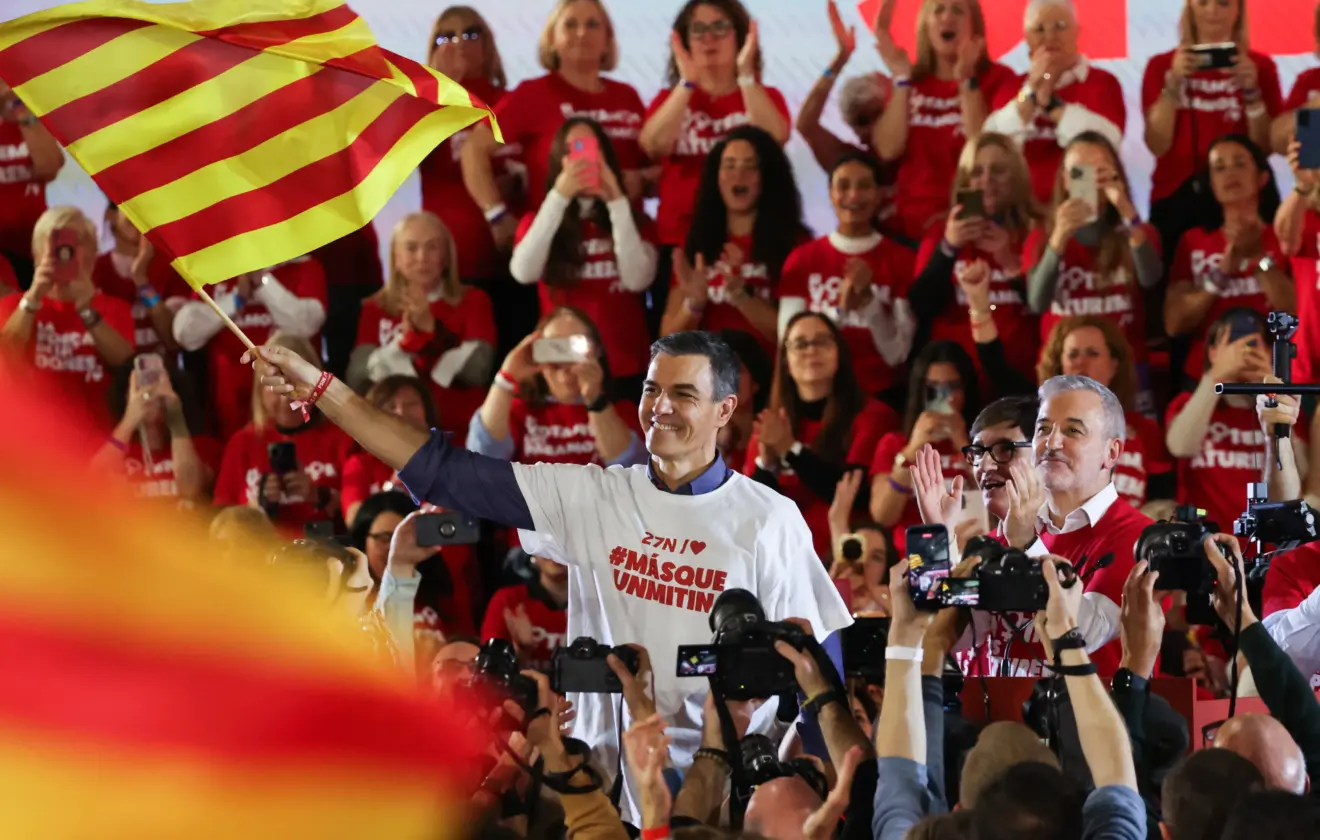
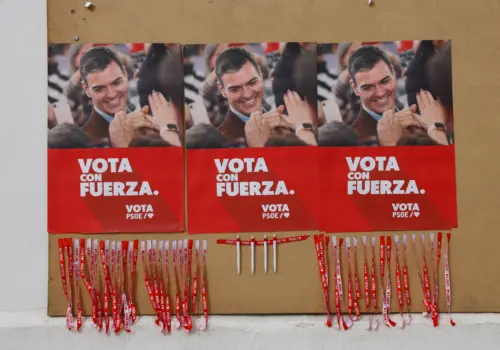
MADRID, Nov 27 – Spanish Prime Minister Pedro Sánchez insisted on Friday that he could still win a left-wing majority in Sunday’s snap election, despite opinion polls pointing to a right-wing victory after eight years of Socialist-led government.
Speaking to radio station SER as Spain’s election campaign entered its final hours, Sánchez said his party’s internal polling showed the Socialists would win the most votes, allowing him to form a new government with the support of smaller left-wing allies.
“I can’t conceive of us losing,” he said. He added that left-leaning voters were increasingly mobilising and that a high turnout among them was needed to build a progressive majority to tackle issues such as Spain’s housing crisis.
Spanish law bars the publication of opinion polls in the final days before a vote, so no new surveys have appeared in the last stretch of the Spanish election race. Nearly all the surveys released before the ban showed a clear lead for a possible coalition between the conservative People’s Party (PP) and the far-right Vox, both of which want to remove Sánchez from power.
Most polls had Sánchez’s centre-left Spanish Socialist Workers’ Party (PSOE) behind the PP, although the Socialists narrowed the gap in recent weeks. Even if the PSOE finishes first in the Spanish election, the polls suggested the left would struggle to win enough seats to stop a right-wing majority.
A PP-Vox government would mark the first time the far right has taken part in a Spanish government since the death of dictator Francisco Franco in 1975 and the return of democracy.
Sánchez called the Spanish election last month after his coalition collapsed when it failed to pass emergency measures to deal with the housing crisis. The eviction of Maricarmen Abascal, an 87-year-old pensioner, had set off protests across the country over housing costs and fed the political row that led to the early vote.
The final months of his term have also seen a series of strikes by teachers, medical staff, rail workers and others who say their living standards are falling.
The 54-year-old prime minister has built a strong reputation abroad, particularly among European progressives. He has been a firm backer of Ukraine and an outspoken supporter of Palestinian rights, and has openly clashed with US President Donald Trump.
Spain refused to let Washington use bases the two countries operate jointly for direct strikes on Iran. “We don’t want anything to do with Spain,” Trump said on March 3. Sánchez also rejected the White House’s demand that NATO members raise defence spending to 5% of GDP.
At home, however, voters have grown tired of his government, CNN reported, pointing to corruption scandals involving people close to Sánchez, a migrant disaster in the Spanish exclave of Ceuta, two deadly train crashes, high housing costs, and an economy that has grown strongly without improving life for many ordinary Spaniards.
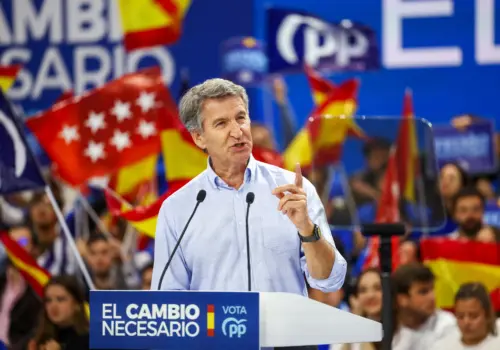
PP leader Alberto Núñez Feijóo, 65, has campaigned on a promise of competent, steady government. His posters across the country describe him as “the necessary change” and “the necessary president”.
“I’m not running to entertain Spain,” Feijóo told the newspaper La Razón on Nov. 4. “I’m running to serve Spain.”
In the Spain election campaign, the PP has focused heavily on the two high-speed rail crashes this year, which together killed 115 people and injured more than 300. In a televised head-to-head debate last week, Feijóo accused Sánchez of running the rail network with “persistent negligence” and ignoring repeated warnings about safety. Sánchez has promised to investigate and fix the problems. Feijóo was seen as the winner of that debate.
Sánchez took a sharper tone in a four-way Spain election debate on Thursday night with Feijóo, Vox leader Santiago Abascal and Ada Colau, candidate for the hard-left Broad Front, his expected junior coalition partner.
Sánchez and Colau joined forces to attack Feijóo and Abascal over policies that Sánchez said amounted to “a return to the past”. Both criticised Abascal for refusing during the debate to condemn gender-based violence.
They also accused Feijóo of sexism after he called Colau “the little silent one”, a jab at what he described as her failure to criticise the government’s handling of the deadly 2024 floods.
“If I have bothered anyone, I withdraw (the remark), of course,” Feijóo said later, while dismissing what he called the “theatrics” of his opponents.
The Socialists and the Broad Front chose Madrid for their final campaign events, while the People’s Party (PP) held its in Seville and Vox in Valencia.
Saturday is a “day of reflection” in Spain, when campaigning, rallies and political advertising are banned so voters can consider their choice before polling stations open for the Spanish election on Sunday.