SpaceX Plans First Starship Catch on Land in 15th Test Flight
For the first time, SpaceX will try to bring the Starship spacecraft back to its launch tower instead of dropping it in the ocean. The flight also carries a batch of Starlink satellites.
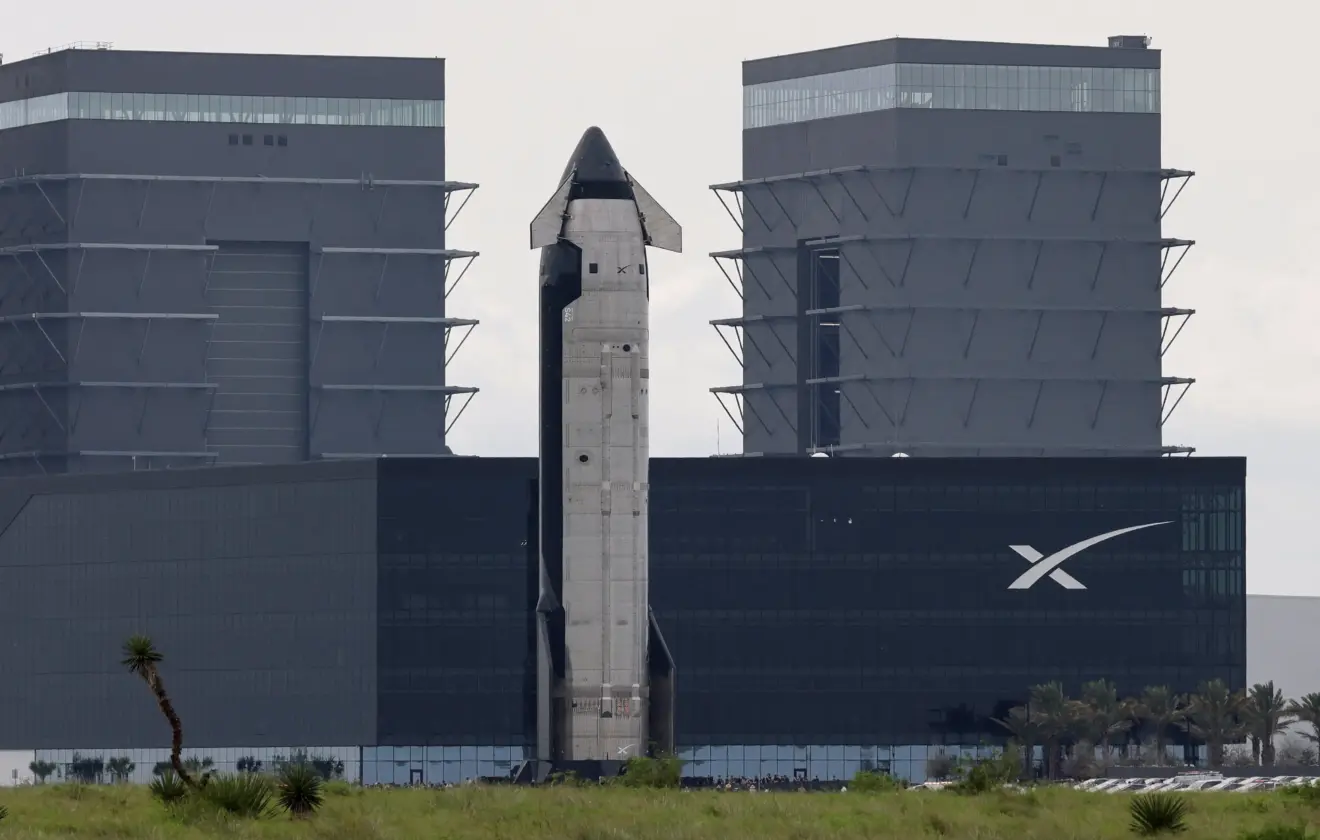
BROWNSVILLE, Texas, Nov 13 – SpaceX will try on Friday to bring its Starship spacecraft back to its Texas launch site for the first time, rather than letting it fall into the ocean. The planned Starship catch is a key test of Elon Musk’s goal of a rocket that can be flown again and again.
The 124-meter Starship is due to lift off at 4:45 in the afternoon local time from the company’s Starbase site in South Texas. It is the rocket’s 15th flight since 2023.
It is also only the second Starship flight to carry working Starlink satellites. That makes the mission both a money-making job for SpaceX’s internet business and a high-stakes test for a rocket that is still being developed.
As of Friday morning, SpaceX did not yet have a launch license from the Federal Aviation Administration. The agency has usually issued such licenses the day before past Starship launches. It did not reply right away to a request for comment.
The plan is to bring both parts of the rocket back.
The first part is the Super Heavy booster, the lower stage, which is 72 meters tall. SpaceX has caught it three times before. Each time, the booster fell back to the launch tower about 10 minutes after liftoff and was caught by a pair of giant mechanical arms. The last such catch was in March 2025.
The second part is the Starship upper stage, the spacecraft itself. It has never been caught. On this flight, it is scheduled to orbit Earth 14 times before returning home.
SpaceX expects it to return about 22 hours after launch, at around 2:45 in the afternoon local time on Saturday. Before that can happen, the company has to move the booster off the launch pad to make room.
SpaceX has said a success would be a “breakthrough moment in making Starship a reliable, rapidly reusable rocket.”
The last Starship flight was in September. It took the rocket and its satellites into orbit for the first time, even though some engines shut down during the flight. That mission was meant to last 10 hours but ended after about three, with the spacecraft splashing down in one piece in the Pacific Ocean.
Musk’s company sees Starship as central to its plans. It wants to use the rocket to put many more Starlink satellites into orbit. In the future, it also hopes to launch a large network of satellites, called Starmind, that would process data for artificial intelligence.
Musk has said he expects Starship to fly once a week by the first half of 2027. SpaceX has also said it could start launching Starship from a new pad in Florida by the end of this year.
The rocket matters to the United States space program as well. The National Aeronautics and Space Administration chose Starship in 2021 to land its astronauts on the moon under the Artemis program. The space agency has paid SpaceX about $3.2 billion for the work so far. SpaceX has put at least $15 billion of its own money into the rocket.
The space agency and SpaceX expect Starship to carry people to the moon by 2028. But analysts and engineers believe that date could slip because several major tests remain. One is demonstrating that Starship can refuel in orbit by transferring fuel from one “tanker” rocket to another, a step needed for the journey to the moon.
SpaceX is not the only company in the race. Jeff Bezos’ Blue Origin is developing a moon lander called Blue Moon. Next year, it is set to join Starship and the space agency’s Orion capsule in orbit around Earth for Artemis III, a docking test ahead of the moon landings that begin with Artemis IV.