Nvidia Valuation Falls to Lowest Level Since 2012
Investors now pay about $12 for each $1 of profit Nvidia is expected to make. Doubts over Huang, higher bond yields and debt tied to artificial intelligence are all part of the story.
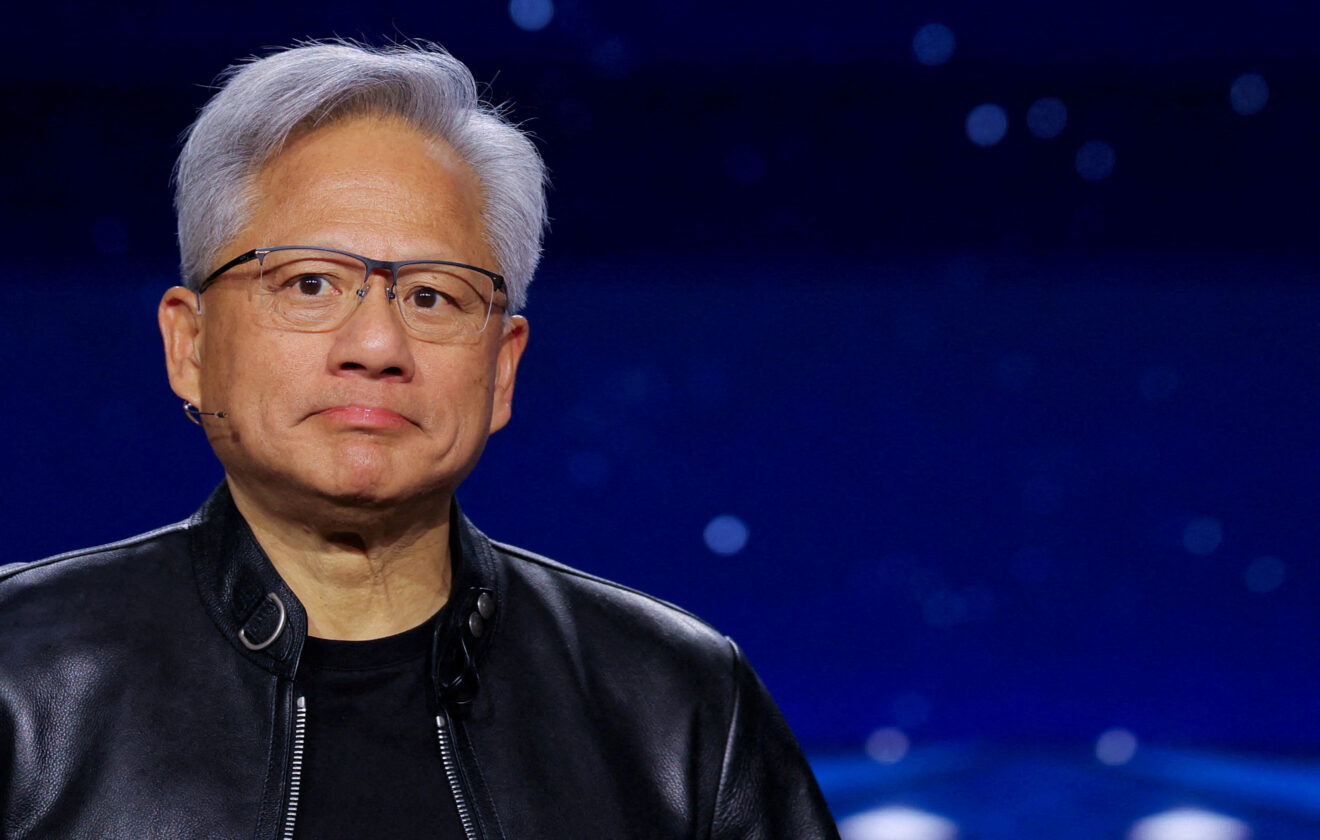
NEW YORK, Nov 12 – Nvidia’s valuation has fallen to its lowest level in 14 years, with doubts about the future of Chief Executive Jensen Huang adding to a slide that was already under way.
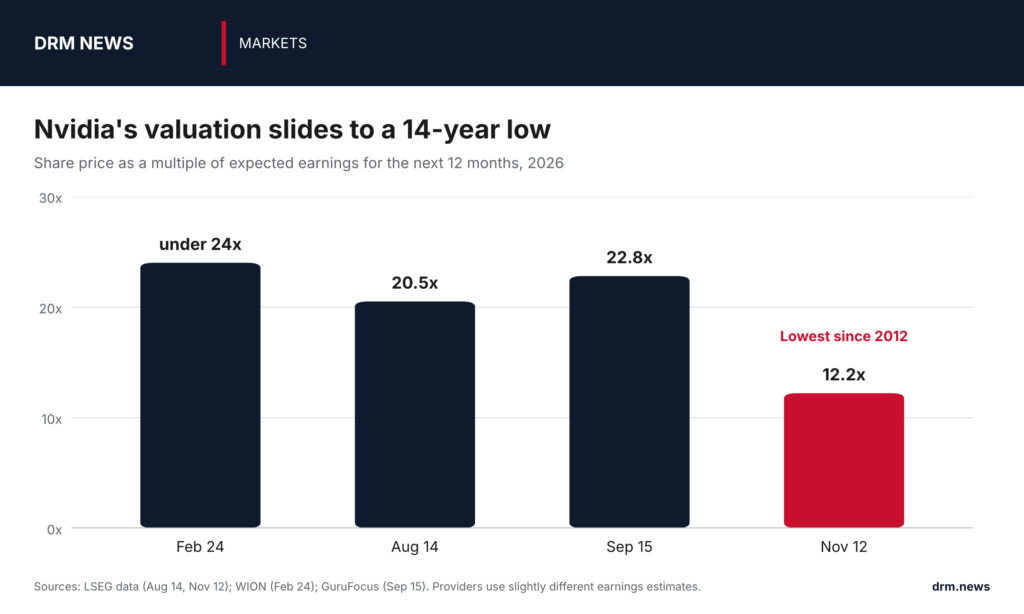
The chipmaker’s shares now trade at about 12 times expected earnings, according to London Stock Exchange Group data. In other words, investors are paying roughly $12 for every $1 of forecast profit. The multiple has not been that low since 2012.
It marks a major shift for the company whose chips sit at the center of the artificial intelligence boom. Until recently, investors were willing to pay far more for each dollar of Nvidia’s earnings.
The decline began before the Huang story broke. Nvidia shares, roughly flat so far this year, are down about 22% from their October peak, Dow Jones reported on Monday.
But the scandal has made things harder.
Nvidia’s board is looking into whether Huang was the target of a spy effort run by China. It began after The New York Times reported that he had a close relationship with Alice Huang, a former employee of Megaspeed, a Singapore-based cloud company.
United States officials believe she passed information to Beijing, the paper said. The two are not related. Huang has told his staff that he was not faithful to his wife.
On Wednesday, The Wall Street Journal reported that Nvidia was getting ready to push Huang out. That’s according to a Reuters link to the report. Nvidia hasn’t confirmed it.
Reuters columnist Mike Dolan said the market is now trying to work out what happens to the chipmaker if Huang goes. But he said it’s still not clear how the case will end.
Huang has run Nvidia since he helped found it in 1993, and much of the company is built around him. He is Nvidia’s fifth-largest shareholder with a roughly 3.6% stake, according to LSEG data, and keeps a tight grip on the company through an unusually flat structure in which dozens of executives report directly to him.
Yet he doesn’t have the final say over the board. Unlike Meta Platforms or SpaceX, Nvidia has no dual-class shares that would give its co-founder majority voting control.
There’s also no named heir. Some analysts say that makes the risk for shareholders even bigger.
The rest of the market isn’t helping.
On Tuesday, the yield on two-year United States government bonds rose to about 4.77%. It was the biggest one-day jump since April 2025. Traders watch that yield closely, because it shows where they think the Federal Reserve will take interest rates next.
The move came after a report showed prices rising faster than expected. That raised the odds of bigger rate hikes. And higher rates make it cost more for companies to borrow.
Some think the rush to build for artificial intelligence may itself be part of the problem. The surge of money flowing into data centers and power infrastructure is driving up demand, which can push prices higher.
The Fed sounded its own warning on Tuesday. Michelle Bowman, its vice chair for supervision, said debt tied to artificial intelligence is on track to pass $800 billion this year.
She said the firms behind the boom are getting more and more tangled up with each other, through loans, deals and promises to cover each other’s debts. If the bets don’t pay off, she said, the harm may not remain in the tech world. It could reach people and businesses far from Silicon Valley.
So investors are torn. A low price compared with profit can make a stock look like a bargain. But it can also mean people have started to doubt the profit forecasts in the first place.
Nvidia’s shares fell again on Thursday, as talk of Huang’s exit grew.
The company has said its board has no reason to think national security or its own secrets were put at risk. It says Huang is fully cooperating with the review.