Iranian President Masoud Pezeshkian seeks war damage compensation at COP31
Iran’s president told world leaders in Antalya that climate talks should cover the harm done by war. Current climate deals have no rule for that.
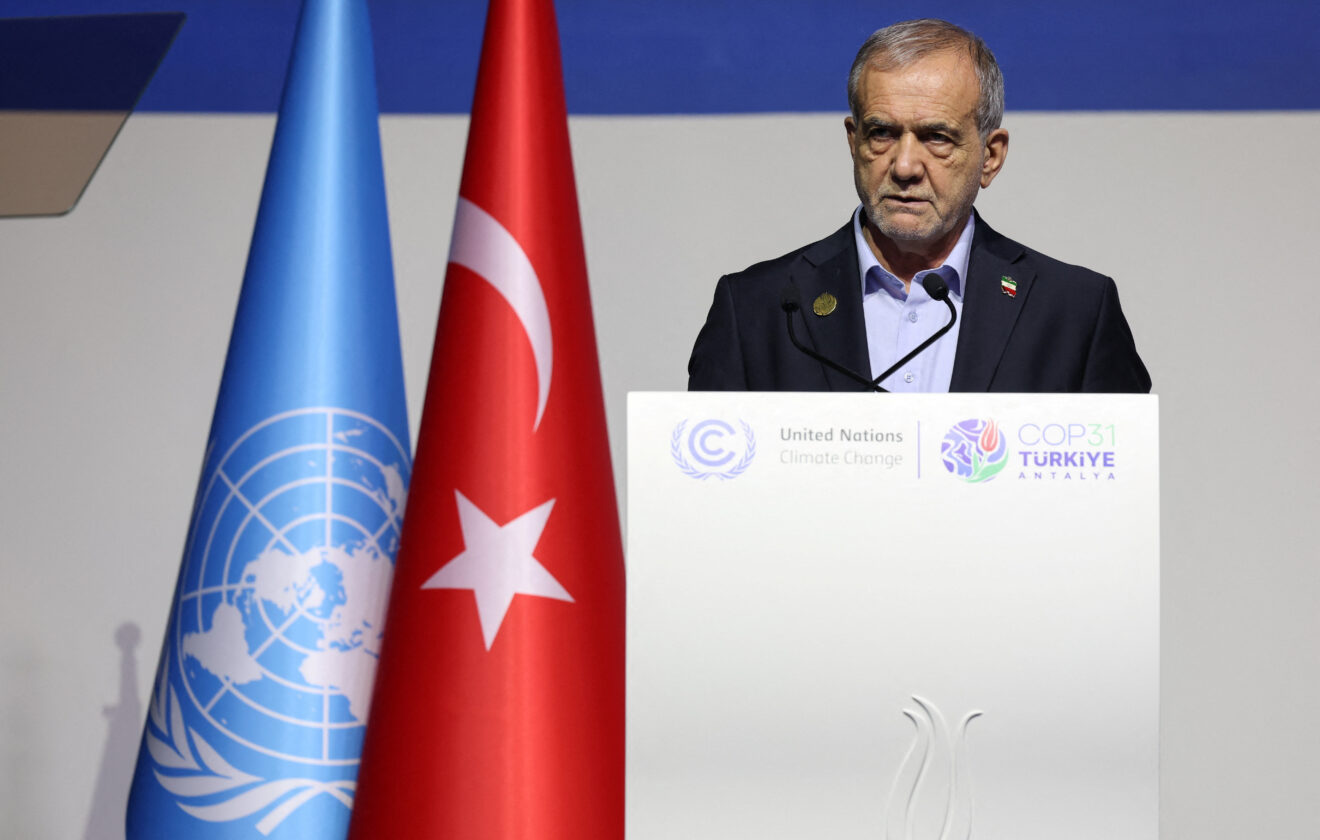
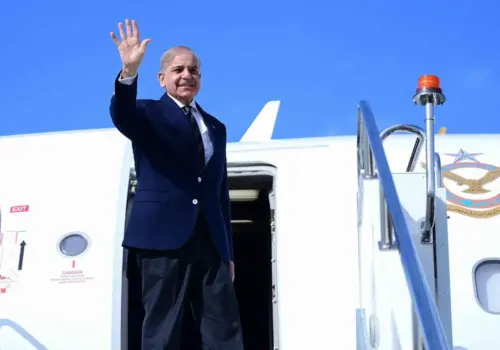
ANTALYA, Turkey, Nov 12 – Iran’s President Masoud Pezeshkian told the COP31 climate summit on Wednesday that his country wants compensation for the environmental damage caused by United States and Israeli strikes. In his speech, he said the issue is closely tied to the global fight against climate change.
He spoke on the third day of the two-week summit in Antalya, as heads of state delivered speeches one after another.
Pezeshkian urged world leaders to connect the commitments countries make on climate during peacetime with the responsibilities they bear during times of war. He argued that environmental destruction caused by conflict should be treated as part of the broader global effort to address climate change and protect vulnerable communities.
He said the world should set up a way “to document and assess the environmental damages caused by military aggressions.” And he said it should create ways to pay for that damage.
There is no such rule today. Global climate deals do include billions of dollars from rich countries to help poorer ones adapt to climate change and pay for its effects. But they say nothing about the harm caused by military strikes.
The United States and Israel launched their campaign against Iran in late February. The United States called it Operation Epic Fury, while Israel named it Operation Roaring Lion, the Jerusalem Post reported.
The war has since spread to Lebanon and the Gulf. It has involved repeated strikes on energy sites in Iran and across the region, as well as attacks on ships.
Iran, for its part, has attacked oil tankers several times as they pass through the Strait of Hormuz.
Those attacks have also harmed the environment. They have caused large oil spills, including two oil slicks that appeared in the Gulf in August after a major spill off the coast of Oman, Reuters reported at the time.
But the war may also have produced an effect few expected. A group of international scientists said in a report on Tuesday that global emissions from fossil fuels are on track to fall slightly this year.
They said this is partly because fuel prices remain high. It is also because more countries have turned to renewable energy since the war began.
Pezeshkian’s call came on the same day that United Nations Secretary-General Antonio Guterres warned leaders that the climate crisis is outpacing the world’s response. Guterres also pointed to the war, saying that three-quarters of humanity lives in countries that import fossil fuels and are exposed to price shocks they did not cause.
The United States did not send a delegation to the summit. It is staying away for a second consecutive year, after President Donald Trump withdrew the country from global climate cooperation.
Israel has not commented on Pezeshkian’s demand. Israel and the United States say their strikes were aimed at Iran’s nuclear and military sites and were intended to prevent Iran from developing a nuclear weapon. Iran denies seeking one.
Negotiators from nearly 200 countries are in Antalya to try to agree on a plan to increase the share of electricity in global energy use. They also hope to revive efforts to move away from oil, gas and coal, as countries face growing pressure to cut emissions and limit the worst effects of climate change.
The talks are taking place amid mounting concerns that global efforts to limit warming are falling behind. Scientists have warned that without deeper and faster cuts in emissions, the world will face more frequent heatwaves, floods, droughts and other extreme weather events. Delegates are expected to discuss financing for poorer countries, faster deployment of renewable energy and stronger measures to protect communities already affected by climate disasters.
The Summit ends on November 20, 2026.