Midterm elections poll reveals nine issues shaping how Americans vote
A Reuters/Ipsos survey taken in the last days of the campaign shows that voters are worried about prices, unhappy with the war in Iran and mostly sure that their votes will count.
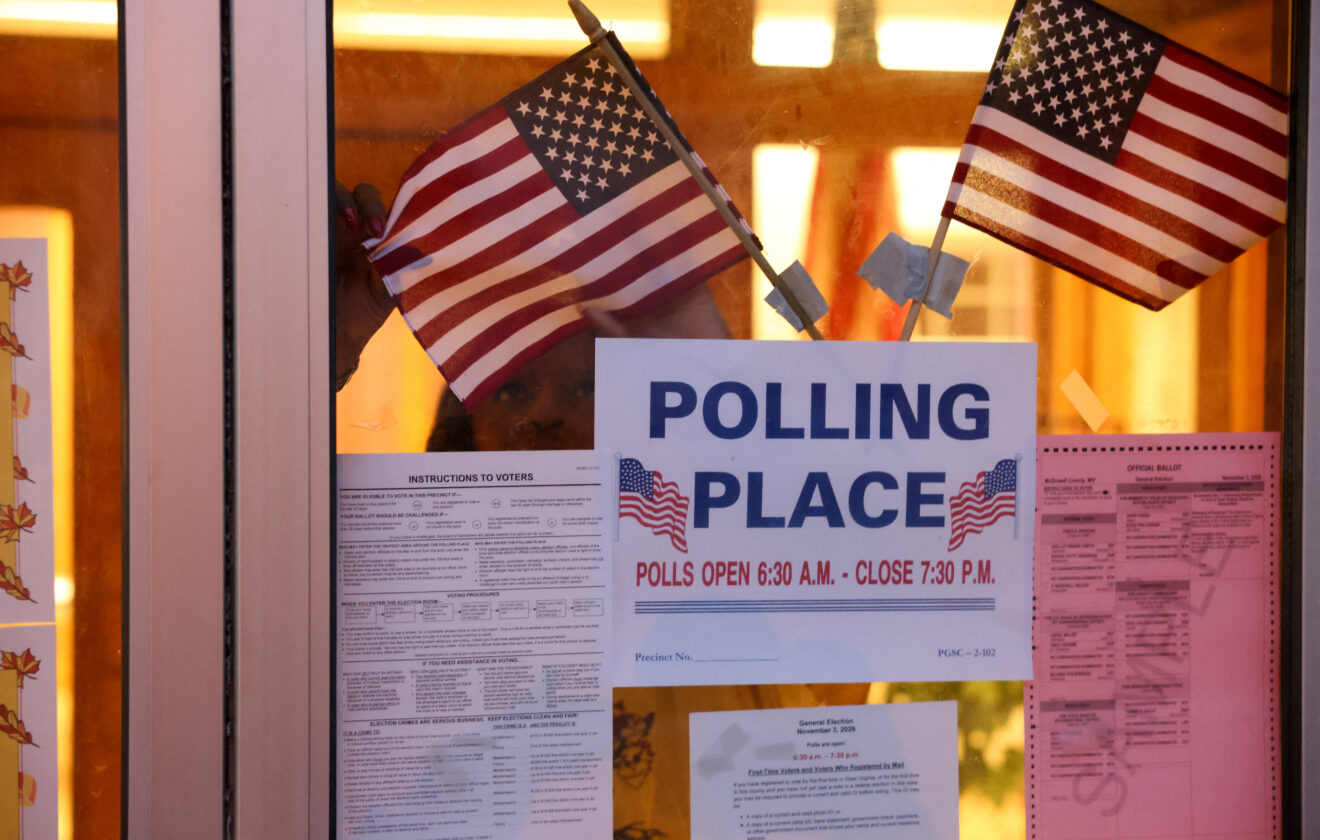
Americans are heading to the polls on Tuesday with the cost of living at the forefront of their minds, according to a new midterm election poll. Many voters also say they view their ballot as a way to send a message to President Donald Trump.
The Reuters/Ipsos poll asked 1,765 adults across the country for their views from Thursday through Monday. It is not an exit poll, which is the kind of survey that asks people questions as they walk out of a polling station. For registered voters, the margin of error was 3 percentage points.
At stake is control of Congress for the last two years of Trump’s term. Every one of the 435 seats in the House of Representatives is up for a vote, and so are 35 seats in the Senate. Republicans hold both chambers right now. Republicans hold 53 seats in the Senate, meaning Democrats would need to gain four more to take control.
Here is what the poll found on nine of the issues that voters care about.
The cost of living
Prices come first, and it isn’t close. Almost half of the registered voters in the poll, 48 percent, said the cost of living is the issue that matters most when they decide how to vote. Only 26 percent said democratic norms, and 13 percent said immigration.
That is about where things stood at the end of the summer, too. In late August, 47 percent of voters said the cost of living would decide their vote, and 71 percent said they didn’t like the way Trump was handling it.
Gas has played a major role in the economic pressures facing Americans. Prices at the pump rose sharply after the United States and Israel went to war with Iran in February, while diesel costs also increased, driving up the expense of transporting food and other goods across the country.
As a result, many people feel the impact every week. Government figures show that both prices and wages have risen by about 5.5 percent since Trump returned to the White House in January 2025, meaning most workers are no better off financially than they were then.
Borrowing has also become more expensive. The Federal Reserve raised interest rates in September and is expected to raise them again in December. For those hoping to buy a home, mortgage rates above 7 percent have put homeownership out of reach for many.
Donald Trump
Trump’s name is not on the ballot. But he has asked his supporters to vote as if it were, and he has held dozens of rallies to make the point.
For many voters, the effect has been the opposite. Among those surveyed who had already voted or planned to vote, 48 percent said they saw their ballot as a vote against Trump. Just 25 percent described it as a vote for him, while the remaining 25 percent said Trump played no role in their decision.
His approval rating is near the bottom. In September, a poll put it at 32 percent, the lowest of his political career. And in the seven Senate battleground states that The New York Times and Siena College polled at the end of the race, only 38 percent of likely voters said they approved of the job he was doing.
Iran
Most voters don’t think the war has been worth it. In the poll, 55 percent said the military action in Iran has not been worth the cost, 25 percent said it has been, and 18 percent said they weren’t sure.
Trump has said the war was needed to keep Iran from getting nuclear weapons. Iran, for its part, has kept most ships out of the Strait of Hormuz, and that has kept oil prices high.
The fighting has slowed considerably in recent weeks, and the two sides have been communicating through mediators. On Monday, Vice President JD Vance said that he and Trump feel optimistic about the prospects of reaching a deal. Later that same day, U.S. forces carried out strikes on Iran’s Qeshm Island, which officials described as defensive.
Election integrity
Voters mostly trust the system to count their votes. In the poll, 77 percent said they are confident that their ballot will be counted. At the same time, 45 percent said they think voter fraud is a widespread problem.
Trump has claimed that large numbers of people who are not citizens vote in United States elections. Election officials and many studies say that kind of voting is rare. Some officials worry that the administration could try to get in the way of the vote, or of the certification of results it doesn’t like.
The White House says it only wants to keep elections safe and secure. The Justice Department plans to send 1,000 monitors to polling places, a record number, and critics say that could scare some voters away.
Courts have intervened on multiple occasions. On Monday, the Supreme Court declined to block California from counting roughly 20,000 ballots that federal officials had challenged. The day before, a federal judge dismissed a lawsuit filed in Alaska by the Justice Department over the Senate race.
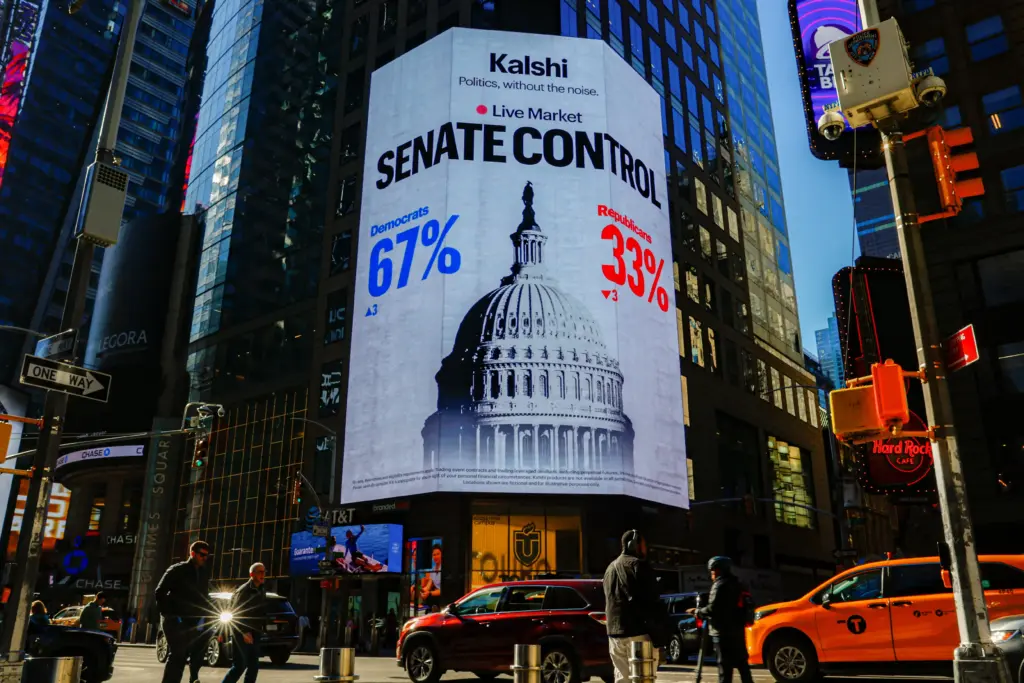
A screen displays a Kalshi advertisement on political betting featuring Senate control in New York City, US, October 27, 2026. REUTERS
Household finances
Many people say that they are worse off now. In the poll, 49 percent said their household finances have gotten worse since January 2025. Only 13 percent said things have gotten better, and 37 percent said they are about the same.
That is a difficult figure for Trump, who campaigned in 2024 on a pledge to make the economy boom. It is even more concerning among Hispanic voters, many of whom shifted their support to him two years ago. In this poll, 54 percent of Hispanic Americans said their financial situation has worsened, while only 10 percent said it has improved.
Yet the big numbers on the economy look good. Unemployment was 4.2 percent in September, and the economy grew at a 3.4 percent rate in the last quarter. Brian Jacobsen, chief economic strategist at Annex Wealth Management, said how people feel about their own money matters more on election day than the big figures do.
“Sentiment is the bigger driver of election outcomes,” Jacobsen said.
Transgender sports
Some voters care a lot about this issue. In the poll, 38 percent said keeping transgender girls and women out of women’s sports was a very important issue for them, or the most important.
On the other side, 25 percent said the same thing about protecting the rights of transgender people.
Data centers
The big data centers that run artificial intelligence have become part of the campaign. In the poll, 42 percent of registered voters said limiting how many get built was a very important issue, or the most important one.
People have had doubts for a while. Back in June, a poll found that only about one in three Americans liked how fast data centers were going up. Analysts on Wall Street say that if Democrats win control of Congress, they could launch new investigations into the artificial intelligence industry and the companies that operate these platforms.
Mega donors
There are very few limits on how much the very rich can spend to sway federal elections. But voters in both parties say they don’t like it. In the poll, 93 percent of Democrats and 71 percent of Republicans said it isn’t right for billionaires to spend tens of millions of dollars to influence an election.
And there is a lot of that money this year. Trump has raised close to $450 million for his super political action committee, and Elon Musk, the richest man in the world, has put more than $400 million into helping Republicans. Democrats have raised much more in small online gifts. All told, more than $11 billion has been spent on ads, a record for a midterm.
Political options
The poll found that voters lean slightly toward Democrats in the congressional races. However, they remain divided over which party has the better ideas, with 43 percent of registered voters saying Democrats have at least some good ideas and 39 percent saying the same about Republicans.
There is also some encouraging news for Republicans in the data. In the New York Times/Siena College polls, voters who made up their minds within the past month leaned Republican by nine percentage points.
Polling hours vary across the country. The first polls close at 6 p.m. Eastern time in parts of Indiana and Kentucky, while the final polls close in Alaska at 1 a.m. Eastern time on Wednesday.