Midterm election results put investors on watch over spending and AI
Wall Street is preparing for a possible change in control of Congress. A Democratic win could bring probes into artificial intelligence, while a Republican sweep could mean bigger deficits.
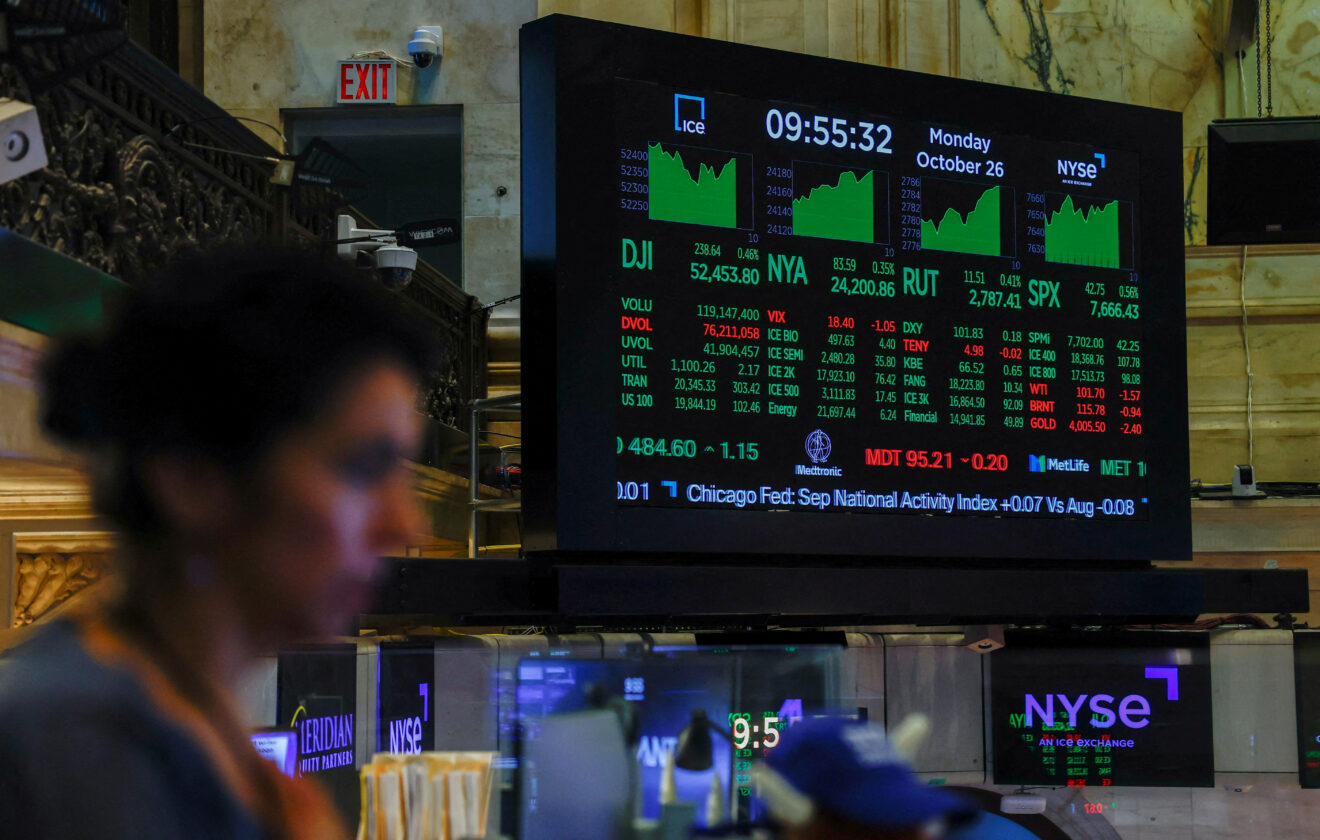
NEW YORK, Nov 2 – Investors are preparing for the results of Tuesday’s midterm elections in the United States. Their focus is on what a shift in control of Congress could mean for government spending, the debt ceiling, and the rapid growth of artificial intelligence.
Midterm elections do not usually cause major market movements. This year, however, the contests are taking place at a particularly sensitive moment.
The S&P 500 has gained about 27 percent since President Donald Trump returned to the White House in January 2025 with Republicans in charge of both chambers. Heavy spending on artificial intelligence and strong company earnings drove much of that rise.
Borrowing costs have climbed too. Treasury yields rose sharply after the United States and Israel attacked Iran in February, which set off a jump in energy prices. Those higher prices are now spreading into other parts of the economy.
Forecasts suggest Democrats are likely to win the House of Representatives, while control of the Senate remains less certain.
History offers some guidance on how markets tend to respond to midterm results. According to Ned Davis Research, the president’s party has lost the House in eight midterm election cycles since 1930. In five of those years, the S&P 500 rose for the remainder of the year.
In those years, the median gain from Election Day to the end of the year was 1.4 percent, according to the firm. That is slightly below the 1.9 percent median gain recorded across all midterm years.
Ed Clissold, chief United States strategist at Ned Davis Research, said a Democratic House could slightly cool the usual year-end rally. But it hasn’t generally stopped stocks from rising, he said.
“Conventional wisdom is that gridlock is good,” Clissold said. He added that stocks have done better under Democratic presidents than under Republican ones.
A strong Democratic result could hit the artificial intelligence trade hardest. Control of one or both chambers would give the party the power to investigate industries and regulators.
Ed Mills, a Washington policy analyst at Raymond James, said in a note that investigations could speed up efforts to set safety standards for advanced artificial intelligence models. Those efforts include independent testing and incident reporting. Probes could also hold data center developers more accountable, he said.
Public resistance to data centers is growing. Only about a third of Americans support the rapid pace of construction, according to a Reuters/Ipsos poll. Investors have placed large bets on rapid growth in artificial intelligence, leaving share prices vulnerable to sharp swings when confidence in that outlook weakens.
Democrats are also preparing to investigate links between Trump, his family, and the cryptocurrency and prediction market industries, according to recent media reports.
A divided Congress would carry its own risks. Investors say split control could increase the likelihood of government shutdowns and clashes over the debt ceiling, potentially putting further pressure on the United States’ credit rating.
Large deficits and rising interest costs are already a concern for investors. Some strategists warn that compromises pairing defense spending with health care subsidies could add to those deficits over time.
The dollar could fall if markets believe political conflict in Washington will slow economic growth.
Diego Barnuevo, a market analyst at Ebury, said negotiations between a Democratic Congress and the White House would likely be limited to must-pass legislation. That would include the federal budget and the debt ceiling, an issue expected to return in 2027. He argued that a Democratic sweep would be “neutral to mildly positive for the fiscal outlook,” because divided government could limit new spending.
Others are less convinced. Some investors do not expect Democrats to be significantly more restrained on spending, and they doubt that any election outcome will resolve the country’s worsening fiscal position. A Republican sweep, by contrast, could put greater pressure on Treasuries, since it would extend policies that may widen the federal deficit.
Joaquín Kritz Lara, chief economist and strategist at Numera Analytics, said that result would confirm the fiscal agenda of Trump and Treasury Secretary Scott Bessent. The administration might then push for more tax changes or a much larger defense budget, he said, which could worsen the country’s finances.
At first, higher yields could support the dollar. Karl Schamotta, chief market strategist at the payments company Corpay in Toronto, said a clear Republican victory might lift the currency in the early stages. However, he noted that markets could also interpret the result as approval for additional government spending financed through borrowing, as well as a more assertive foreign policy. Over time, that could encourage investors to increase their hedging against longer-term risks.
A strong Republican performance would also reduce concerns about potential investigations into artificial intelligence companies. With fewer regulatory and political threats, investors may see a clearer path for continued growth in the sector.
JPMorgan strategists said in a note that Republican control of Congress would likely provide the greatest support to artificial intelligence and infrastructure development. They cited steady policy, possible fiscal expansion, deregulation, and faster federal permitting as factors that could accelerate investment. In their view, a Republican sweep would create a more predictable environment for companies planning large, long-term projects in technology, energy, transportation, and construction.