Frankfurt Riots Leave Over 100 Police Injured After Gen Z Protests Sweep Germany
Tens of thousands marched peacefully in dozens of German cities on Saturday. In Frankfurt, hooded rioters smashed shops and threw petrol bombs at police.
FRANKFURT, Nov 2 – German ministers have promised tough punishment for rioters who looted shops in Frankfurt on Saturday night and hurt more than 100 police officers.
The violence came at the end of a day of youth-led protests across Germany. Tens of thousands of people marched in dozens of cities to call for better schools and lower living costs. Most of the rallies passed off peacefully. Frankfurt, the country’s financial center, did not.
As night fell, hooded rioters moved through the city center. They smashed shop windows and threw petrol bombs, rocks and bottles at emergency workers. Police posted a warning on X, telling people to stay away from the center or to leave it.
Roman Poseck, interior minister of Hesse, the state that includes Frankfurt, gave the details on Sunday. He said 17 shops were damaged and five of them were looted. Police had sent 1,300 officers onto the streets. More than 100 of them were hurt. Police arrested 54 people. The youngest was 13, and the oldest was 29.
“I am shocked by what I have seen,” Roman Poseck told reporters. He said there was no point in playing it down. “Things cannot go on like this,” he said.
He said most of the people arrested were German citizens. But he also said police believe they faced between 1,000 and 1,500 violent people, and that most of them were from immigrant backgrounds. He said that came from police information.
Hesse’s state premier, Boris Rhein, also blamed left-wing extremists and young people prone to violence, most of whom he said came from immigrant backgrounds, according to German media.
Germany’s Interior Minister Alexander Dobrindt, a member of the conservative Christian Social Union, vowed that those behind the violence would be identified and held accountable. “I expect there to be severe penalties,” he said, adding that Germany would not tolerate riots of this kind.
Dobrindt accused troublemakers from immigrant communities of acting in concert with left-wing extremists, though he offered no evidence for the claim or specified which groups were involved.
He also defended the police response, saying the deployment plan had worked. Large numbers of officers were positioned across many locations, which he said helped prevent the violence from escalating. Border checks were also intensified as part of the security measures.
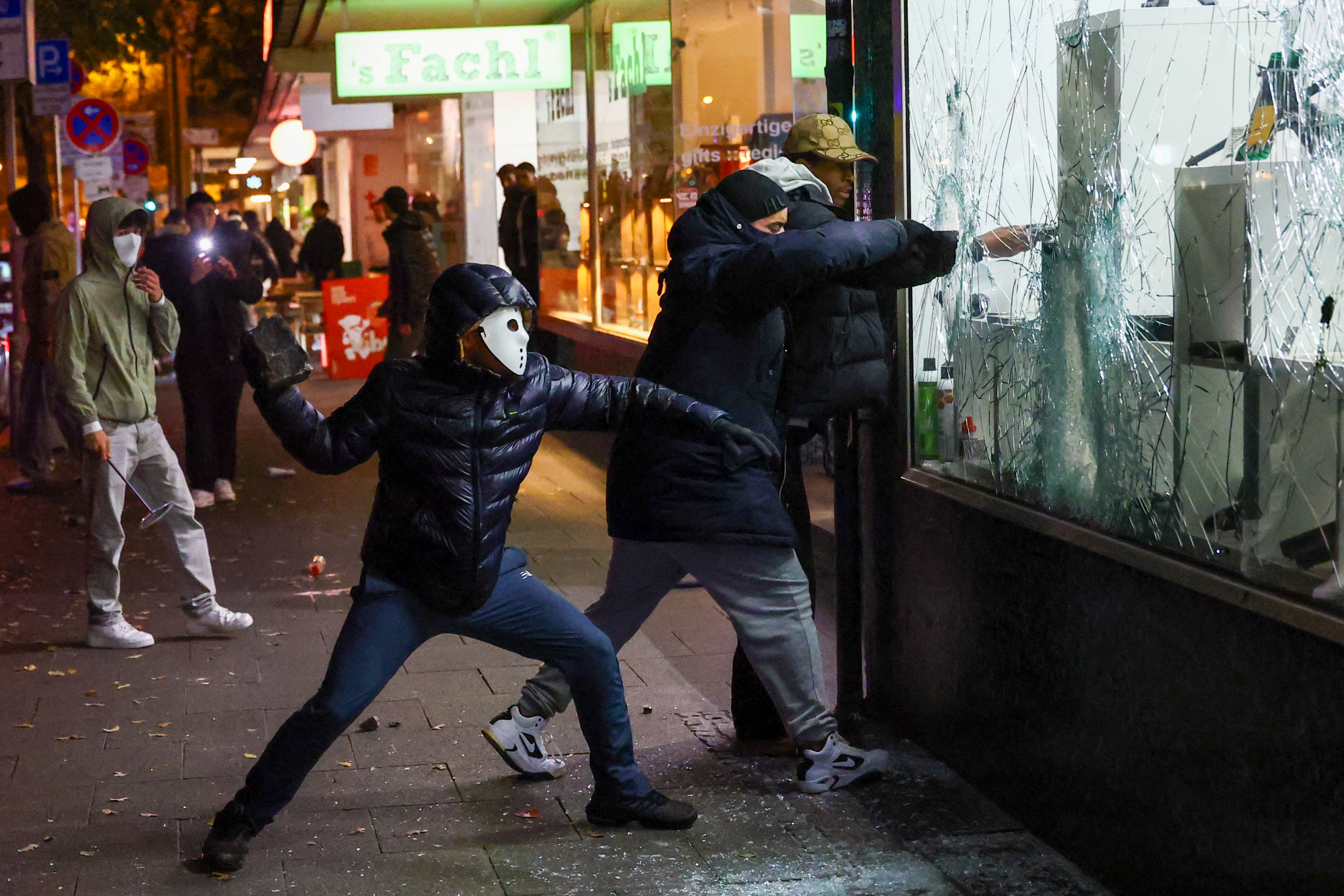
People try to break a window of a store selling weapons, during a nationwide protest by campaign group Gen Z regelt (Gen Z takes charge) against underfunding of schools, cuts to education, social services, culture and healthcare, rising living costs, and military conscription, in Frankfurt, Germany, October 31, 2026. REUTERS
Border checks had been tightened in the days before the protests, he added, out of concern that extremists from abroad might enter the country to incite further unrest.
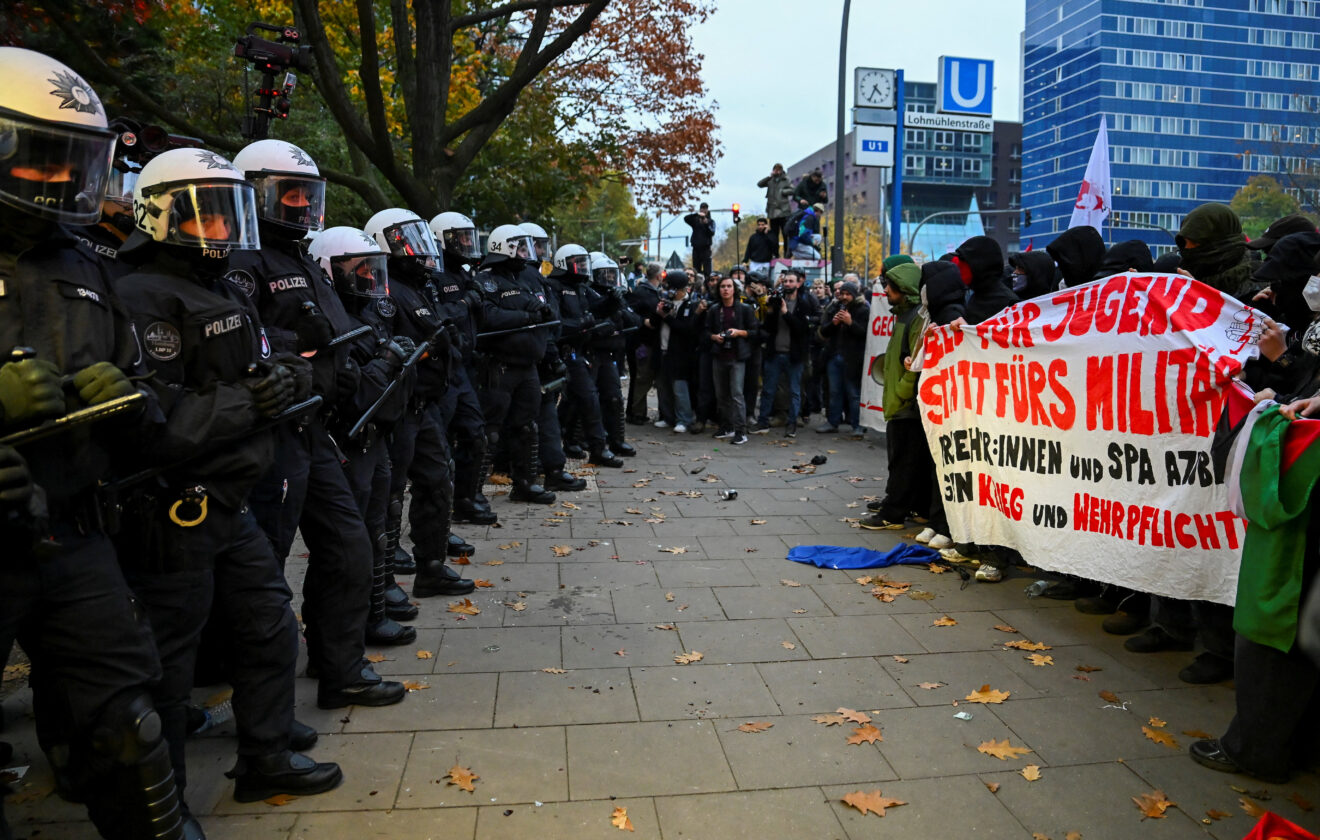
There was also trouble in other cities, though on a smaller scale. In Hamburg, several barricades were set on fire, while disturbances were reported in both Berlin and Cologne. Police said the incidents remained isolated compared with the larger demonstrations, but they added to concerns about the potential for violence at future rallies.
The protests were organized by a campaign group called Gen Z regelt, which translates to “Gen Z takes charge.” Rallies were held in 34 cities across Germany, including Berlin, Frankfurt, and Munich, drawing young people, students, and activist groups from a wide range of backgrounds.
The group says it opposes compulsory military service and is calling for greater investment in education. Organizers argue that many young Germans are struggling to keep up with rising living costs, and they want the government to do more to support healthcare, housing, and schools. They say the protests are about securing a fairer future for the next generation, rather than simply reacting to a single policy issue.
Lina Friedrich, a spokesperson for the group, addressed supporters in Berlin on Saturday. She said the movement was fighting for peace and freedom, not war and coercion. She said its main priorities were stronger support for healthcare and schools, as well as a fairer distribution of society’s burdens.
Turnout, however, fell short of organizers’ expectations. They had anticipated around 182,000 participants, but police in Frankfurt, Munich, and Berlin counted up to 18,000 protesters across those cities, roughly half the figure organizers had claimed.
Authorities had warned of possible unrest in the days before the demonstrations. Germany’s federal interior ministry said that parts of the far-left scene, as well as groups linked to extremists abroad, had helped rally support.
On Friday, Roman Poseck cautioned that some people were thinking of scenes from France: looting, burning buildings, and attacks on police—and said France must not become a model for Germany. Businesses in several cities took precautions ahead of the protests. In Berlin, some luxury stores along the Kurfürstendamm shopping street closed early, while shops in other cities boarded up their windows.
The organizers say the pressure on young people in Europe’s largest economy is growing. Steve, an 18-year-old who was due to speak at a rally in Munich, aimed his words at Chancellor Friedrich Merz. He said the government had answered young people only with more cuts and more burdens. He said they would keep using their right to protest until the government stopped ignoring them.
Germany has struggled to reignite economic growth, while facing mounting pressure on its pension system and public services as the population ages and the working-age population shrinks.
Questions have also been raised about who is truly behind the campaign and whether it is genuinely youth-led. In reality, a broad coalition of political and civic organizations is involved. Germany’s national umbrella body for school students has distanced itself from the movement, announcing plans to hold its own day of protest on November 20.
Sean Baker, a student at the Technical University of Berlin, said he joined the protests because of the poor state of buildings on his campus. He said some rooms look like an abandoned building, even though students are expected to study there every day.
The German protests follow a wave of youth-led protests across Europe this year. In Serbia, student activism helped remove the country’s long-time leader at the ballot box. In France, protests turned into rioting and looting in mid-October. They continued on Saturday for a third weekend, but this time they were mostly peaceful.