Byron Donalds wins Florida governor’s race, becoming state’s first Black governor
The Republican congressman beat Democrat David Jolly in one of the most closely watched races of the midterms. He will succeed Ron DeSantis in January.
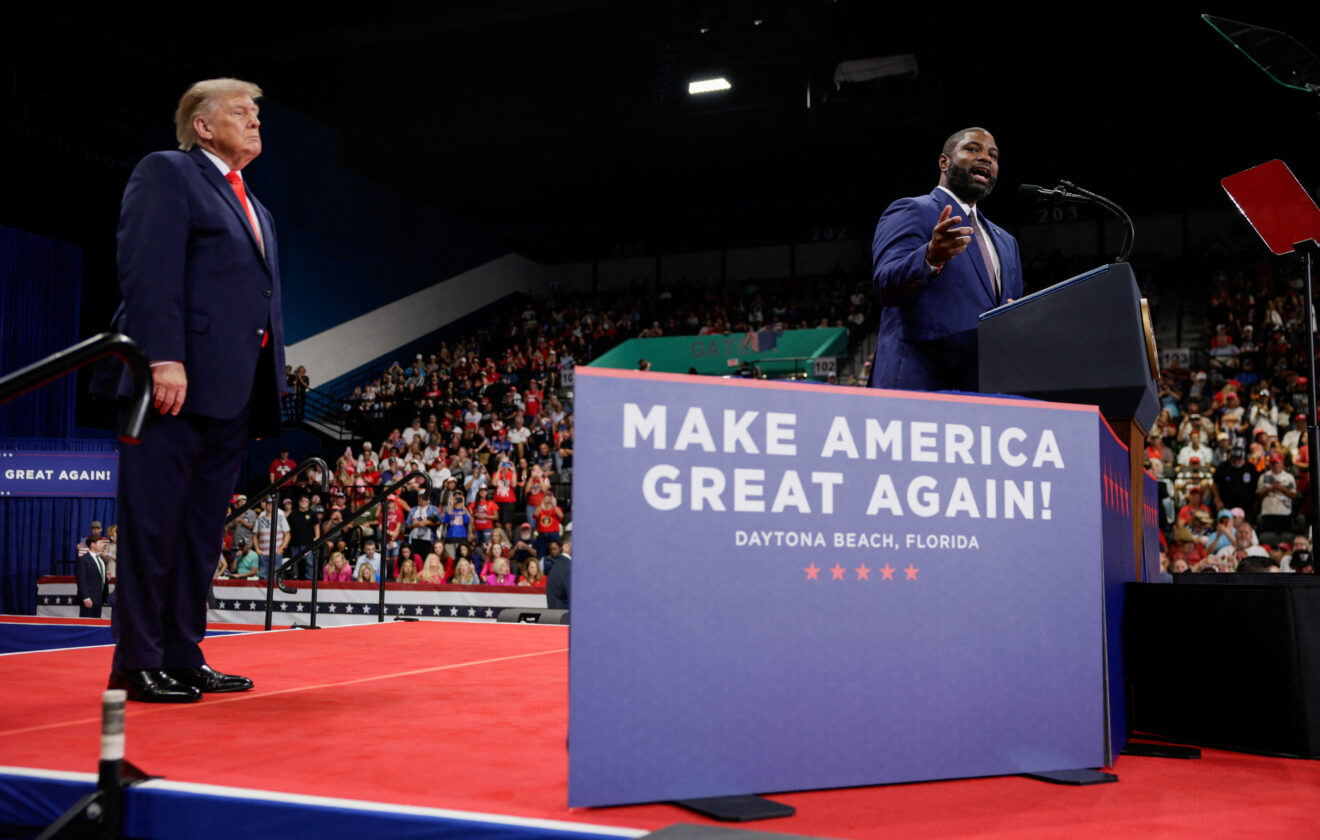
MIAMI, Nov 4 – Republican Byron Donalds won the race for governor of Florida on Tuesday, defeating Democrat David Jolly and becoming the first Black governor in the state’s history.
The Associated Press projected Donalds as the winner in one of the most closely watched contests of the midterm elections.
Donalds will succeed Republican Governor Ron DeSantis, who is unable to run again due to term limits and will leave office in January. DeSantis, a former presidential candidate, has led Florida for eight years, overseeing a period of rapid population growth and economic expansion.
President Donald Trump endorsed Donalds. Trump appeared with him twice in the final days of the campaign, at rallies in Fort Myers and Daytona Beach.
That came even though Donalds had seemed to put some distance between himself and the president earlier in the race. Trump has grown unpopular nationwide over the war with Iran and the rising cost of living, and that had threatened to cut into Republican support in a state he won three times.
Both parties treated the race as a turning point after the DeSantis years, and both sent well-known figures to Florida to campaign.
Former President Bill Clinton campaigned for Jolly and headlined a fundraiser that raised $3 million for his campaign. Former President Barack Obama also endorsed Jolly.
DeSantis’s record was at the center of the race. During his time in office, he focused heavily on cultural issues. He pushed laws affecting lesbian, gay, bisexual, transgender and queer people, reshaped the state’s public universities and helped carry out Trump’s immigration crackdown in his second term.
Donalds embraced that record. He promoted DeSantis’s endorsement and described his campaign as “a continuation of the DeSantis-era of success.”
The Florida Republican Party warned in an advertisement that Jolly wanted to undo the progress DeSantis had made during his time.
Jolly did not dispute that characterization. Instead, he centered his campaign on Florida’s rising cost of living, highlighting higher housing costs and the sharp rise in property insurance rates.
“I’ll fight to bring down costs and always put you first,” Jolly said in his final television and social media messages.
Donalds now inherits a state that remains deeply divided. While Florida’s economy has grown rapidly and its population has expanded, that growth has also driven up living costs and led many residents to leave the state.
In a September poll conducted by the James Madison Institute, nearly 70 percent of respondents said economic pressures and the cost of housing were their top concerns.
The composition of the state legislature will also play a major role in shaping Florida’s direction under its new governor. In recent years, a Republican supermajority approved nearly every measure DeSantis put forward.
However, Republican leaders in the state House and Senate have signaled that they intend to act more independently going forward.
Donalds, 47, represents southwest Florida in the U.S. House of Representatives. He was first elected to Congress in 2020 and has been a strong ally of President Trump.
Jolly is a former Republican congressman from the Tampa Bay area. He left the Republican Party during Trump’s first term and later joined the Democratic Party.
The race was one of 36 gubernatorial contests on the ballot Tuesday.
In Florida’s special Senate election, Republican Senator Ashley Moody defeated Democrat Angie Nixon, according to an Associated Press projection. Early vote counts showed a much closer margin than in previous statewide races in Florida.
Donalds is expected to be sworn in as governor in January, taking over a state that continues to face major questions about housing, insurance, and the pace of its growth.