Francophonie Summit In Cambodia Shadowed By Congo-Rwanda Rift
French-speaking nations met in Cambodia for their summit this week. A bitter dispute between Congo and Rwanda hung over the choice of the group’s next leader.
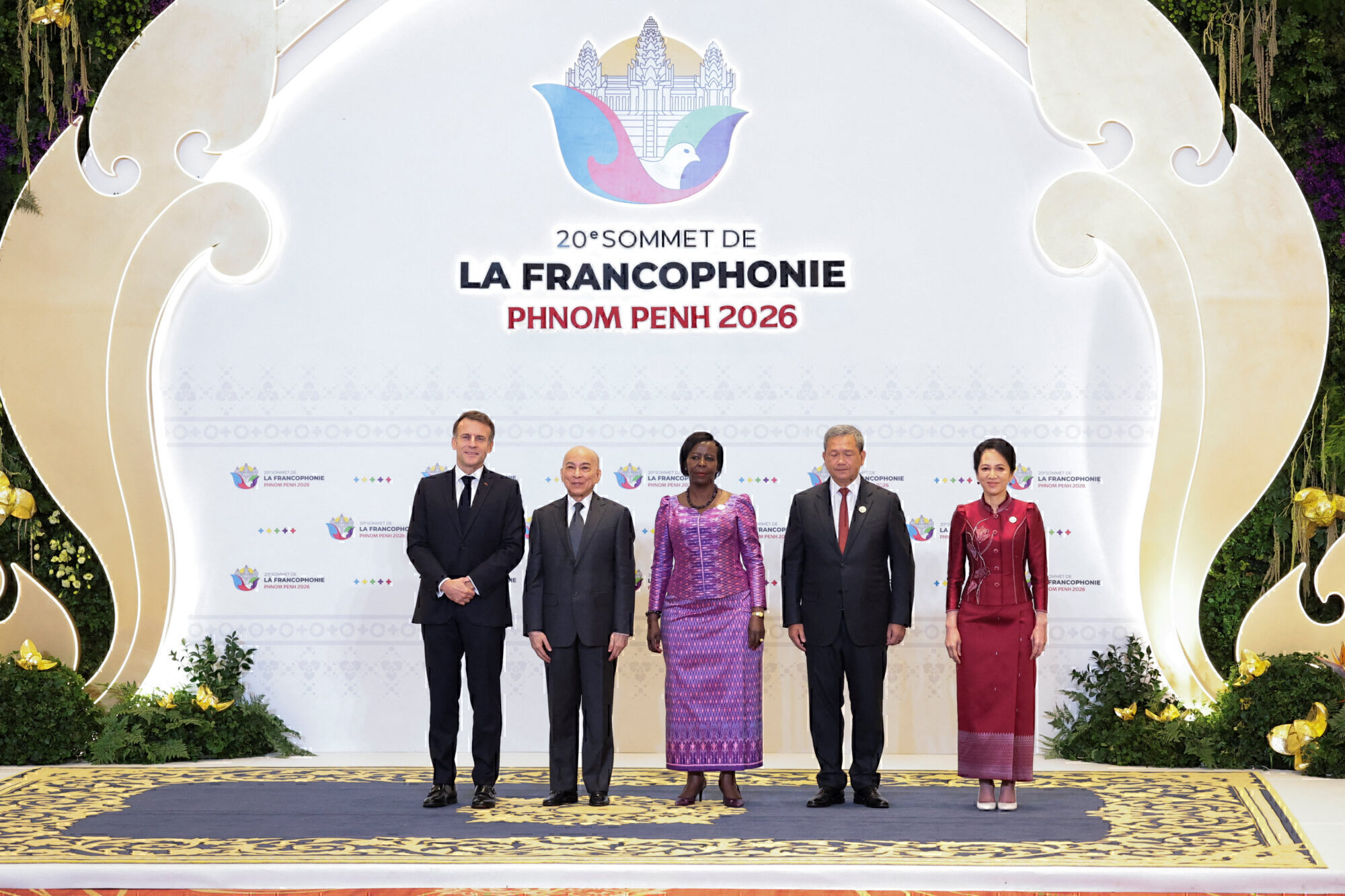
PHNOM PENH, Nov 15- The Francophonie summit of French-speaking nations met in Cambodia this week, with a bitter feud between two African members, the Democratic Republic of Congo and Rwanda, hanging over the choice of the group’s next leader.
The International Organization of La Francophonie held its three-day meeting in the Cambodian capital, Phnom Penh, through Monday. The group is a loose alliance of 90 member states and governments. Of those, 53 are full members, five are associate members, and 32 are observers.
About 20 government leaders were expected to attend. Among them were French President Emmanuel Macron, Canadian Prime Minister Mark Carney, Vietnam’s To Lam, Rwanda’s Paul Kagame and Congo’s Felix Tshisekedi.
Cambodia took over as chair of the summit from France, which hosted the last meeting in 2024.
The most sensitive item was the vote on the group’s secretary-general, leader and chief executive, for the next four years. Leaders were due to decide on Monday.
At first, the race included candidates from both feuding countries. Rwanda’s Louise Mushikiwabo is seeking a third term. Congo put forward Juliana Lumumba, the 71-year-old daughter of the country’s independence hero, Patrice Lumumba.
But on Saturday, Congo withdrew Lumumba from the race. It said it was backing Dacian Ciolos, a former prime minister of Romania, to build “consensus around a unifying candidacy.”
Rwanda’s foreign minister later said Mushikiwabo would stay in the race.
The dispute is tied to the war in eastern Congo. Congo, the United States and United Nations experts accuse Rwanda of backing M23, one of about 100 armed groups fighting for control in the mineral-rich region along the Rwandan border. Rwanda denies supporting armed groups in Congo.
Congo has threatened to leave the organization if Mushikiwabo is reelected.
That would be a major loss. Congo has more than 110 million people, over 40 million more than France. It is the most populous country where French is an official language.
Macron’s office said on Saturday that most members agreed on the need for consensus on the leadership. It said Macron would raise the issue with his African counterparts.
France has a strong voice in the decision. It’s the largest contributor to the organization’s 2026 budget of 71.7 million euros, or about $79 million.
The group has already lost members. In March 2025, Mali, Niger and Burkina Faso announced their departure after being suspended over military coups. Mali said the suspensions violated its sovereignty.
The exits also came as several French-speaking African countries pushed back against what they saw as heavy French political, military and cultural influence.
Macron arrived in Phnom Penh to a welcome from traditional Apsara dancers. He later met Cambodian Prime Minister Hun Manet. Macron said on X that he wants to open new markets in Cambodia for French businesses.
His trip comes as he faces unrest at home. Earlier this month, more than 600,000 people took to the streets in France to demand higher wages and back a student protest movement. The protests have led to thousands of arrests and hundreds of injuries.
Before leaving for Malaysia, Macron was set to visit the Angkor World Heritage Site near Siem Reap. There, he and King Norodom Sihamoni were to mark the end of a French-backed restoration of the West Mebon temple.
Most of the summit’s agenda wasn’t in dispute. Leaders were set to approve documents on peaceful coexistence, economic and cultural cooperation, peace-building and the protection of cultural heritage.
The summit’s slogan was “Reinvest in Peace for Shared Prosperity and Lasting Stability.” It’s seen as a nod to Cambodia’s recovery from years of war in the late 20th century.
Some local activists used the meeting to press for more freedoms in Cambodia, which critics describe as a one-party state in practice. United Nations Special Rapporteur Tom Andrews urged delegates to press the government to free detained rights activists.
“No one should be detained for defending human rights,” Andrews said.
Cambodia has deep roots in the organization. Its late king, Norodom Sihanouk, was one of four founders of the agency in 1970 that later became the group. Cambodia joined as an observer in 1991 and became a full member in 1993.