New Tariffs Hit China, EU And 12 More US Trading Partners
Washington has proposed capped duties on 14 trading partners over excess industrial capacity. China calls the charge false, and Brazil faces separate levies.

WASHINGTON, Nov 26 – The United States has proposed new tariffs on 14 major trading partners, including China, Japan and the European Union. President Donald Trump is pressing on with his trade policy despite his Republican Party’s heavy losses in the midterm elections.
The United States Trade Representative’s office announced the plan on Wednesday. It set maximum potential rates of 20 percent to 40 percent to counter what it calls excess industrial capacity promoted by these countries. But the office said it intends to cap the new duties at the lower levels agreed under trade deals that are either complete or still under negotiation.
The proposals follow an eight-month investigation into unfair trade practices. It began in March, weeks after the Supreme Court struck down Trump’s broad global tariffs, which had been imposed under a national emergencies law.
This time the administration is relying on Section 301 of the Trade Act of 1974. It’s a court-tested law that lets the United States respond to foreign trade practices.
China faces the highest rate under the plan, with a capped rate of 20 percent on top of duties of about 25 percent imposed during Trump’s first term.
That rate would comply with a trade truce between Washington and Beijing that expires on January 10. But if the truce falls apart, China’s rate would rise to 40 percent, the trade office said.
Vietnam would face a capped rate of 20 percent if it reaches a trade deal with the United States, and 35 percent if talks fail. India, which also has no deal yet, would face 17 percent with an agreement and 25 percent without one.
The office proposed a rate of 18 percent for Cambodia, Indonesia, Malaysia, Thailand and Bangladesh. Japan, South Korea, Taiwan, the European Union and Switzerland would pay 15 percent, including existing duties, while Singapore would get the lowest rate, at 10 percent.
Mexico and Norway were left out of the plan because investigations into their trade practices are still under way, United States Trade Representative Jamieson Greer said.
The new tariffs would not take effect until after a public hearing on January 25. They would not stack on top of separate duties on steel, aluminum and cars, or on tariffs from an earlier probe into forced labor. And Greer said they would not apply to about $30 billion of Chinese goods now being considered for tariff cuts.
Greer said the tariffs would “level the playing field for American workers.”
He said many trading partners have for decades used strategies built on wage suppression, state support and other practices that, in his view, have worn down American manufacturing.
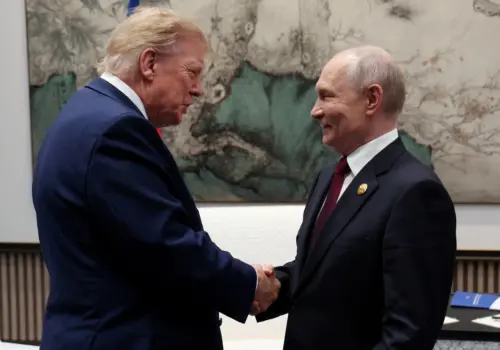
China rejected the charges. A spokesperson for its embassy in Washington stopped short of threatening retaliation and urged both sides to carry out the agreements reached by Trump and Chinese President Xi Jinping.
“The so-called issue of ‘industrial overcapacity’ does not really exist,” the spokesperson said.
Other governments voiced concern too. The European Commission rejected the tariffs and said it would examine the reasons behind them, while noting that the rate is limited to the 15 percent already agreed. Japan called the move regrettable, and Singapore said it disagrees with the findings and is in talks with Washington to lower its rate.
Vietnam’s Deputy Prime Minister Bui Thanh Son said the rate does not match the reality of trade ties between the two countries. But South Korea’s trade minister said a 15 percent rate would be a decent outcome, since it fits a limit agreed earlier.
Separately, Washington proposed a 10 percent tariff on finished Embraer passenger jets from Brazil and higher duties on Brazilian sugar above quota levels. Greer said months of talks with Brazil had made no meaningful progress.
“Brazil will not yield to such threats,” President Luiz Inacio Lula da Silva’s office said.
Stock markets fell on Wednesday, and the prospect of new trade barriers added to a sell-off in technology shares. The Nasdaq Composite dropped more than 3 percent.
Trump’s tariffs and their effect on living costs were a major issue in the midterm elections, which the Democrats won by a wide margin. A Reuters and Ipsos poll taken after the vote found 62 percent of people backed Democratic efforts to repeal them.
Senator Ron Wyden of Oregon, who is expected to chair the Senate Finance Committee from January, said voters had rejected Trump’s trade agenda less than a month ago.
“I will use every tool at my disposal to end Trump’s disastrous tariffs,” Wyden said.
But Nathaniel Halvorson, a former trade office official now at the law firm Baker McKenzie, said there is support from both parties in Congress for tackling excess capacity, which is largely centered in China.
The new tariffs are expected to take effect next year, after rounds of public consultation.