Black Friday Tests Retailers As Tight Budgets Meet AI-Savvy Shoppers
US shoppers are expected to spend more this Black Friday, but inflation is driving much of the rise as households trim budgets and turn to AI for bargains.
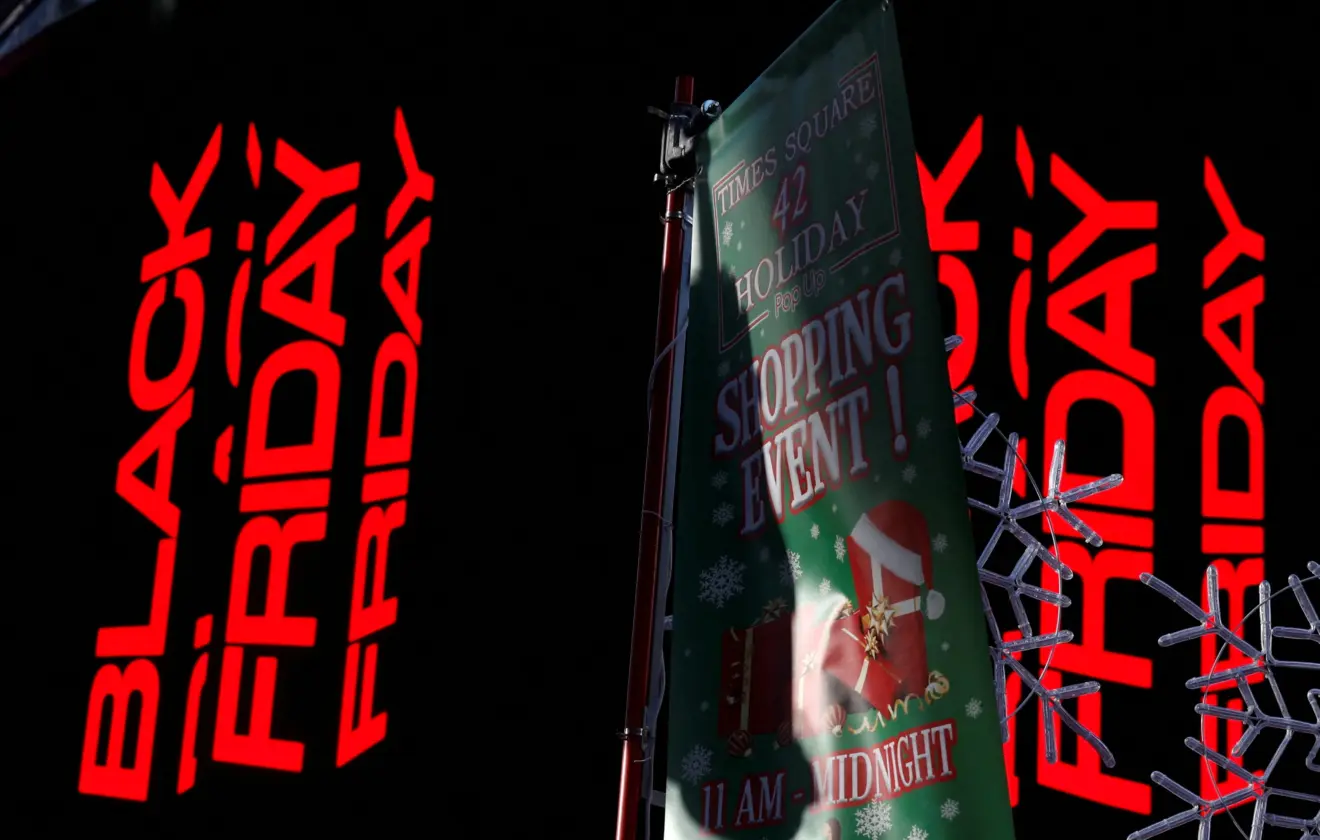
NEW YORK, Nov 27 – US shoppers are expected to spend more than ever this Black Friday, but higher prices are doing much of the work. Inflation at 3.8% and rising fuel costs have left many households more careful with their money, even as retailers compete for an expected $1 trillion-plus in holiday sales.
According to several economic forecasts, holiday spending beginning with Black Friday is expected to rise by 4 to 6 percent compared with last year. Much of that increase reflects inflation, which is about a percentage point higher than in each of the past two years.
The National Retail Federation (NRF) expects November and December sales to grow 4.2% from a year earlier to $1.013 trillion, faster than the 3.1% growth seen in 2025. The Mastercard Economics Institute and EY Parthenon both forecast growth of more than 5%. Final figures often end up above pre-holiday estimates.
Fewer people may turn out for Black Friday weekend, though. The NRF estimates 182.7 million consumers will shop over the Thanksgiving weekend, down from 202.9 million last year. In a November survey by the trade group, 82% of consumers said they were taking steps to keep holiday costs down, such as buying cheaper gifts.
Felicia Cox, a 50-year-old sales representative in Los Angeles, said her spending would be about the same as last year, but she was choosing presents differently. “I want to get more gifts that people will actually use or need,” she said while shopping at a Marshalls store. “I feel like people aren’t able to afford as much stuff.”
A Deloitte survey of 1,200 consumers in October found 87% planned to shop during the five days from Thanksgiving to Cyber Monday on Nov. 30, the highest share in a decade. Spending over that period is expected to stay flat at $624 per shopper.
Katie Thomas, who leads the Kearney Consumer Institute, said people still like to spend at the holidays despite a “persisting undercurrent of stress”. Kearney’s survey found middle- and lower-income shoppers, many of whom have been switching to cheaper goods for months, were more likely than wealthier ones to cut back.
Retailers heading into Black Friday have noticed. Target, Dollar Tree and Kohl’s have all pointed to belt-tightening on recent earnings calls. Kohl’s Chief Executive Michael Bender said on Tuesday that consumers were “looking to stretch every dollar”. Walmart, Ross Stores, Gap, Bath & Body Works and Lowe’s have also given cautious forecasts for the season.
Most spending forecasts were made before the recent stock market correction that followed the midterm elections, along with turmoil at chipmaker Nvidia and growing fears of an AI bubble. UBS analysts said in a note on Tuesday that the decline could weaken the wealth effect that has encouraged affluent shoppers to spend on gadgets and accessories.
Among Black Friday categories, toys have been hit especially hard by higher costs for plastics and other oil-based materials. Toy prices have risen 13.2% since January, and Barbie maker Mattel cut its annual forecast this month as consumers pushed back on prices.
Some products are holding up the category. Best Buy and Target have both named trading cards, including Pokémon and Magic: The Gathering, as a key source of growth. NeeDoh squishy toys sold for $24.99 on Amazon in October, nearly three times their price a year earlier, according to e-commerce marketing platform Omnisend.
Rick Woldenberg, chief executive of toy maker Learning Resources, said demand looked roughly flat but was hard to judge before the holiday. “People can’t shop until they have their turkey,” he said.
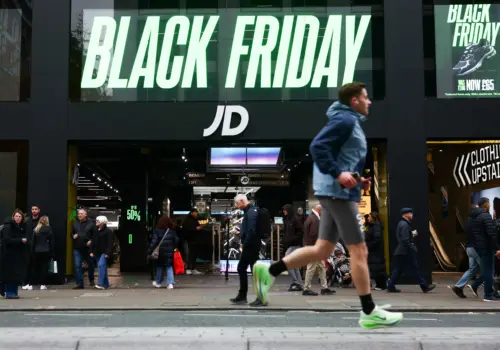
Black Friday itself has changed. What was once a single day of crowds queuing before dawn has stretched into weeks of online and in-store deals. October events such as Amazon’s Prime Big Deal Days and Target’s Circle Week now open the season, and more than half of the consumers Deloitte surveyed had already bought gifts during those sales.
Costco started its holiday promotions on Oct. 30 and launched another round on Nov. 16. Walmart’s “Deals & More” event began on Nov. 12 and runs to Dec. 2. Amazon and Best Buy started their Black Friday sales on Nov. 19.
Electronics remain among the most heavily discounted goods. A Reuters review of retailer websites found Walmart selling an 85-inch Vizio Quantum TV for $498, down from $698, and Best Buy offering a 65-inch TCL TV for $229.99, down from $469.99.
More shoppers are also using artificial intelligence to hunt for bargains. Nearly one in five now begin their shopping with AI tools, according to Salesforce, which expects AI and digital agents to influence $75.8 billion, or 21%, of global Cyber Week sales. The company said AI-driven traffic to retail websites has more than doubled from a year earlier.
That could change when the best holiday deals appear. Ryan Orabone, a consultant at Spaulding Ridge, said that as shoppers use AI to find bargains and retailers use it to change prices quickly, the deepest discounts could arrive closer to Christmas. “Don’t jump on the first deal you see,” he said.
Not every brand is taking part in Black Friday. Italian fashion label Pinko is sitting out the event for the first time. Chairman Pietro Negra said the decision would cost the company about €2 million ($2.19 million) in revenue, but the effect on profit would be far smaller, and margins were his priority. He said discounting could turn into a vicious cycle.
Outdoor retailer REI closes its stores on Black Friday and gives staff the day off, while The Ordinary, a skincare brand owned by Estee Lauder, shuts its stores and runs blood donation drives in New York and Toronto. British outerwear maker Buffalo Systems says it stays out because it is a small UK-based business.
Shikha Jain, a partner at consultancy Simon-Kucher, said five years of high inflation had made shoppers doubt whether advertised discounts were real. “There has been a serious erosion of trust,” she said.
Other small brands use the day differently. British beauty company UpCircle, which makes products from food industry byproducts, offers a 25% discount while posting criticism of overconsumption on Instagram. Founder Anna Brightman said the company makes 20% of its yearly online sales in the three weeks around Black Friday.