Rubio Says Recent Tech Outages Are Unrelated And Not A Cyberattack
Marco Rubio says there is no evidence linking a week of outages that hit flights, banks and major tech firms. Experts blame old systems that are being upgraded quickly.
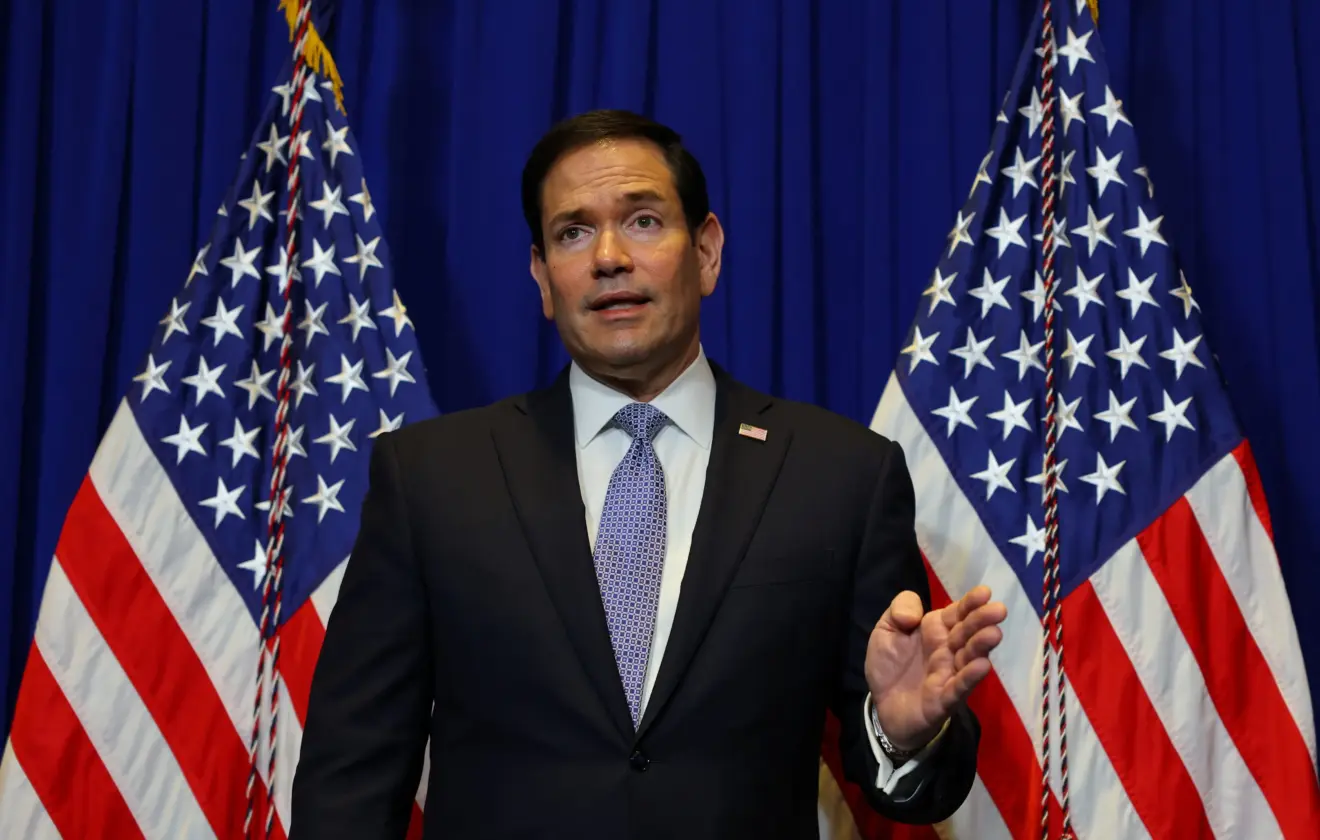
WASHINGTON, Nov 18 – Secretary of State Marco Rubio has rejected fears that a string of tech outages over the past week are connected, telling reporters there is “zero evidence” of any link between them.
The outages grounded every flight in the United States for hours and disrupted services at major banks, Apple and Microsoft. Many people online have suggested they could be part of a coordinated plot.
Rubio said he understood that people were afraid.
“We are not under systemic attack,” Rubio said. He said the events were unrelated to one another.
He said that, based on the information available so far, each outage appeared to have a separate explanation and that none had been linked to a cybercriminal, a hostile group or a foreign country.
Rubio was asked whether the administration was concerned that public fear could lead people to stockpile goods or rush to withdraw money from banks.
He said the best response was for the government to share everything it knew with the American people.
His remarks came hours after Director of National Intelligence Jay Clayton addressed the issue. Clayton told Fox News that the outages were not the result of a cyberattack.
He said many institutions were patching or upgrading their systems, which had caused some disruption.
Every company and agency affected has said the problems were cyber-related and were not caused by an outside actor.
The disruptions have come almost every day since Thursday.
That day, a large Microsoft outage knocked out many of its services, including email, for more than 24 hours.
On Friday, the Federal Aviation Administration halted all departures from the country for more than four hours. It was the longest such halt since the September 11, 2001 attacks. The transportation secretary said the cause was technical, linked to a copper wire upgrade and old equipment.
On Monday, a technology failure at United Airlines delayed about 150 flights. A software problem at JPMorgan Chase also disrupted service at the largest bank in the United States. Both companies blamed software issues.
On Tuesday, Apple users lost access to iCloud and Apple Pay for a time. The company said the outage was caused by an internal update, not a cyberattack.
On the same day, a highly classified network used by the National Security Agency for internal communications also went offline for some time.
Cybersecurity experts say there is no evidence linking the events. Many of the problems appear to have resulted from updates to aging systems.
Kris Beevers, chief executive and co-founder of the network management company NetBox Labs, said he had seen the theories spreading on social media.
“There is no conspiracy here,” Beevers said.
He said the real story is more ordinary. The systems that run the world are changing faster than ever, he said, and change brings risk. Much of the infrastructure is 30 to 40 years old and is now being asked to change very quickly.
Beevers said artificial intelligence is part of the picture. It is putting more strain on old networks, he said, and creating real urgency around security.
He said the teams behind the networks at airlines, banks, energy firms and retailers are doing the equivalent of heart surgery on a global scale to keep systems running.
Sherrod DeGrippo, vice president of threat intelligence at Palo Alto Networks’ Unit 42, said the week showed “how tightly coupled, and fragile, our core digital infrastructure is.” She said a single software bug or a failed router can now cause problems across the whole country.
The Trump administration has asked Congress for $50 billion in emergency funding to rebuild the air traffic control system after Friday’s halt.