Komyshuvakha strike on aid school kills at least 31 in Ukraine’s Zaporizhzhia region
Russian aerial bombs hit a village school where residents gathered each week for humanitarian packages, Ukrainian officials say. Moscow says it struck Ukrainian military units in the area.
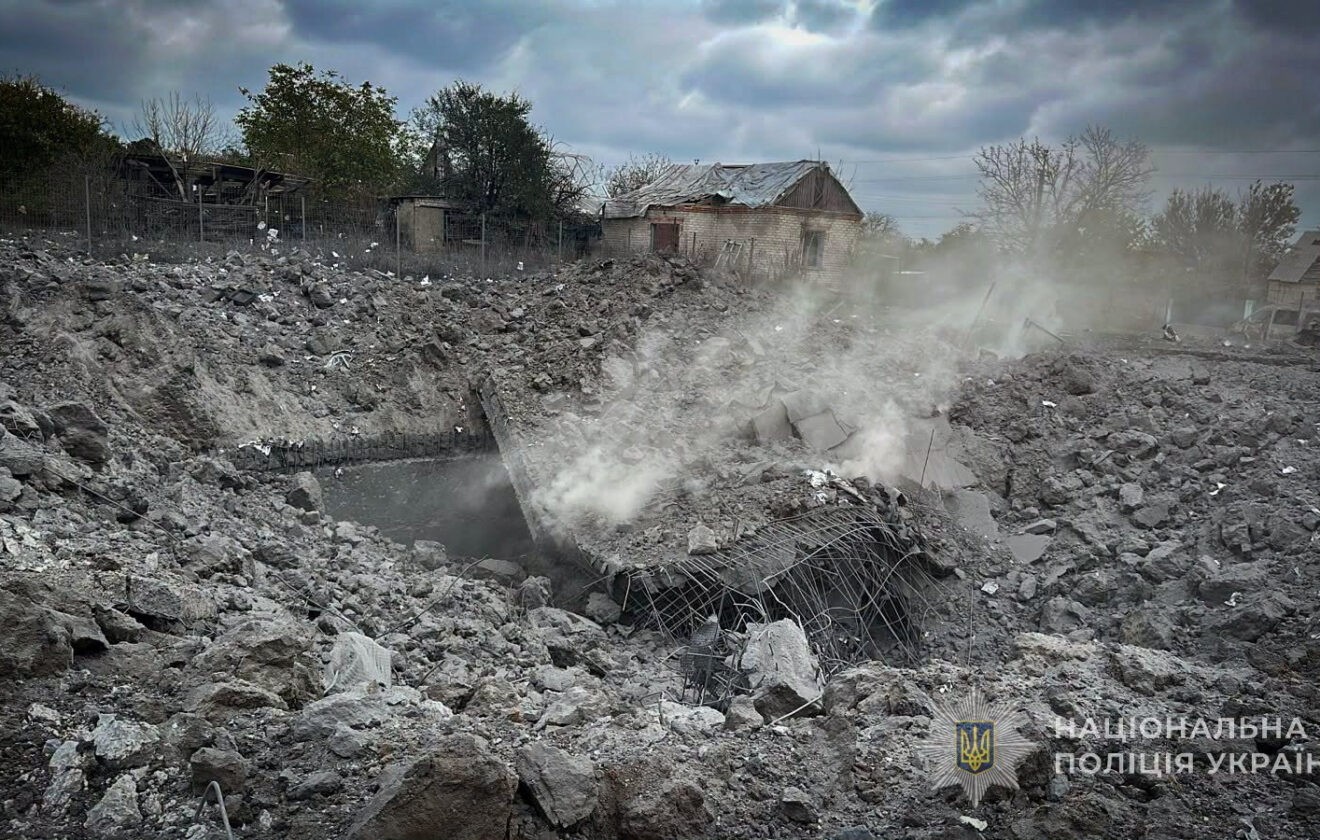
KYIV, Nov 3 – At least 31 people were killed in a Komyshuvakha strike on Monday, when Russian forces bombed a school used to hand out aid in a front-line village in Ukraine’s southeastern Zaporizhzhia region, a regional official said.
Mykhailo Semikin, acting head of the Zaporizhzhia regional military administration, said on national television that five people were also injured in the attack. Nearly 50 people remain missing, he said. The death toll has continued to rise since the strike. Early reports put the number of dead at 18, which later increased to 24 and then 26, before officials released the latest figure.
Regina Kharchenko, secretary of the Zaporizhzhia City Council, gave a lower estimate of 27 people missing. Police officers and rescue teams are still working to reach residents believed to be trapped beneath the rubble.
Among the dead are two rescue workers and four police officers, according to Ukraine’s emergency services. They were killed in a second strike that struck the area after emergency crews had already arrived at the scene. Two additional rescue workers were hospitalized with injuries.
Ukrainian President Volodymyr Zelenskiy said Russian forces first dropped aerial bombs on the school just as people were arriving. He said further bombs then struck a shelter located at the site.
“A vile terrorist strike,” Zelenskiy said.
The school was not holding classes, as the village lies too close to the front line for regular education to continue. Instead, it had been serving as a shelter and as a distribution point where aid was handed out every Monday.
Komyshuvakha is located southeast of the regional capital, also named Zaporizhzhia, roughly 20 kilometers from the front line.
Zelenskiy said Russian forces could not have been unaware that residents still living in the village gathered at the school each week to collect humanitarian aid packages.
The attack destroyed a gym, an outbuilding and a fire truck, and damaged the school building, according to Ukrainian media. Photos posted online showed smoking rubble scattered across the area.
Russia’s Defense Ministry gave a different account. It said in a statement on Tuesday that its forces had struck Ukrainian military units around Komyshuvakha and two other settlements in the region.
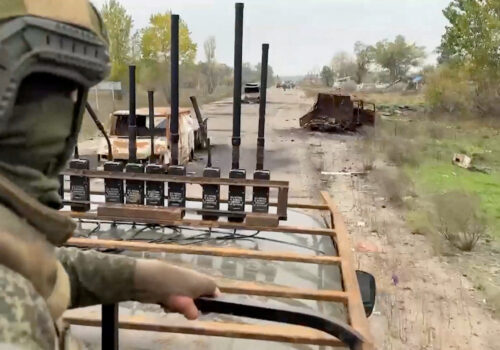
The ministry said that up to 25 Ukrainian soldiers were killed in the strike. It also claimed that 15 vehicles and an electronic warfare station were destroyed.
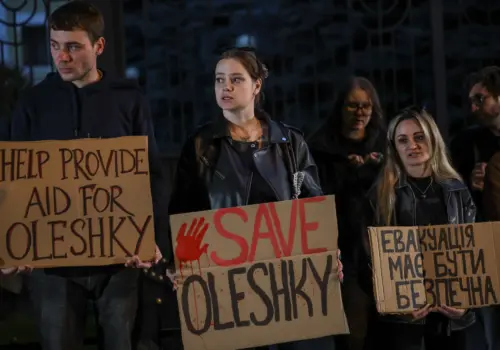
Both Russia and Ukraine deny intentionally targeting civilians. President Volodymyr Zelenskiy said the attack demonstrated that Moscow would rather kill people than build on last week’s humanitarian mission in Oleshky, a town in Ukraine’s southern Kherson region.
A six-day local ceasefire allowed humanitarian aid to reach Oleshky and enabled residents who wished to leave the area to evacuate safely. The ceasefire ended on Sunday, just one day before the attack on Komyshuvakha.
Zelenskiy said Ukraine had proposed additional humanitarian measures following the Oleshky operation. But Russia, he argued, continues to kill civilians rather than pursue peace.
Ukrainian Foreign Minister Andrii Sybiha also strongly condemned the strike. “Russia’s cruelty knows no bounds,” Sybiha said.
Sybiha used the attack to call on countries to keep Russia excluded from top-level international sport. Last week, the Court of Arbitration for Sport ordered the International Ice Hockey Federation to allow Russian teams to return to five championships this season.
“Russia deserves condemnation and isolation, not a return to international respect,” Sybiha wrote on X.
Civilian casualties in the war have increased this year. In August, United Nations monitors reported that more civilians were killed or injured in July than in any single month since March 2022.
The attack comes ahead of a new round of negotiations. A senior U.S. official said Washington plans to bring delegations from Ukraine and Russia together in Abu Dhabi on November 10 and 11.
The discussions are expected to focus on steps toward ending the war, security arrangements for the period after it ends, and measures to reduce ongoing fighting, according to the official. U.S. negotiators are hoping to achieve a breakthrough before winter. The last round of U.S.-mediated peace talks took place in February, before the United States and Israel launched their war against Iran.
Russia launched its full-scale invasion of Ukraine in February 2022, triggering the largest conflict in Europe since World War II.