Lula’s Comeback Victory Puts the Amazon and Brazil’s Divided Politics in the Spotlight
Luiz Inácio Lula da Silva overturned a first-round defeat to win a fourth term. Supporters see a model for campaigners abroad, while his rival refuses to concede.
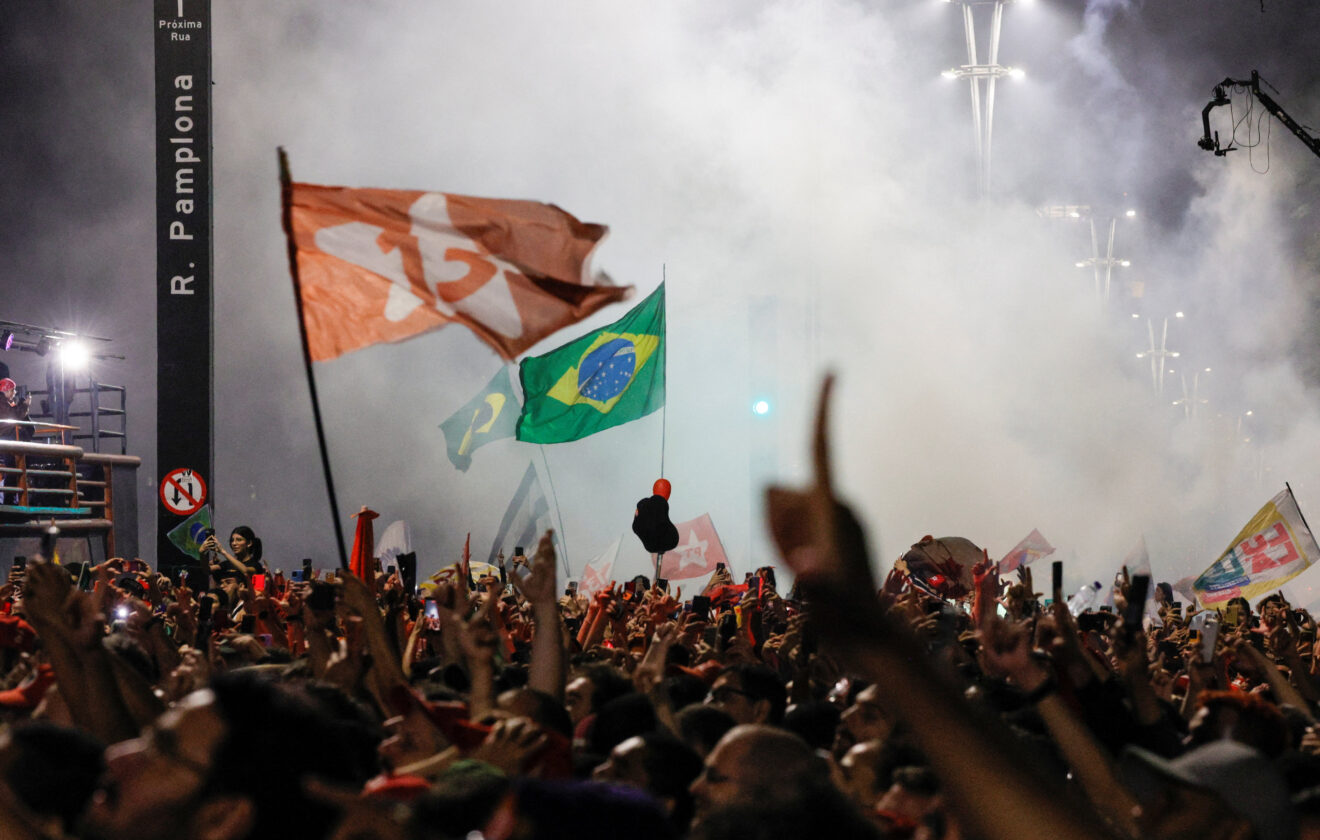
BRASILIA, Oct 31 – Three weeks ago, Luiz Inácio Lula da Silva looked finished. He had lost the first round of Brazil’s presidential election by roughly 2.2 million votes, financial markets had begun pricing in his defeat, and some pollsters were already discussing the shape of a Bolsonaro government.
Then the campaign turned. Lula sharpened his message, rallied his base, and reframed the election as a choice over Brazil’s future—its democracy, its environment, and its place in the world. By Sunday night, he stood on a stage on Paulista Avenue in São Paulo, waving a Brazilian flag after securing a fourth term.
The victory marked one of the most striking political comebacks in modern Brazilian history. It cemented Lula’s place as one of the country’s most enduring leaders and set the stage for another four years in office. But it also left him with a divided nation, a hostile Congress, and a demanding agenda from restoring economic confidence to protecting the Amazon at a moment when Brazil’s political and environmental futures are more closely intertwined than ever.
Official results from the Superior Electoral Court gave Lula 51.8% of valid votes, about 64.2 million, against 48.2% for Senator Flávio Bolsonaro, the eldest son of former President Jair Bolsonaro. No candidate had come from behind in a runoff since Brazil went back to direct presidential elections in 1989.
Flávio Bolsonaro hasn’t accepted it. He says he will ask the electoral court to throw out the result, something it has never done, and he would need to show that millions of votes were fraudulent. His own Liberal Party has recognized Lula’s win, and so has the head of the electoral court, a judge Jair Bolsonaro himself put on the Supreme Court. In Washington, President Donald Trump said the vote looked rigged but gave no evidence.
Investors did not welcome the result either. Brazilian stocks and the currency fell on Monday, and even before the campaign began, about half of voters told pollsters they disapproved of Lula’s government.
Among environmental groups, however, the mood was very different. Many welcomed the outcome as a sign that Brazil’s climate agenda still had political support, praising the government’s efforts to curb deforestation and strengthen environmental protections in the Amazon.
Their attention is on the Amazon. A few weeks before the vote, the government said destruction of the rainforest and of the Cerrado, the savanna to its south, had dropped to record lows. Official figures put forest loss in the Brazilian Amazon over the past year at about 3,335 square kilometers, the smallest since satellites started measuring it in 1988. Campaigners like to set that against the jump in clearing under Jair Bolsonaro between 2019 and 2022.
The government’s target is zero deforestation by 2030. Activists want the new term to deliver it, and to keep Brazil arguing on the world stage for a move away from oil, gas and coal. Lula’s own record is mixed, though. He has signed off on several projects that environmentalists opposed, and he has spent much of his career balancing them against farmers and miners.
The comeback itself was built in a hurry.
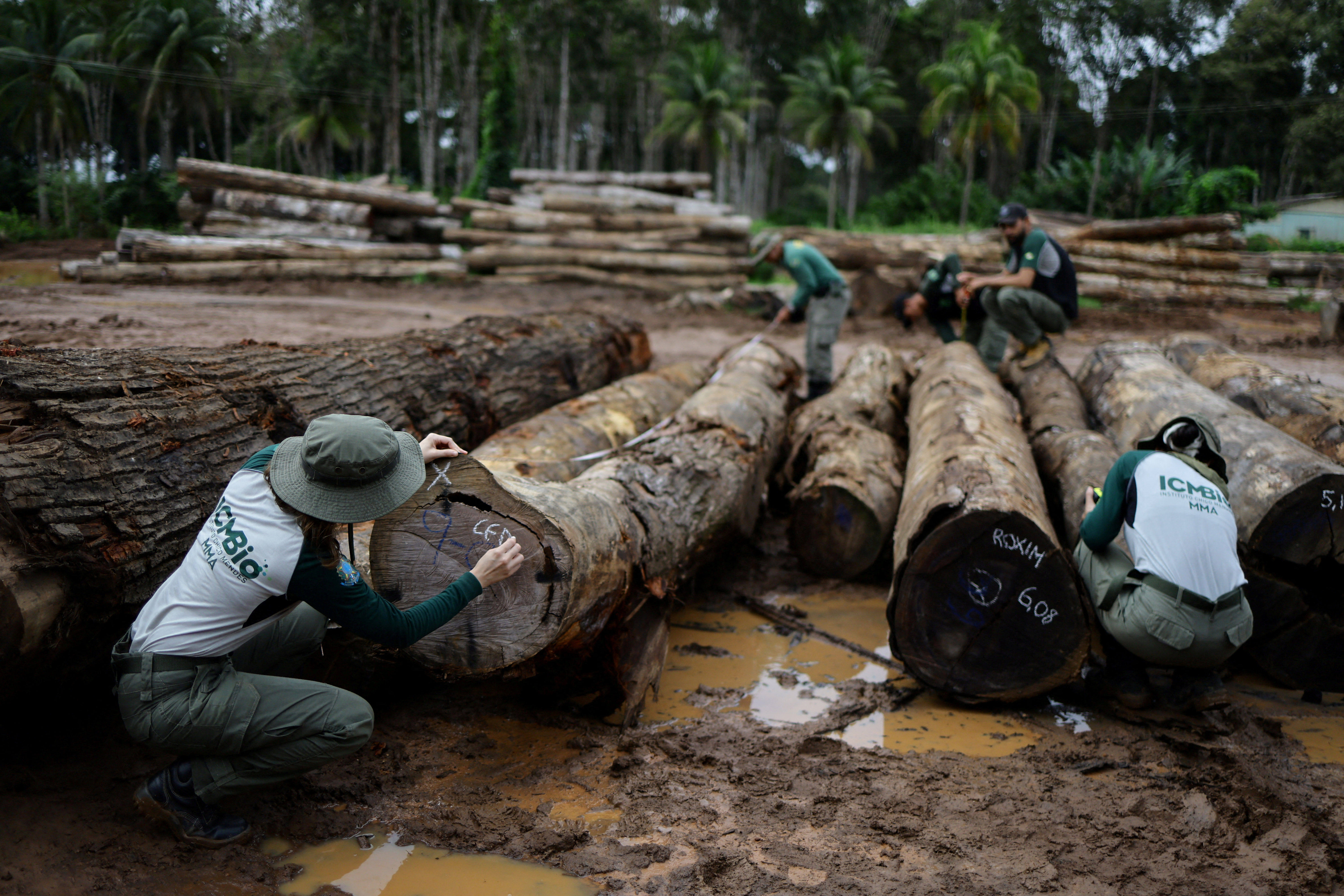
Agents of the ICMBio (Chico Mendes Institute for Biodiversity Conservation) and Brazilian Institute for the Environment and Renewable Natural Resources (IBAMA) inspect logs seized from the Amazon rainforest during an operation to combat deforestation, at a sawmill in Nova California, Rondonia State, Brazil, February 8, 2025. via, REUTERS
After the first-round loss, unions and social movements filled city squares with rallies. In the Amazon, Indigenous groups, river communities and quilombolas, who descend from people who escaped slavery, spent hours, in some cases days, on boats and buses to reach polling stations.
Online, the change was sharper. Lula’s first-round campaign had been widely criticized as old-fashioned. For the runoff, congressman André Janones poured his energy into a WhatsApp channel he called “Lula’s Army,” full of jokes, memes and live videos. Before the first round, it had around 50,000 followers. By election day it had close to 11 million, by some counts, in a country where the right had owned political WhatsApp since 2018. Members were told to ignore the other side’s posts and keep sharing their own. Bolsonaro’s team took some of that content to court, saying it spread falsehoods.
Then came the row with Meta. Lula’s campaign accused the company that runs Facebook, Instagram and WhatsApp of tilting its algorithms and its artificial intelligence tools toward Flávio Bolsonaro, and unions protested outside its São Paulo offices. Meta said it wasn’t biased, but admitted some of Lula’s ads had been switched off by mistake. The electoral court ordered Meta to treat both candidates equally and threatened fines of up to 1 million reais a day if it failed to comply. Lula did not let the issue go in his victory speech. “We are going to have to regulate them,” he said of the social media companies.
His campaign also went after the flag. Green and yellow had become the uniform of Bolsonaro rallies over the last two elections. This time, Lula wore the national football shirt, and his supporters from Indigenous leaders to foreign celebrities posted photos in Brazil’s colors, making an “L” with their thumb and finger.
Money in people’s pockets may have counted for more than any of that. Unemployment is at a record low, wages have been rising, payments under the Bolsa Família anti-poverty program went up 15%, and Lula has promised a higher minimum wage. Brazilian environmental groups have long argued that protecting forests only wins elections when it comes with help for poor families, and this campaign seems to have proved their point.
Some on the left abroad are already treating the result as a template, with elections coming up in the United States, Spain and France. Former Environment Minister Marina Silva, speaking at the victory celebrations, said people from all over Brazil had come together for a future that was fairer, democratic and sustainable.
Governing will be far harder than campaigning. Lula enters a fourth term with a celebratory mandate but little room for complacency: his coalition is narrow, his opponents are entrenched across Brazil’s most environmentally sensitive states, and the forces pressing for expansion of agriculture, mining, and infrastructure remain powerful in Congress.
Candidates aligned with Flávio Bolsonaro’s party won seven of the nine governorships in Amazon states, along with a large share of municipal offices. That gives Lula’s rivals control over much of the day-to-day political machinery in the very region where deforestation, land conflicts, and enforcement of environmental law matter most. In the federal Congress, the powerful farm and mining lobbies continue to push for more industry on Indigenous lands, new roads through the forest, and weaker environmental safeguards. Some opposition figures have even floated impeachment, a reminder that Lula’s victory has not ended the political conflict; it has merely changed its terrain.
Washington adds another layer of pressure. Lula remains the only leader of a major South American country who has not joined the Trump administration’s regional security pact, the Shield of the Americas. At the same time, the United States is expected to press Brazil to direct its critical minerals, especially rare earths, toward North American supply chains rather than China or Europe. Brazil holds vast mineral wealth, but it still lacks some of the processing capacity needed to turn those resources into higher-value industrial products, making the question not merely diplomatic but economic.
Above all of this hangs the climate. Scientists have warned for years that a hotter, drier planet could push large portions of the Amazon past a tipping point, transforming rainforest into dry savanna regardless of who occupies the presidential palace. If that threshold is crossed, the consequences would extend far beyond Brazil: the Amazon helps regulate rainfall across South America and stores enormous quantities of carbon, much of which could be released if the forest degrades.
Brazil, meanwhile, remains split almost exactly in half politically, geographically, and economically. Lula’s challenge is to govern a country whose environmental future and industrial ambitions point in different directions, while holding together a fragile coalition in a nation that has never been more evenly divided.