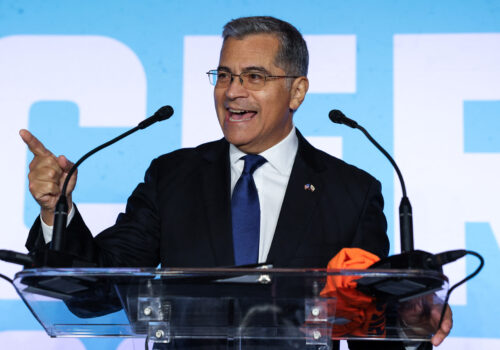
Abdul El-Sayed brushes off Stevens endorsement of Rogers, urges Michigan voters to turn out
The Democratic Senate nominee said he does not think about his former primary rival and kept his closing message on health care and the cost of living. Party leaders closed ranks behind him.
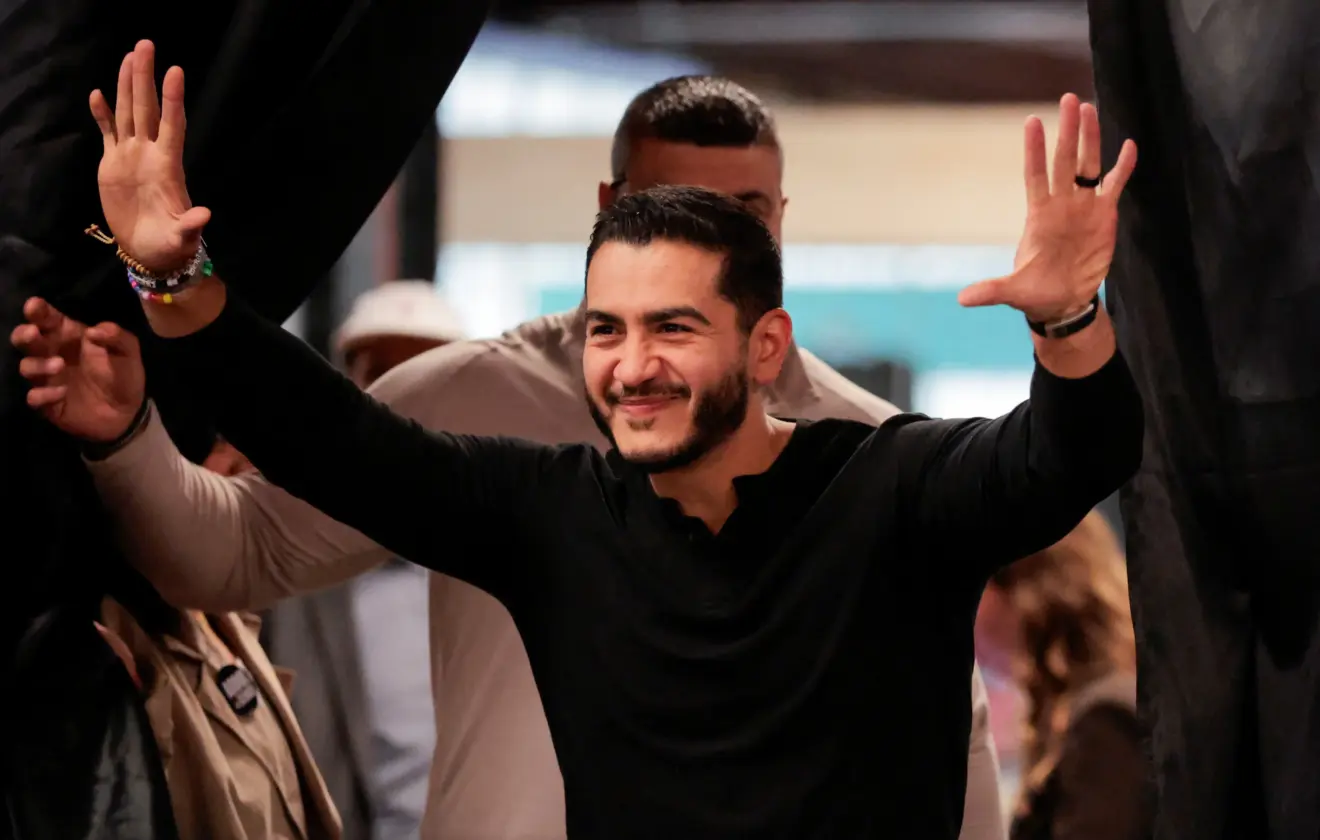
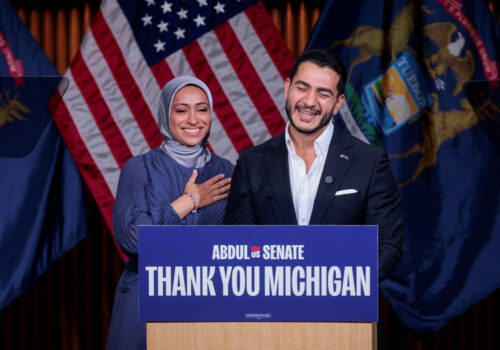
DETROIT, Nov. 3- Abdul El-Sayed, the Democratic nominee for the U.S. Senate in Michigan, has brushed aside his former primary rival’s decision to endorse his Republican opponent. In the final days of the campaign, he urged supporters to set aside the dispute and focus on getting to the polls.
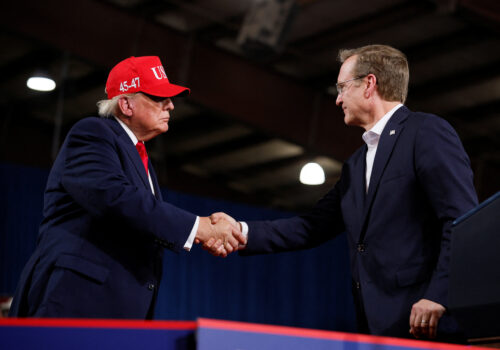
Representative Haley Stevens, a Democrat, backed Republican Mike Rogers on Sunday. She announced the endorsement at Perfecting Church in Detroit, where she appeared alongside Rogers two days before Election Day.
El-Sayed spoke the same morning at a Democratic event at another Detroit church. He did not spend long on the subject.
“I actually do not think about Haley Stevens,” El-Sayed said.
He said his attention was on the people of Michigan and what they need. Anyone who truly opposes hate, he said, would be unlikely to support Rogers, President Donald Trump or Vice President JD Vance.
The next day, El-Sayed took his campaign to Royal Oak, a suburb north of Detroit. He talked about limiting corporate money in politics and expanding government health coverage to all Americans. When reporters asked him about Stevens after the rally, El-Sayed urged people to go vote.
That has been the shape of El-Sayed’s response from the start. He has tried to treat the feud as a distraction and keep the race about prices, health care and Trump.
The dispute dates back to the summer. El-Sayed narrowly beat Stevens in a bitter Democratic primary in early August. Stevens pledged at the time to support the party’s nominee. But the relationship soured again in the final weeks of the race.
At the center of the latest fight is an advertisement from a political action committee led by left-wing commentator Cenk Uygur. The ad linked high grocery prices to United States support for Israel. Stevens called it antisemitic.
El-Sayed has said his campaign did not make the ad and that he disagrees with it.
Stevens wanted more. On Friday, she issued a statement saying she still supported El-Sayed, but she demanded that he condemn the ad and apologize for his past remarks about Israel.
She also objected to his campaigning with Hasan Piker, a left-wing streamer and Uygur’s nephew. Piker has been criticized over comments about Israel and Jewish Americans.
That same night, Politico reported that El-Sayed’s campaign had asked Stevens to stay away from its remaining events. The report cited two people familiar with the decision. CBS News, CNN and NBC News later confirmed the request.
One person said the aim was to avoid distracting from the central issues of the campaign. The campaign declined to comment on the request. But in a post on X, El-Sayed accused Stevens of reopening a primary that had ended three months earlier.
The request scrapped a planned show of unity. El-Sayed and Stevens had been due to appear together on Sunday at a Detroit church with Representative Jim Clyburn of South Carolina, a senior Democrat.
After the request, El-Sayed’s public schedule listed only himself and Clyburn.
Representative Debbie Dingell, a Michigan Democrat who helped set up the joint appearance, said she asked Stevens to stay away because the feud had become too distracting. Stevens agreed, Dingell said.
On Saturday, Stevens’s fiancé, Jason Turkish, told Fox News that he was not sure she would attend. He said her only request had been for El-Sayed to say that society’s high costs should not be blamed on one group.
Turkish, who is Jewish and calls himself a lifelong Democrat, had already said he would vote for Rogers. He said he decided after El-Sayed would not say in a debate whether Iran or Israel posed the greater threat to the United States.
A day later, Stevens went further and endorsed Rogers herself.
In a CNN interview after the endorsement, Stevens was asked about an August post in which she had called Rogers a rubber stamp for Trump. She said she had been trying to help her campaign at the time. Asked why she had changed her mind, she said nothing about her had changed.
Democratic leaders moved quickly to back El-Sayed.
Senate Democratic leader Chuck Schumer called Stevens’s move a betrayal. He said Senate Democrats remain united behind their nominee.
Dingell said voters want candidates focused on affordability. She backed El-Sayed.
Michigan Democratic Party chair Curtis Hertel said Stevens isn’t a current member of the party and won’t be one in the future. By Sunday night, the party had removed her photo from its list of elected officials.
Stevens’s own office was shaken. Her chief of staff, Justin German, resigned and said many other staff members also quit. He said the team was shocked and heartbroken.
Republicans welcomed the news. Rogers called Stevens’s decision an act of courage. Trump praised her on social media and attacked El-Sayed, and House Speaker Mike Johnson said he had spoken with her.
El-Sayed has made the cost of living the core of his campaign. Democrats across the country have argued that Republicans failed to fulfill Trump’s promise to lower prices. Voters are also frustrated by gasoline costs, which rose following the war with Iran.
So far, polling indicates that El-Sayed has maintained strong support among Democrats.
A recent Mitchell Research and Communications survey conducted for Michigan television stations found that 94 percent of Democrats back El-Sayed, while 91 percent of Republicans support Rogers. The final New York Times/Siena College poll placed El-Sayed at 53 percent and Rogers at 42 percent among likely voters.
A Glengariff Group poll for WDIV and The Detroit News, conducted from October 19 to 22, showed El-Sayed at about 51 percent and Rogers at about 45 percent. That survey carried a margin of error of four percentage points.
Despite the polling advantage for El-Sayed, Republicans have not abandoned their efforts in Michigan. Party strategists view the state as one of their strongest opportunities to counter potential Democratic gains elsewhere in the country.
Rogers is a former congressman who previously chaired the House Intelligence Committee. He narrowly lost Michigan’s 2024 Senate race to Democrat Elissa Slotkin, and his campaign is hoping to build on the support he demonstrated in that contest.
El-Sayed is a physician and former health director of Detroit. He ran for governor of Michigan in 2018 but was defeated in the Democratic primary. His campaign has emphasized health care, economic fairness, and expanding access to public services.
The Senate seat is open because Democratic Senator Gary Peters decided not to seek reelection. The contest is among the most closely watched races in the country and could play a decisive role in determining which party controls the Senate.
Republicans currently hold 53 of the Senate’s 100 seats. Democrats would need to flip four seats to gain a majority, since Vice President JD Vance could break a 50-50 tie in Republicans’ favor.
Voting in Michigan is underway on Tuesday, with turnout expected to be a key factor in a race that remains competitive despite El-Sayed’s lead in recent polls.