South Korea Naval Mission to Expand Toward Strait of Hormuz
Seoul will ask parliament to extend its anti-piracy unit’s area to waters off Oman. Officials say the unit will stay out of combat and away from Iranian territory.
SEOUL, Nov 5 – South Korea plans to expand its naval mission in the Middle East to waters closer to the Strait of Hormuz, the defense ministry said on Thursday, after pressure from President Donald Trump to do more to support the war with Iran.
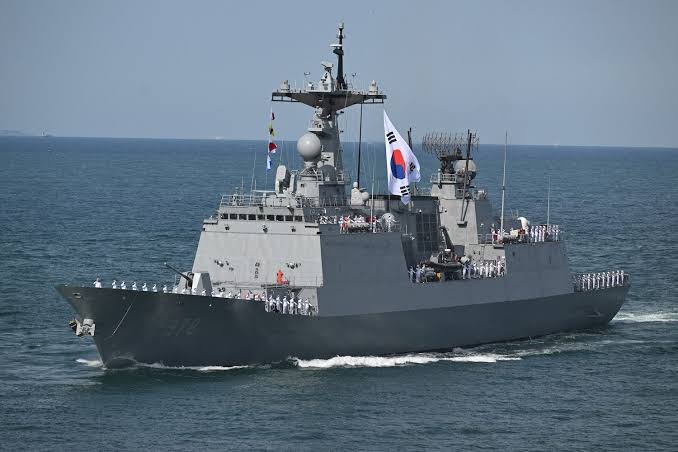
The government will submit a motion for the Cheonghae unit to parliament to expand the area of operations, South Korea’s anti-piracy force. The new area would reach waters near the port of Duqm in Oman, about 650 kilometers (403 miles) from the strait.
The motion also needs approval from President Lee Jae Myung and his cabinet. “The enhancement of the Cheonghae unit’s mission is to protect our citizens,” a defense ministry official told reporters.
The official said it would also safeguard the country’s economic interests.
The official, who spoke on condition of anonymity, said the stronger mission was strictly for non-combat purposes. He said the unit would act on its own and not as part of any allied force.
He said operations would stay in open waters south of Oman. Patrol aircraft will be barred from targeting or watching Iranian territory, Iranian waters or the inside of the Strait of Hormuz, he said.
The motion would also extend the unit’s deployment in the Middle East, which is scheduled to end at the close of 2026, a ministry spokesperson said, confirming a report by the Yonhap news agency.
The Cheonghae unit has been based in the Gulf of Aden, off the coast of Yemen and Somalia, since 2009. Its job is to keep commercial ships safe from pirates.
It now includes a 4,400-ton destroyer, a maritime helicopter, up to three fast inflatable boats and about 300 sailors and marines, according to the broadcaster YTN.
Under the plan, Seoul would also send a P-8A maritime patrol aircraft and add 75 more personnel to the unit, the Korea Herald reported.
Trump has criticized South Korea for what he called weak support for the war with Iran. This summer, he scaled back major joint military drills between the two countries’ armed forces, a step that unsettled the U.S.-South Korea alliance.
But Seoul has been careful not to be drawn into the fighting. On September 18, Lee said he would not send military assets to the Middle East in a way that could pull South Korea into the conflict.
He said at the time that the government was considering a larger role in the region by securing the shipping lanes. The issue has stirred debate at home. Protesters in Seoul have rallied against sending South Korean troops to the strait.
South Korea depends heavily on imported oil. In 2025, it got 70 percent of its oil from the Middle East, most of it shipped through the Strait of Hormuz, according to the industry ministry.
Iran has kept the strait largely closed to shipping since the war began in February, pushing up oil and fuel prices around the world.
The announcement came as more ships were damaged in the strait. Iran’s Revolutionary Guard said on Thursday that two oil tankers and a tugboat had caught fire in separate incidents after trying to use unapproved routes through the waterway.
One tanker hit a mine while trying to cross a passage south of the strait, the Revolutionary Guard said. A second, very large tanker caught fire as it left a route in the eastern part of the strait.
A tugboat that went to help put out the fire on the second ship also caught fire, the Revolutionary Guard said. It gave no details on casualties.
Iranian state television said on Wednesday that four tankers had caught fire after hitting mines on what it called unauthorized routes. It is not the first time South Korea has stretched the Cheonghae unit’s reach toward Hormuz.
In 2020, amid heightened tensions between Washington and Tehran, Seoul independently expanded the unit’s area of operations to cover the strait rather than join a U.S.-led maritime force.