Paul Mackenzie jailed for 200 years over Shakahola starvation deaths of 190 children
A Kenyan court jailed the preacher who told his followers to starve. Families say the sentence cannot bring their children back
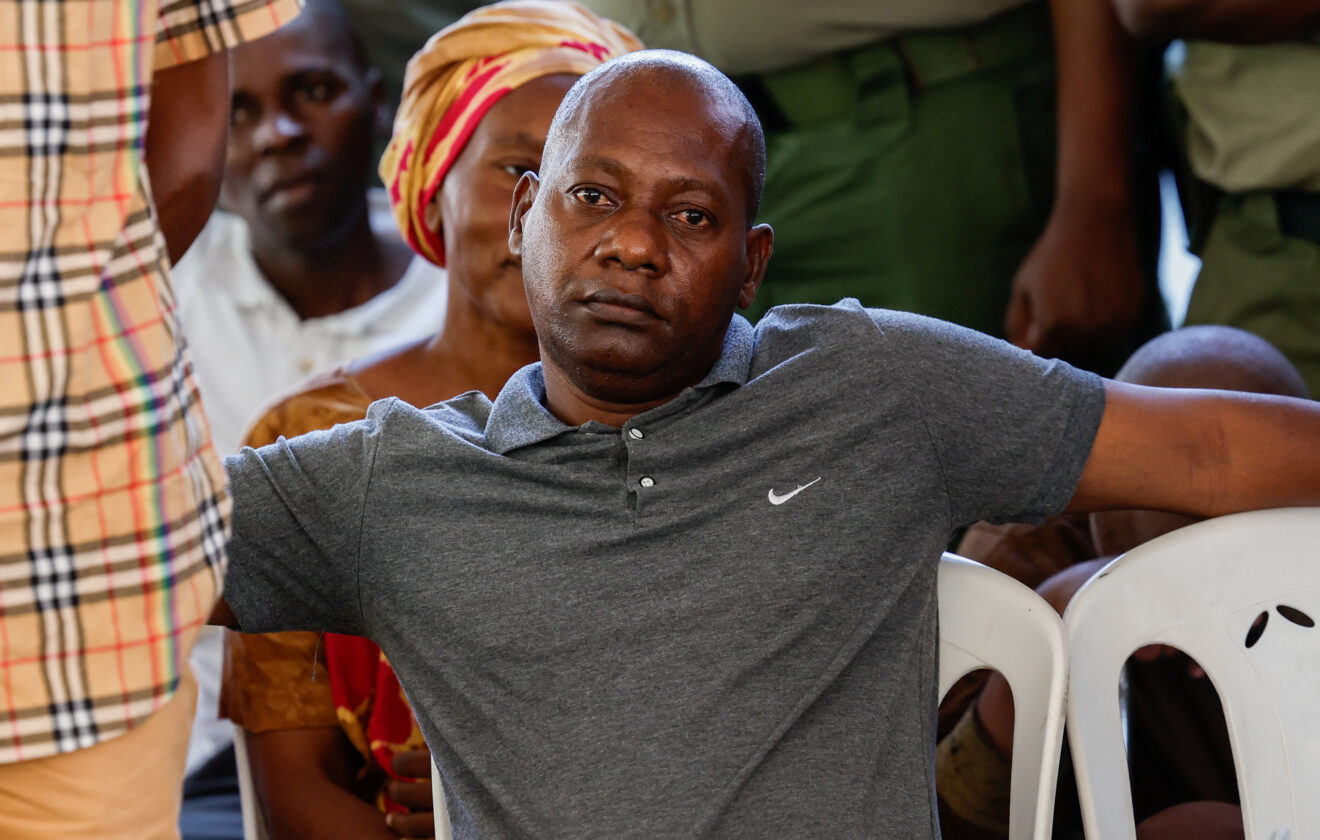
MOMBASA, Kenya, Nov 6 – A judge in Kenya sentenced Paul Mackenzie to 200 years in prison on Friday. He is the preacher who told his followers to starve themselves, and the court found him responsible for the deaths of 190 children.
Judge Diana Kavedza split Mackenzie’s sentence into two parts, giving him 100 years for the deaths caused by starvation and another 100 years for the deaths caused by direct killing.
She read out the sentence in a tent set up beside the courthouse, where crowds had gathered to hear the outcome of one of Kenya’s most shocking criminal cases.
Mackenzie walked in with a smile, dressed in a gray polo shirt and black trousers, showing little emotion as the judge spoke. Throughout the trial, he never admitted guilt and repeatedly told the court that he had not forced anyone to starve, but the judge rejected his claims.
His church preached that the end of the world was near, and he told his followers that they and their children had to stop eating to reach heaven before the world ended.
Prosecutors argued that the children were expected to die first, making the case one of the most disturbing ever heard in Kenya’s courts.
Some people did not want to go on. They were beaten, and they were told they would be hurt, prosecutors said. When the police came, they found thin bodies in shallow graves and in pit toilets.
Some of the dead had been put in the ground while they were still alive. That was in April 2023 in Shakahola Forest, near the coastal town of Malindi.
Mackenzie was convicted in October, along with about 30 others. Prosecutors sought the death penalty, while his lawyers asked for a sentence of no more than 10 years. His lawyer now says they will appeal.
The trial concerned the deaths of 190 children and one adult, but those numbers do not reflect the full scale of the tragedy. Kenya’s national human rights body says 448 bodies were recovered from the forest.
In a separate case, Mackenzie faces accusations involving another 52 deaths in a village roughly 30 kilometers away. He has pleaded not guilty. Together, the two cases bring the reported death toll to around 500.
Other countries have suffered similar tragedies involving doomsday cults. More than 700 people died in Uganda in 2000. In 1978, more than 900 people died in Jonestown, Guyana, after an American cult leader ordered his followers to drink poison.
For parents who lost their children in Shakahola, however, a 200-year prison sentence cannot undo the loss. The punishment may offer accountability, but it cannot bring their families back.
Stephen Mwiti, 48, lost six children after his wife took them to the forest. She was also convicted. He said that while the adults may have chosen to follow Mackenzie, the children had no choice.
“I lost children, and I will not be able to get them back,” he said.
Mwiti had hoped Mackenzie would receive the death penalty or, at the very least, spend the rest of his life in prison. His concern, he said, was to make sure the preacher could never cause such harm again.
Mackenzie’s own son, Dan, also lost people close to him. He said he avoided going to the forest because he had left the church after losing faith in its teachings. His friends and younger brother went, but none returned.
“It’s justice to the people who we lost over there in Shakahola,” he said.
A former taxi driver, Mackenzie founded his church in 2003. He had attracted police attention long before the discovery of the graves. Officers searched his church in 2017, and Malindi closed in 2019. He then moved with his followers into the forest.
After the graves were discovered, President William Ruto established a task force in May 2023 to review the regulation of religious groups. At the time, he accepted responsibility as head of state for the failures that had allowed the tragedy to unfold.
In 2024, the government proposed new measures to oversee religious organizations, while the Senate introduced a separate proposal. Neither has been passed, leaving the promised reforms unfinished.
Rights groups say imprisoning Mackenzie alone is not enough. They argue that accountability must also extend to the institutions responsible for protecting the victims and responding to warning signs.
Ojiro Odhiambo of the Kenya Human Rights Commission said local officials, police, intelligence agencies, and religious leaders had all failed to act. His criticism points to a wider question: not only how Mackenzie persuaded people to follow him, but how the danger went unchecked.
“All these people have failed the people,” he said.