NATO Boosts Black Sea Surveillance After Deadly Drone Attacks on Ships
NATO will expand Black Sea surveillance after a wave of deadly drone attacks on commercial vessels near Romania and Bulgaria.
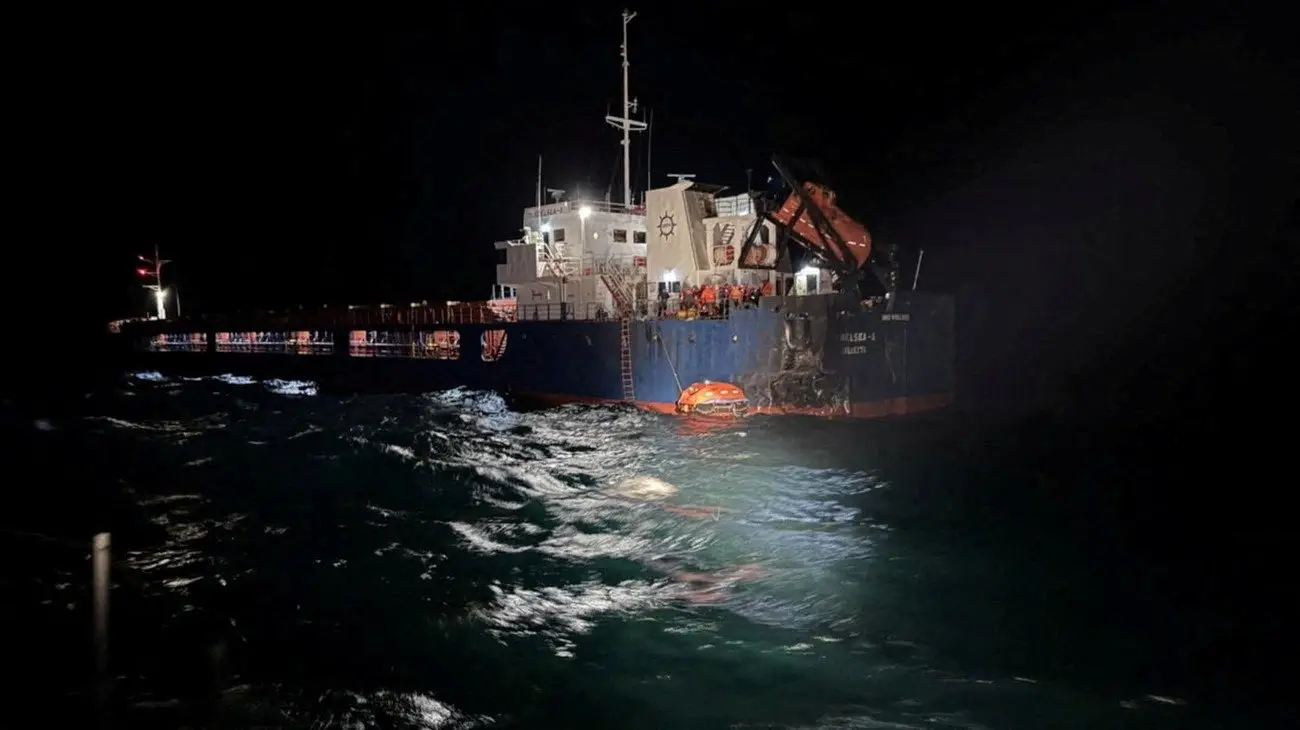
Additional maritime patrol planes, radars, and UAVs are going to be sent to the Black Sea by NATO following a series of deadly drone attacks on commercial ships in the area around Romania and Bulgaria.
This decision was taken after a session of the North Atlantic Council. According to the military spokesman for the alliance, Colonel Martin O’Donnell, more patrol planes, surveillance radars, drones, intelligence officers, and forensic teams have been sent or will soon be sent to assess the explosive devices used in these attacks.
O’Donnell stressed that the first step is to raise awareness of threats across the region due to increased surveillance and intelligence sharing. Although NATO has not officially blamed any particular state for these attacks, military experts view Russia as the most probable culprit even though Moscow has neither admitted nor denied its involvement.
The run of attacks began earlier this month, when sea and aerial drones went after two commercial ships inside Bulgaria’s exclusive economic zone. On Tuesday, October 13, another commercial vessel went down off the Bulgarian coast after being hit by a drone. Bulgaria called in the Russian ambassador to answer for it.
Romania’s turn came the next day. The Comoros-flagged tanker Yara J was struck on Wednesday, October 14. The San Marino-flagged Wine Trader followed on Thursday, October 15. Both tankers carried chemicals, both caught fire, and seven sailors from the two ships are still missing.
Counting those, the attacks hit at least seven vessels near the Romanian and Bulgarian coasts, with at least 23 sailors reported dead or missing.
The count is my own arithmetic, and it is where the numbers need care. The source text says at least five other cargo ships were hit in the 10 days before the tanker strikes, plus the two tankers, for a total of at least seven. The Associated Press also reported at least seven vessels attacked this month, so the totals agree. If you want to avoid your own sum, you can replace that sentence with “At least five other cargo vessels were hit in the preceding 10 days.
Bulgaria has asked the alliance for help. Defense Minister Dimitar Stoyanov said on Friday, October 16, that his government sent letters to the alliance’s Secretary General and Supreme Allied Commander requesting combat aircraft and anti-drone systems. “We are awaiting their decision,” he said. Stoyanov said he plans to meet his Romanian and Turkish counterparts to coordinate a common approach. Bulgaria has also proposed a moratorium on attacks on civilian ships in the Black Sea, and it expects to join an alliance anti-drone initiative by the end of October.
Secretary General Mark Rutte met Bulgarian Prime Minister Rumen Radev and Romanian President Nicusor Dan on Thursday, October 15. Afterward, he said the alliance would “continue to work closely with our Allies in the Black Sea, adjusting our deterrence and defence posture as needed.” A NATO official said ambassadors from the alliance’s 32 member states would discuss Bulgaria’s request this week.
The alliance has not attributed the attacks to any country. They appear linked to Russia’s war in Ukraine, and some members of the alliance wonder whether Russian President Vladimir Putin is seeking to escalate to test their support for Ukraine. A source in Romania’s defense sector told The Associated Press that the attacks are meant to hurt Ukraine economically and that “Romania is not the target right now.” Moscow has not acknowledged any role. The attacks have raised concern among allies about the war spilling into neighboring countries.
They have also raised questions about the safety of shipping routes used by Ukraine and other countries in the region. The alliance has stepped up surveillance over the Black Sea in recent years, including with maritime patrol aircraft, airborne early-warning planes and drones. Allison Hart, the alliance’s principal spokesperson, said it has already strengthened its eastern flank, including with counter-drone capabilities. She said it will remain united and prepared to address threats to its one billion citizens. In July, the alliance launched an initiative that aims to invest more than $40 billion in counter-drone capabilities over the next five years, and Romania joined it.