Poland’s Constitutional Court Chief Suspended, Sparking Overnight Clash With Police
The government says it is restoring the rule of law, while the opposition calls it a coup. President Karol Nawrocki cut short a trip to Africa to rush to the court overnight.
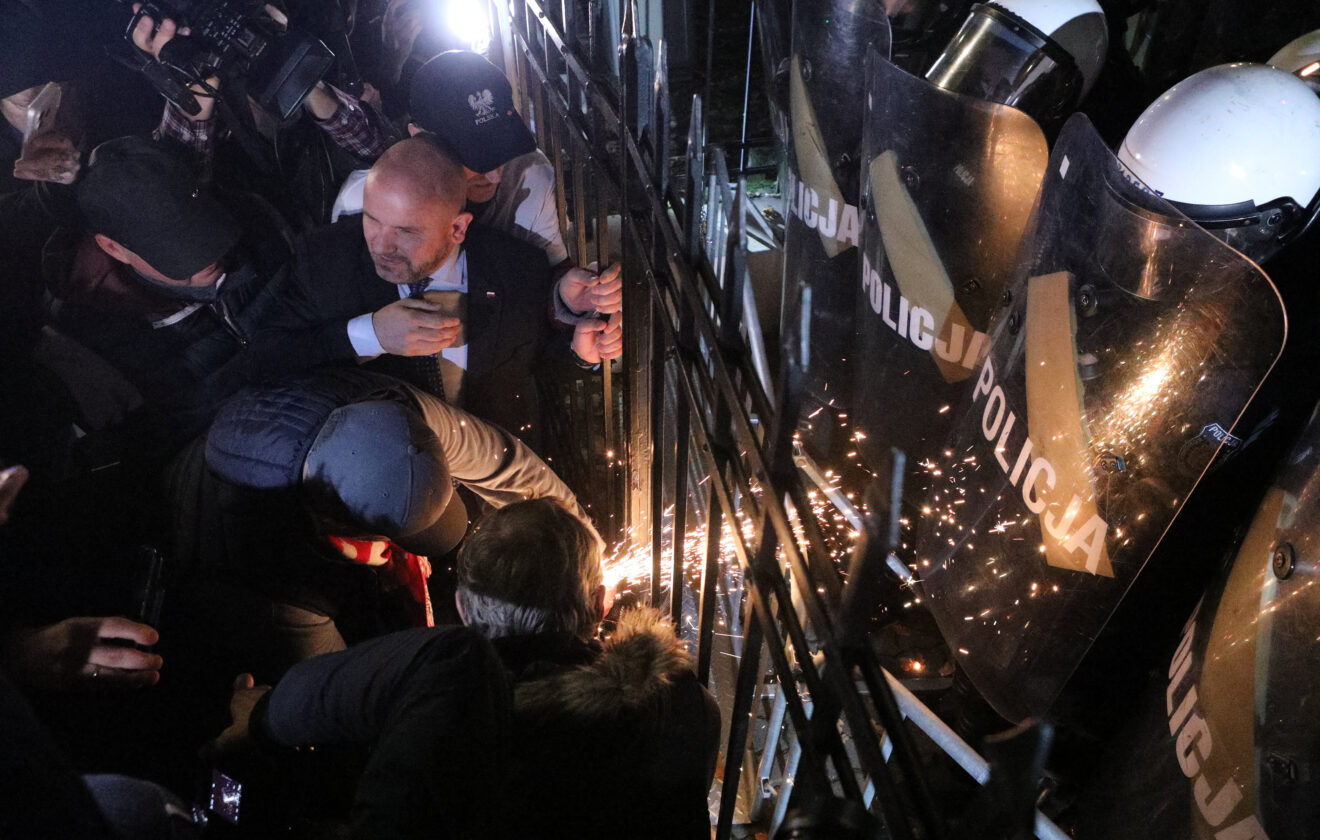
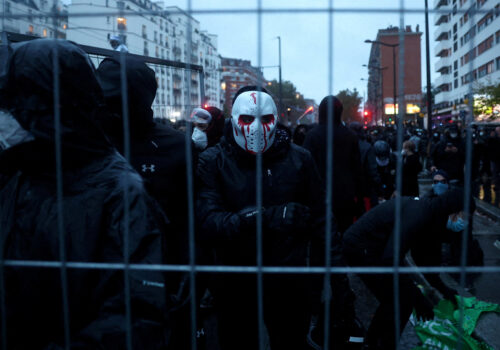
WARSAW, Oct 31 – Riot police faced off with protesters outside Poland’s constitutional court on Friday night, after the court’s chief judge was suspended in the latest turn of a dispute over the court that has dragged on for a decade.
The trouble began when a group of judges appointed under the current government moved to suspend the court’s president, Bogdan Święczkowski, and his deputy, Bartłomiej Sochański. The notice went up on the court’s website at around 6 p.m. The two men are contested figures, and the government doesn’t accept that the court in its current form is legitimate.
The move drew an angry response from the right-wing opposition Law and Justice party. Its leader, Jarosław Kaczyński, called it an assault on the court. The court’s own social media account, which remains loyal to Bogdan Święczkowski, said its website had been unlawfully taken over and that he and his deputy were still in their posts.
President Karol Nawrocki, a conservative backed by Law and Justice and a close ally of United States President Donald Trump, was on his way to a state visit in Senegal when the news broke. He turned his plane around and flew back to Warsaw.
Hundreds of people, including opposition lawmakers, gathered outside the court to show support for the suspended judges. Some protesters broke through the court’s fence, and others threw objects at officers, according to police. Three people were detained.
Shortly before 1 a.m. on Saturday, Karol Nawrocki arrived at the court and made his way through the police line. One video showed him pushing past security staff and other judges to get into the building. He was still inside several hours later.
In a clip posted online, Karol Nawrocki could be heard saying the government’s appointees weren’t real judges of the court. In a statement read out on his behalf at 5 a.m., he called the events a violation of Poland’s constitutional order. “A constitutional body was seized by force,” the statement said. He called on the security forces to leave the building.
The government sees it very differently. Prime Minister Donald Tusk said that “restoring the rule of law is our duty.” He said that after years of what he called lawlessness under Law and Justice, the process is hard and sometimes painful, but needs firm action. Earlier this month, Donald Tusk had promised that the court would start working in line with the constitution, whether people liked it or not.
Foreign Minister Radosław Sikorski, speaking to reporters in Atlanta, said the court had been politicized under the previous government. He said the aim was to let the majority of properly elected judges get the court working again.
The roots of the fight go back to 2015. That year, the outgoing centrist government and the incoming right-wing one both moved quickly, using legally doubtful methods, to fill the court with their own picks. The battle over those appointments left the court frozen.
During its eight years in power, Law and Justice clashed repeatedly with the European Union over the rule of law. The court often sided with Polish laws over European Union law, and Brussels accused it of being too close to the governing party of the time.
Since he returned to power in 2023, Donald Tusk has promised to undo those changes and repair ties with Brussels. But presidents aligned with the opposition have used their vetoes and a broad reading of their powers to block his reforms.
Karol Nawrocki, who unexpectedly beat Donald Tusk’s candidate in last year’s presidential election, has also refused to swear in several judges elected by the current parliament. That has made the legal situation even more tangled. Earlier this month, the Venice Commission, the Council of Europe’s advisory body on the rule of law, said the president’s refusal should not stop those judges from taking up their posts.
On Friday night, a group of judges elected by the current majority moved to suspend Bogdan Święczkowski, a former deputy justice minister under Law and Justice, and take control of how the court runs. Anna Korwin-Piotrowska, one of the judges Karol Nawrocki has refused to swear in, said she had taken over the top job because she has the longest experience as a judge.
Legal experts are split on whether the suspension is lawful. Marcin Matczak, a well-known law professor and a vocal critic of Law and Justice, said he never expected to find himself defending Bogdan Święczkowski. But he said he believes there is no legal basis for the suspension.
Separately, Justice Minister Waldemar Żurek, who also serves as prosecutor general, said he has asked for Bogdan Święczkowski and Bartłomiej Sochański to lose their legal immunity, so they can be prosecuted for blocking the court’s work.
Opposition leaders accused the government of carrying out a coup. Several right-wing politicians from across Europe, including Britain’s Nigel Farage and Liz Truss and the Netherlands’ Geert Wilders, also condemned the move.
Tom Rose, the United States ambassador to Poland, said in a post on X that the events were very serious. He noted that both sides give sharply different accounts of what happened. Whatever the facts turn out to be, he said, thousands of people gathering outside the court make a dangerous situation more volatile, and Poland doesn’t need a confrontation that gets worse.
The clash is likely to deepen divisions in the country ahead of next year’s parliamentary election, with polls suggesting the right has a chance of returning to power.