Lula Wins Fourth Term in Brazil Election Runoff
The veteran leftist overturned a first-round deficit to beat Senator Flavio Bolsonaro in a runoff that split the country almost evenly, and his rival is now asking courts to cancel the result.
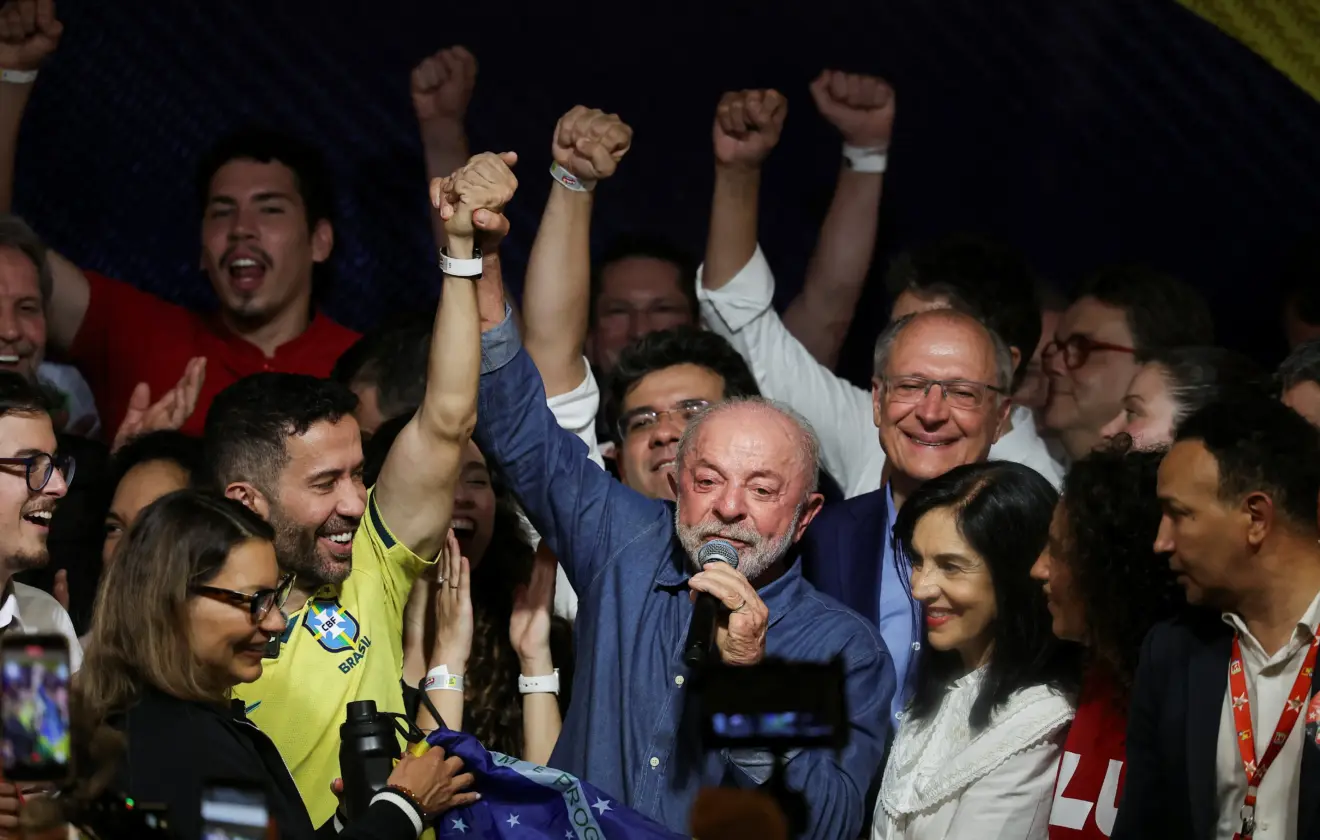
Brazil’s electoral court declared on Sunday, October 25, that President Luiz Inacio Lula da Silva has won a historic fourth term after defeating Senator Flavio Bolsonaro in a tightly contested runoff.
Lula received about 51.8 percent of the vote, compared with 48.2 percent for Bolsonaro, giving him a winning margin of roughly 4.4 million votes.
The result marks one of the most remarkable comebacks in modern Brazilian politics. Lula, 80, finished second in the first round on October 4, when Bolsonaro led him by about two percentage points. No candidate since Brazil’s return to democracy in the 1980s had previously won the presidency after losing the first round.
Lula’s victory also makes him the first Brazilian president to win four terms, though not in consecutive periods.
The result defied the polls. The last Datafolha survey, published a day before the vote, had Bolsonaro slightly ahead at 51 percent to 49 percent. Many people expected voters to remove an incumbent after years of economic strain and corruption controversies. During the count, Bolsonaro took an early lead, and Lula overtook him as more votes came in.
Bolsonaro, 45 and the eldest son of former President Jair Bolsonaro, refused to accept the result. He said conceding was impossible and announced that his legal team would ask the courts to annul the election.
He pointed to a Supreme Court justice’s decision to extend voting hours by two hours, calling it an unacceptable change to the rules while the election was still under way.
His response recalls his father’s. Jair Bolsonaro never accepted his 2022 loss to Lula and was later sentenced to 27 years in prison for plotting a coup to stay in power. Analysts say Flavio’s challenge faces steep obstacles. He lost by a wider margin than his father did, and his own campaign had also asked for more voting hours because of heavy rain in conservative areas of the south. Risk analysts expect some right-wing protests but say a reversal is highly unlikely.
Lula’s team credits turnout. In the first round, 21.08 percent of eligible voters stayed home, the highest rate for a first round since 1998. In the runoff, abstention fell to 19.21 percent. Many of Lula’s supporters live far from polling stations, so his allies saw mobilization as their best chance.
He also made a late push for workers and poorer Brazilians. His team proposed free public transport on weekends nationwide, which Congress would have to approve. His government raised its flagship welfare program by 15 percent. He also backed a constitutional amendment that became Brazil’s biggest labor reform in decades, and it passed with wide support in Congress.
In the final stretch, Lula pointed to his record on poverty, inequality, employment, literacy and deforestation. He warned that a Bolsonaro government would cut welfare and undo social gains. Bolsonaro presented himself as the face of a new generation on the right. He spoke to voters frustrated by rising prices and corruption scandals, and to people working in app-based and informal jobs who felt the government was out of touch.
“People today are choosing between change, with some apprehension, and a known path, which guarantees certain rights,” said Leonardo Barreto, co-founder of the consultancy Think Policy. Many voters chose the known path.
Large rallies filled the final weekend. More than one million people gathered on Copacabana Beach in Rio de Janeiro, and an even larger crowd marched along Avenida Paulista in São Paulo. After the result, supporters celebrated in both cities and elsewhere. “This election was a defeat for denialism,” Lula told the crowd. “It was democracy that made this happen.” He said he would change how the country is governed.
Lula was born into rural poverty and worked as a metalworker and union leader before he entered politics in the late 1970s. He lost three presidential races, in 1989, 1994 and 1998, and won in 2002 as Brazil’s first elected working-class president. He served two terms as president before returning to politics after corruption convictions against him were overturned. He then defeated Jair Bolsonaro in the 2022 election.
Health Minister Alexandre Padilha called the result a huge win for Brazilians. “It’s a massive victory — not just for Brazil,” he said. “It’s also an important signal to the rest of Latin America and to the world.”
The result matters well beyond Brazil. Lula’s win stops Brazil from joining the group of Latin American governments that have moved closer to Washington on security and migration. It is also a setback for President Donald Trump, who had backed Bolsonaro and has publicly clashed with Lula. Celso Amorim, a former Brazilian foreign minister, said Lula provides balance in the region. Mexican President Claudia Sheinbaum praised Brazilian democracy, and Paraguayan President Santiago Pena welcomed what he called a great democratic journey.
Lula is scheduled to take office on January 5, 2027. He will face a Congress in which Bolsonaro’s Liberal Party holds its largest bloc in decades, making it harder for him to pass legislation and advance his agenda.
He will also need to stabilise Brazil’s large public debt. Investors expected volatility in Brazilian markets on Monday, as Bolsonaro had been viewed as more likely to pursue austerity measures and deregulation.