White House Plans to Govern Without Congress if Democrats Win
Aides have drawn up executive actions on tariffs, immigration, housing and spending. Trump says he would become “Mr. Veto” if Democrats take control.
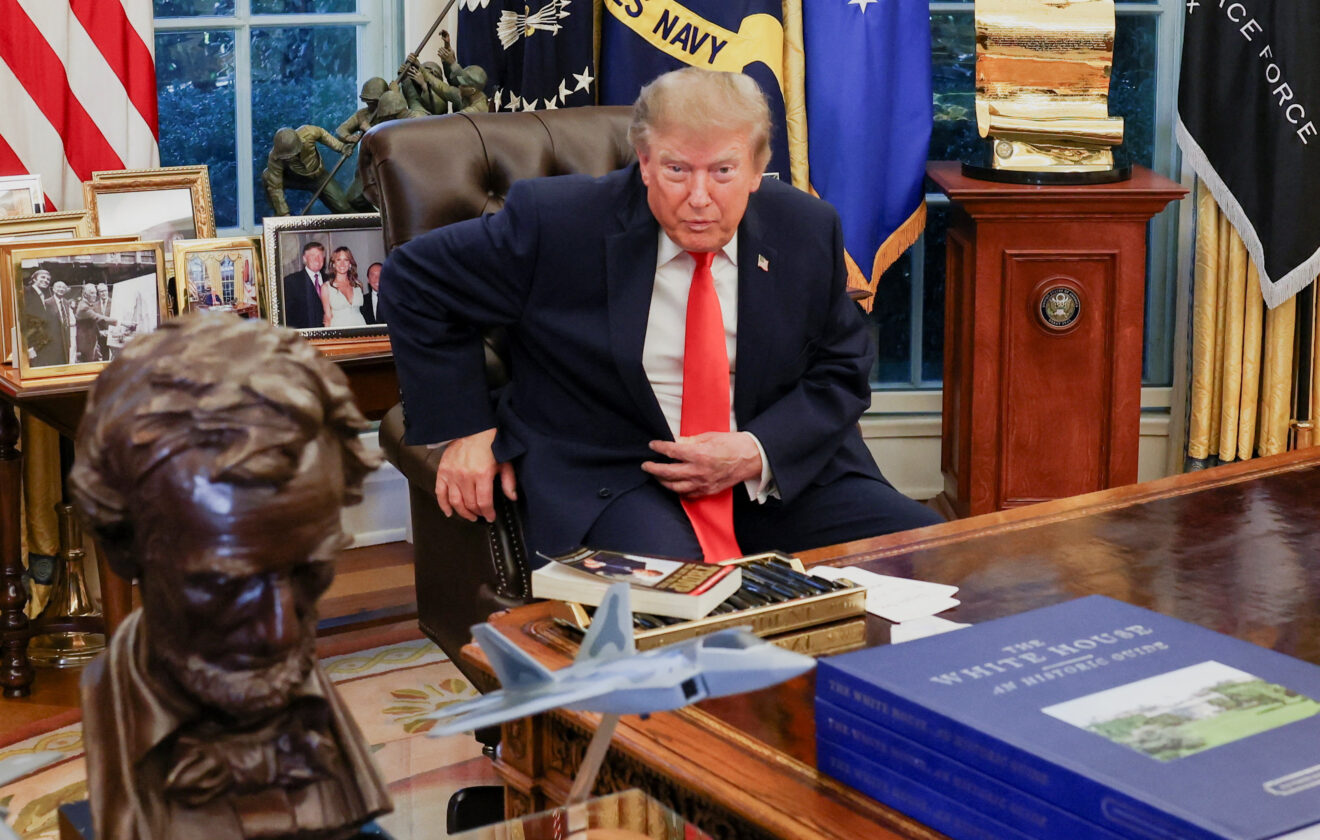
WASHINGTON, Nov 1- The White House has been preparing for some time for the possibility that Democrats take control of Congress. The plan is to advance his policy agenda through executive power while also preparing for the expected wave of congressional investigations.
Deputy chief of staff Stephen Miller and budget director Russell Vought have been working with the White House Counsel’s Office since April to find steps Trump could take on his own, without a vote in Congress. The focus is on immigration, tariffs, housing costs and federal spending.
White House counsel Will Scharf and his team are also studying the limits of the president’s power. They are looking at what Trump can legally do, where he could push those limits, and how to defend his choices in court, the White House official said.
It points to an odd feature of Tuesday’s midterm elections. If Democrats win Congress, they will gain the power to investigate Trump, block his bills and rein in his spending plans. But Trump would still hold wide powers over trade, foreign policy and the federal workforce, and he has already used those powers aggressively in his second term.
Trump has spoken about it openly. He said that if Republicans lose, he expects to veto Democratic bills for a month or two before the two sides start making deals.
“I guess I’ll become Mr. Veto,” Trump said in an interview with the New York Post’s Pod Force One podcast, in a clip released on Sunday. It was a rare public admission that his party could lose its majorities.
The math is tight. Republicans hold the House 218 to 214 and the Senate 53 to 47. Democrats need a net gain of four seats in each chamber to take control. Polls favor Democrats to win the House. The Senate is too close to call.
For the past month, Trump has crossed the country holding rallies to keep Congress in Republican hands. Behind the scenes, his aides have been planning for a very different 2027.
The White House pushed back on the idea that Republicans are headed for losses, and accused the media of pushing a false story. Spokeswoman Lauren Bis said the administration and Republicans in Congress will keep working to secure the border, restore law and order, and put more money in Americans’ pockets.
So what is on the list? According to the White House official, the options include new tariffs on imports of critical minerals and wind turbines, tighter visa rules for foreign students and temporary foreign workers, and measures to address housing and construction costs.
Federal agencies have already submitted proposals, along with legal assessments of what the administration could pursue on its own, according to one of the people familiar with the effort.
Money is a central part of the strategy. Russell Vought, who leads the Office of Management and Budget, is examining which priorities can move forward using funds Congress has already approved, according to two of the people. He also wants to revise the rules governing federal grants so that political appointees have greater influence over which programs receive taxpayer money. That could give the White House more control over federal spending without needing to ask Congress.
Trump has been briefed on the plans and has taken part in discussions about them, the White House official said. Asked how comfortable Trump would be governing largely through executive authority under a Democratic-controlled Congress, one of the people replied: “Very comfortable.”
It would not be a big change. Since returning to office in January 2025, Trump has leaned heavily on executive power. He has used it to impose sweeping tariffs, step up immigration enforcement, cut the federal workforce and pursue foreign policy goals, including the war against Iran, without approval from Congress or new laws.
The main exception was his large package of tax and spending cuts, which the Republican-led Congress passed and Trump signed into law in July 2025.
Nathan Gonzales, editor of the nonpartisan analysis service Inside Elections, said Trump has largely ignored Congress for the past two years and tried to do as much as he can through executive orders. He expects that to continue if Democrats win.
Trump has also declared national emergencies many times to widen his power to act without new laws. Congress can vote to end those emergencies. But Trump can veto that vote, and it takes a two-thirds majority in both chambers to override him.
A Democratic Congress could still make life hard for the White House.
If Democrats win control of the Senate, they could block Trump’s nominees for judgeships and senior government positions, including any candidate he puts forward for the Supreme Court. Andrew Busch, a public policy professor at the University of Tennessee, Knoxville, who has written a history of midterm elections, said he expects Democrats to be highly reluctant to confirm the president’s choices.
Democrats could also refuse to pass legislation Trump supports. Trump, however, retains the power to veto bills he opposes, and Democrats are unlikely to command enough votes in the House to override him.
The courts provide another constraint. Judges can strike down executive actions that exceed Trump’s legal authority. The White House plans to ask the Justice Department for legal opinions on what Trump can do without congressional approval and on how to defend those measures if they are challenged in court, according to one of the people familiar with the plans.
There’s one thing executive power can’t get around, though. That’s congressional investigations.
Senior House Democrats and committee staff have already discussed using hearings, subpoenas and requests for documents to look into whether Trump has used his office to help himself, his allies or his donors, Reuters has previously reported.
Trump’s aides have been preparing for that too, all three people said. White House lawyers have been briefing political appointees and agency heads on how to handle inquiries, document requests and subpoenas from Congress, one person said. They have told officials to be careful about what they put in writing.
The White House has also asked the Justice Department for an opinion that could allow Trump to invoke executive privilege, keeping his discussions with private advisers beyond Congress’s reach, according to the person.