France Summons Iran Envoy Over Supermarket Fridge Cyberattack
Paris says a unit tied to Iran’s Revolutionary Guards turned up the heat on store freezers across France. The foreign minister says some of France’s response may never be made public.
PARIS, Nov 10 – France summoned Iran’s ambassador on Tuesday over a cyberattack on Fridge that knocked out refrigerators and freezers in hundreds of French supermarkets last month. Foreign Minister Jean-Noel Barrot warned that Paris could strike back with cyber measures of its own.
The meeting took place on Tuesday morning, the foreign ministry said. Barrot had announced it a day earlier.
French officials said on Monday that Iran’s Revolutionary Guards were behind the hacks. Iran’s mission to the United Nations did not reply to requests for comment. Iran usually denies carrying out cyberattacks.
Speaking on France Info television, Barrot said France would push for new European Union sanctions on Iran.
He called it an “attack of unprecedented scale and aggression in our country.”
He said France could also take other steps, and that some of them would not be made public. Those steps would be taken if they were judged fair and needed to stop new attacks and punish the people responsible, he said. He added that France’s cyber defense rules give the government a wide range of options.
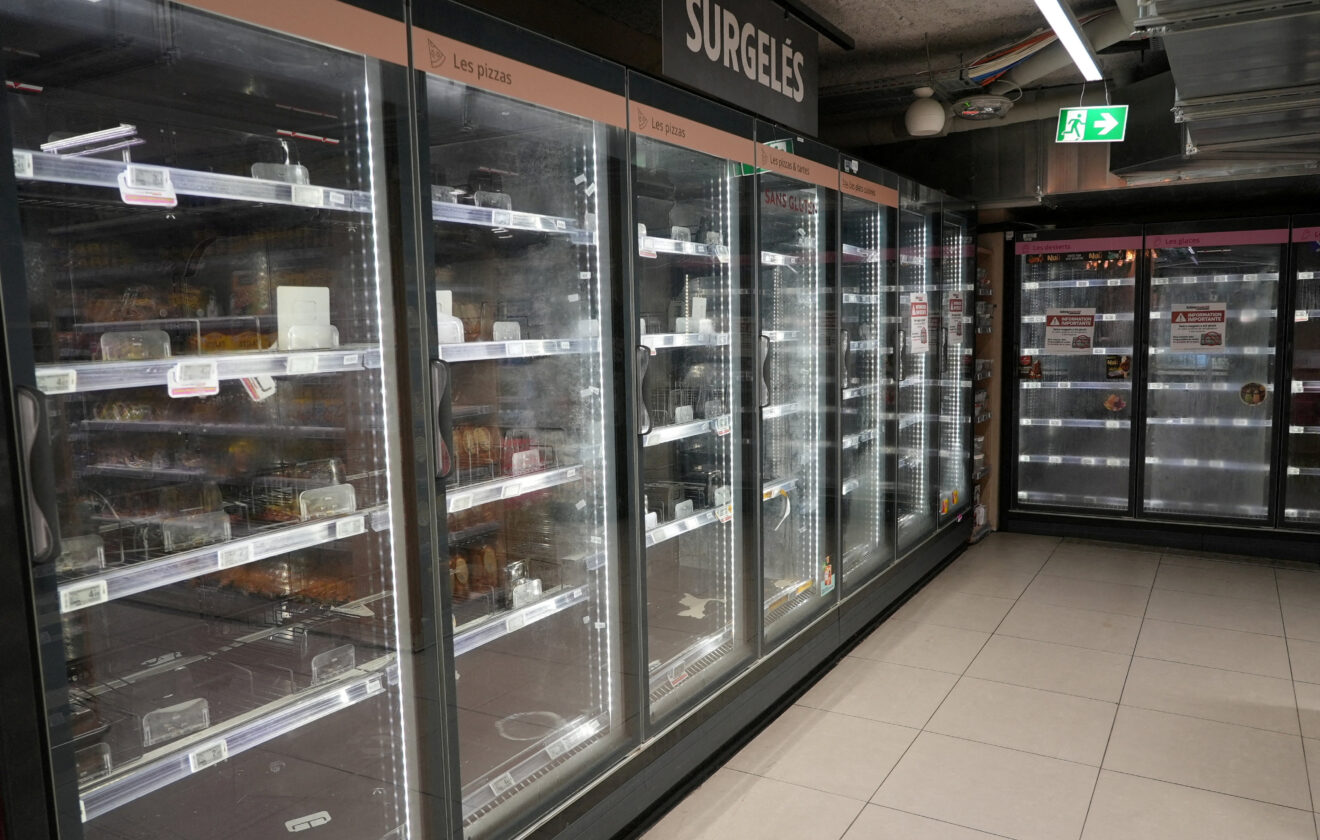
The hacks hit on October 11, and the damage was easy to see. In some stores, the hackers turned the temperature up so high that the fridges caught fire. Staff threw out boxes of spoiled meat and melted ice cream. One supermarket owner said the total cost across the country could run to tens of millions of euros.
A report by French spy and cyber agencies said about 700 business sites were targeted across France, and at least 15 fires broke out. Most were supermarkets. But small butcher shops, a slaughterhouse and food factories were hit too.
The report named the group it blames. It is called Shahid Kaveh, and the report describes it as an offensive cyber unit linked to the Revolutionary Guards. It also named three men it says are tied to the group: Hamid Reza Lashgarian, Mahdi Lashgarian and Reza Salarvand.
According to the report, the hackers hid behind front groups that posed as independent hackers, with names such as “CyberAveng3rs” and “Cyber Isnaad Front.”
Reuters could not find contact details for the three men. Paris prosecutors said they have asked for international arrest warrants.
French officials said they linked the group to the hacks in three ways. They tied the attacks to the digital tools used to break into the fridges. They matched the pattern to past hacks by Shahid Kaveh. And they found traces of Farsi in the systems used for the attack.
Microsoft had privately linked Iran to the hacks at least two weeks ago, according to three people familiar with the matter. Microsoft declined to comment.
The trouble did not end in October. This month, a second wave of hacks hit more than 100 sites across Europe. It even reached fridges used by French blood banks, where staff had to move blood to other cold storage.
There was also an earlier case in the United States. In August, refrigerators at at least six military stores stopped working. Pentagon investigators are treating it as a suspected cyberattack and are working with French officials. A person familiar with the matter said Iran was a possible suspect, but the investigation is still ongoing.
The Pentagon said on Monday that it was aware of reports of a possible cyber incident but could not provide further details for security reasons.
Experts say Iranian hackers have often struggled to cause widespread disruption in the past. The refrigerator hacks were an exception, though they may not have been difficult to carry out.
The company that made many of the units said several were old or running outdated software, which could have made them easier to breach.
Saher Naumaan, a senior researcher at the cybersecurity firm Proofpoint,
Saher Naumaan, a senior researcher at the cybersecurity firm Proofpoint, said the attack highlighted the weaknesses of the systems rather than Iran’s technical capabilities.
“How exposed these systems are,” Naumaan said, describing what the hacks revealed.
The refrigerator attacks are among the most disruptive cyber incidents since the conflict with Iran began in February. Other suspected cases include hacks on the Los Angeles transit system in March and on United States water treatment plants in July.
Ties between France and Iran have been tense for years over Iran’s nuclear and missile programs, its role in the region and its detention of several French citizens. Relations got better after those detainees were freed and France kept its distance from the United States war on Iran.
But they soured again this summer. In July, Barrot said two French diplomats were held and mistreated by Iranian security forces in Tehran. In August, France expelled two employees of Iran’s embassy in Paris.