Ueno Bank Collapse Locks 3 Million Paraguayans Out Of Savings
The digital lender grew from a small fintech into one of Paraguay’s best-known banks in just five years. Its central bank chief had once run it, and its collapse has now toppled a president.
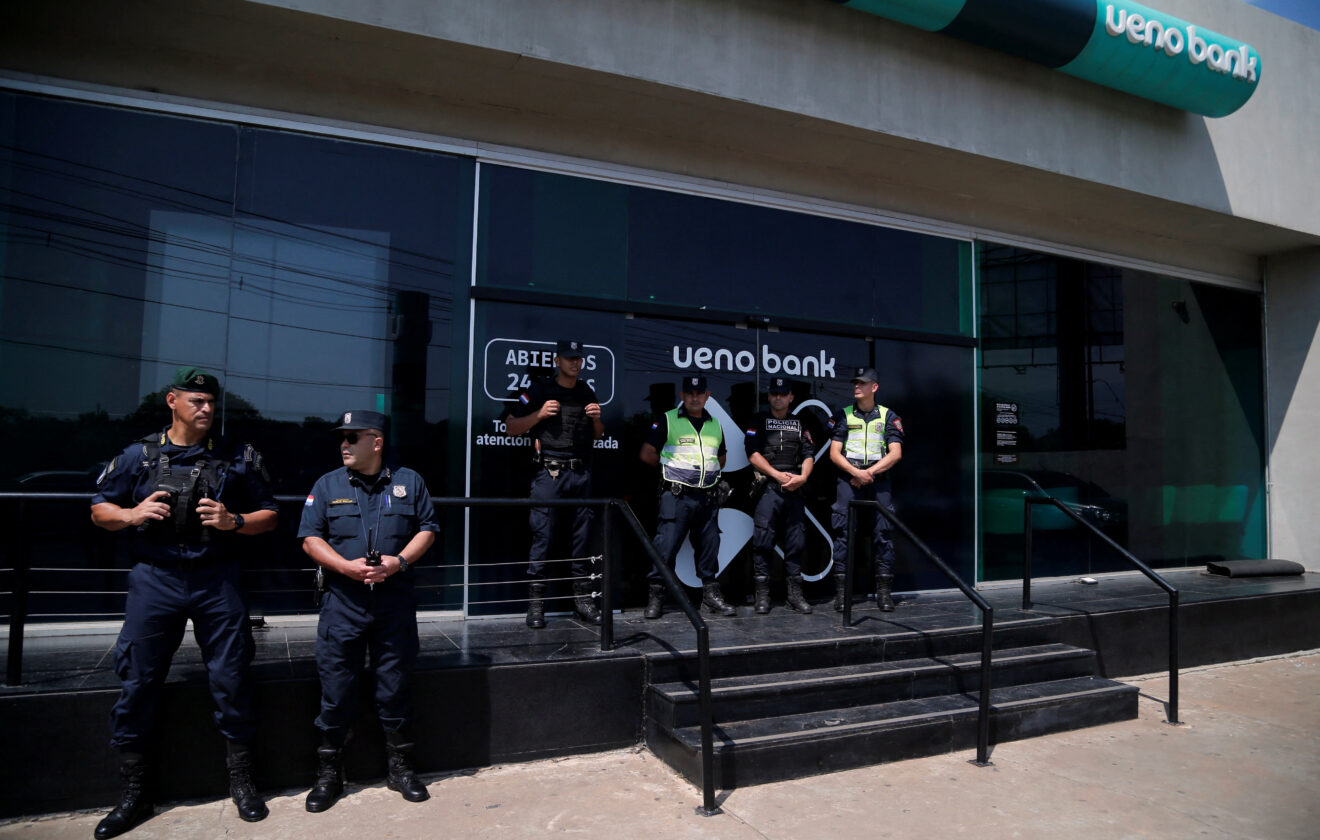
ASUNCION, Nov 6 – For the third day in a row this week, people in Paraguay lined up outside the few remaining branches of Ueno Bank, hoping someone could tell them when they would regain access to their savings. Most left without an answer.
The bank’s collapse has frozen the accounts of about 3 million customers in a country of roughly 6.5 million people. The crisis has also forced the resignation of the central bank chief, led prosecutors to pursue the bank’s senior staff, and on Thursday brought an end to the presidency of Santiago Peña, who had once held shares in the group that controlled the lender.
The turmoil has left many families unable to pay bills, withdraw cash, or access money set aside for daily expenses. Officials have promised to investigate the bank’s collapse and to protect depositors, but customers say they have received little clear information about when their funds will be released.
Ueno began in 2021 as a small technology-focused financial firm and grew in only a few years into one of Paraguay’s most prominent digital banks, conducting most of its business through a mobile app. The company styled its name with a lowercase “u,” and industry observers often compared it with app-based banks such as Nubank, Monzo, and Revolut.
The bank’s roots were older than its modern image: Grupo Vázquez acquired Financiera El Comercio in 2021 and rebranded it as Financiera ueno, before obtaining a full banking license in November 2023. Ueno began operating as a bank that December, and in 2024 it absorbed Visión Banco, sharply expanding its customer base and balance.
Its digital model helped it reach customers who had previously been outside the formal banking system. Ueno said that more than 1 million Paraguayans opened their first bank account through its platform, and it reported more than 2.8 million customers by March 2026.
By June 2026, Ueno said it had about 3 million customers and was managing roughly $850 million in public money, much of it from state institutions and pension-related bodies. That included about $380 million invested by Paraguay’s state pension and health fund, known as IPS.
The bank had also grown into a significant player in Paraguay’s financial system: it reported a loan portfolio of nearly 15 trillion guaraníes and deposits of more than 17 trillion guaraníes in June 2026, according to local reporting. It issued $350 million in international bonds in March 2026 and announced a $100 million capitalization plan later that year.
A lot of those customers had never had a bank account before, or had been poorly served by the big banks. For them, Ueno was an easy way to get paid, pay bills and put a little money aside.
The problems began when regulators began examining loans the bank had extended to companies linked to its main owner, the Grupo Vázquez business group. They came to the view that it was lending far too much to firms in its own family.
In the end, the central bank found that Ueno no longer had enough capital to meet the legal minimum, and it took control of the bank. The step, known as resolution, is the toughest one the central bank can take without closing the lender outright and selling its assets.
That decision put the central bank itself in the spotlight, because the man who led it, Carlos Carvallo, had once run Ueno.
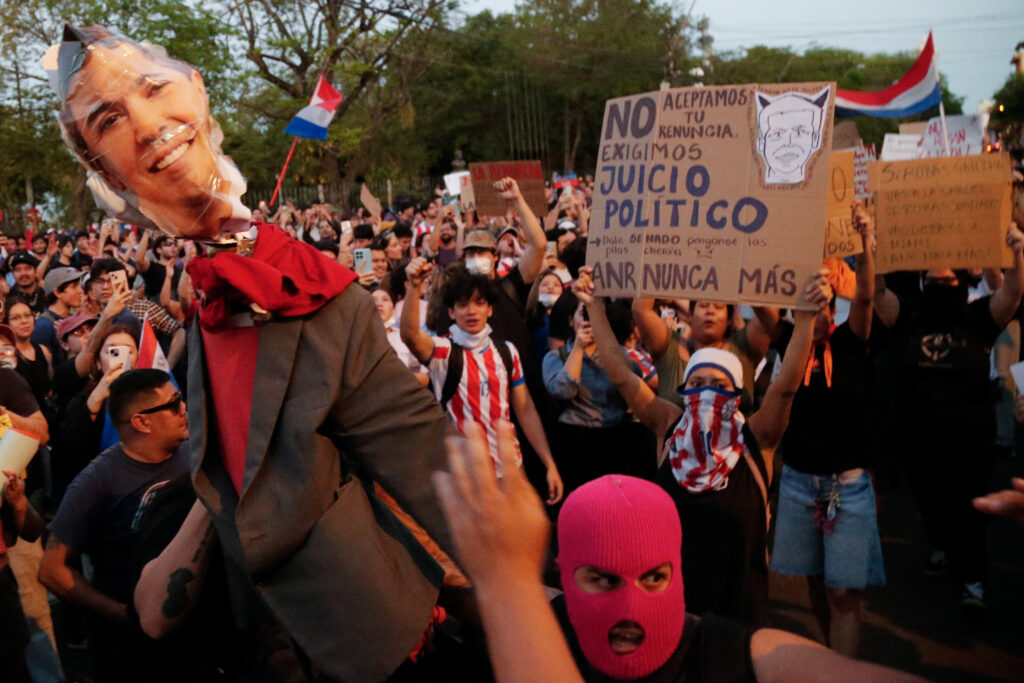
Demonstrators protest near the Paraguayan Congress following the crisis triggered by the collapse of the digital lender Ueno, Paraguay, November 5, 2026. REUTERS.
Carvallo resigned on Tuesday, soon after the takeover. The central bank has said there was no conflict of interest and that he stayed out of every decision about the lender. But as details of the probe leaked out, lawmakers, bankers and opposition leaders asked how the bank had been allowed to grow so fast with so little scrutiny.
The same questions followed Peña. He has said he owned shares in Grupo Vázquez until March 2025, when he sold them, and Ueno says he never held any stake in the bank itself.
Opposition lawmakers accuse him of a conflict of interest, of misusing pension money and of trying to hide what went on. Peña denies any wrongdoing and has said the matter began as a problem for regulators, became a political fight and should now be left to the courts.
Prosecutors said on Thursday that he is among the people under investigation, although they have not questioned him. They also issued arrest warrants this week for eight of the bank’s executives.
For ordinary customers, the bigger concern is simple: They want to know where their assets went and want their Money back.
The central bank says it is transferring Ueno’s accounts to other banks. The process has not gone smoothly, and the strain on the financial system caused several banking apps to fail this week.
Pensioners have been among the hardest hit, as many receive their state pensions through Ueno. That prompted the government to act quickly to guarantee deposits and protect public funds. Earlier this week, President Peña signed a law to speed up payments to those affected.
Officials insist that the problems are confined to Ueno and say the rest of the banking system remains sound.
The bank had also borrowed heavily abroad. It said this year that it had raised about $510 million from development lenders, global funds and capital markets, including a $350 million bond sold on Wall Street led by JPMorgan and Bank of America.
Paraguay has spent years building a name as one of South America’s steadier economies, and it has earned investment-grade credit ratings along the way.
Whether the fall of Ueno will damage that standing remains unclear. The government has moved quickly to reassure depositors and protect public funds, but the scale of the freeze has shaken confidence among customers, investors, and businesses. Much will depend on how smoothly the authorities can transfer accounts, return savings, and restore trust in the country’s financial system.