European Far Right Distances Itself From Trump After Midterms
Leaders who once celebrated their ties to Trump now blame the Iran war and the cost of living for his party’s losses. Most still avoid criticizing the president by name.
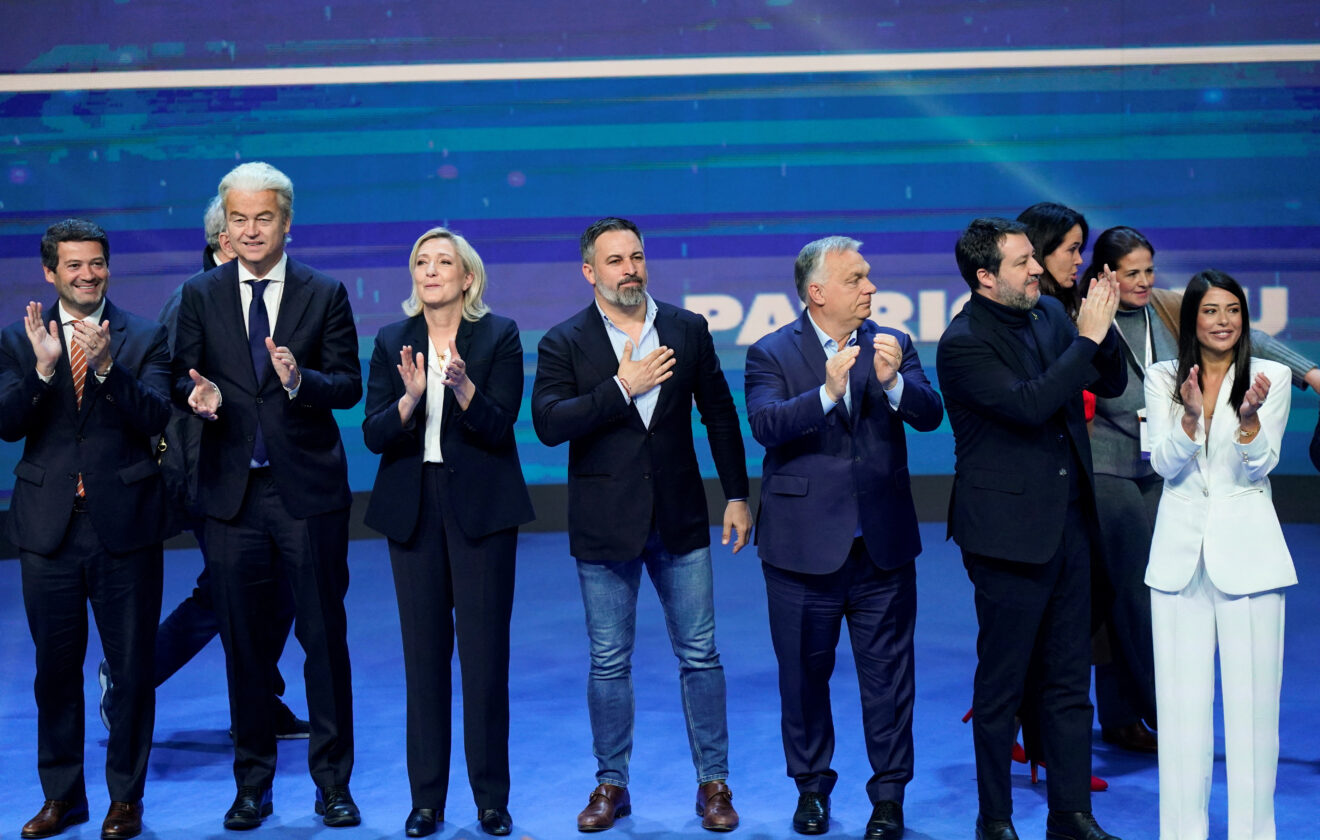
LONDON, Nov 5 – The European far right began to put some distance between itself and Donald Trump on Wednesday, after Democrats won control of both chambers of the United States Congress. But most of its leaders avoided criticizing the president directly.
The shift stands out. Many of the same leaders celebrated their shared views with Trump after he won the White House in 2024. Some have visited Washington since then, and several have received support from his billionaire ally Elon Musk.
Now most of them say the war with Iran and the rising cost of living lost Republicans the election.
Jordan Bardella, leader of France’s National Rally, was typical of the change. Most polls suggest his party could form the next government in France.
Bardella said Trump’s second term had been less isolationist than his first, from 2017 to 2021.
“American intervention regarding Iran carries very heavy consequences,” Bardella said, pointing to the effect on economies around the world. He did not say that Trump was behind that intervention.
In Germany, Alice Weidel, co-leader of the Alternative for Germany party, also blamed Iran. She told the news site T-Online that Trump had promised his voters he would not pursue a foreign policy of intervention.
“This broken promise has now come back to haunt the Republicans,” Weidel said.
In Italy, Matteo Salvini, leader of the far-right League party, which is part of the ruling coalition, said the American result was shaped above all by wars, international tensions and the rising cost of living. He said those costs fall directly on families.
Salvini said he hoped the vote could speed up “the end of the conflicts and a return to peace.”
Roberto Vannacci, a former Italian general who leads the far-right Futuro Nazionale party, said the result showed the political danger of failing to keep campaign promises.
Vannacci has praised Trump’s “America First” politics in the past, but has since criticized him over foreign policy. He told the ANSA news agency that Trump had failed to meet expectations, had not ended the war between Russia and Ukraine and had launched a war against Iran.
He said the rise in energy prices and the turmoil in the economy and on stock markets that followed had hurt the American middle class.
In Spain, Santiago Abascal, leader of the far-right Vox party, made little effort to soften his move away from Trump. Abascal had promoted his alliance with Trump and his movement.
He told reporters he was “in Spain and not in Michigan.” He said he cared very little about what happens in other places.
In Britain, Rupert Lowe, leader of the far-right Restore Britain party, called the decision to attack Iran a “catastrophic mistake.” He said the war had achieved nothing of value. But in his long post on X, he did not name the president who launched it.
One of the few to play down the defeat was Dan Dungaciu, vice president of the opposition hard-right Alliance for Uniting Romanians. He said reports of Trump’s political death were “greatly exaggerated.”
Dungaciu said Trump does not simply become a powerless president. Instead, he said, Trump moves from a presidency backed by Republican majorities to one where the White House and Congress will check each other much more closely.
Mujtaba Rahman, managing director of the political risk firm Eurasia Group, said Europe’s far-right leaders were distancing themselves from Trump for clear political reasons.
He said Trump’s falling popularity, especially over the cost of living, risked “turning what was once a political asset into an electoral liability.”
Rahman said the far-right leaders seemed to want it both ways. They want to benefit from the energy of Trump’s movement without being tied to the chaos and economic damage of his presidency, he said.
But he warned there was a risk. Trump and his allies, who see Europe’s far right as partners in a fight against the European establishment, could respond by withdrawing their support or even turning on them, he said.
The split over Iran is not new. When the United States and Israel launched the war in February, Europe’s far-right parties were divided over how to respond, according to reports at the time. Some backed the strikes, while others warned they went against Trump’s promise to keep the United States out of foreign wars.
Trump has acknowledged that the war played a part in his party’s losses. But he has said he stands by his decision to go to war.