Trump Mocks Muslim Name Mohammad, Says America Will “Burn” Like France Under Democrats
The president's comments about a common Muslim first name and about France became a talking point as the midterm campaign intensifies.
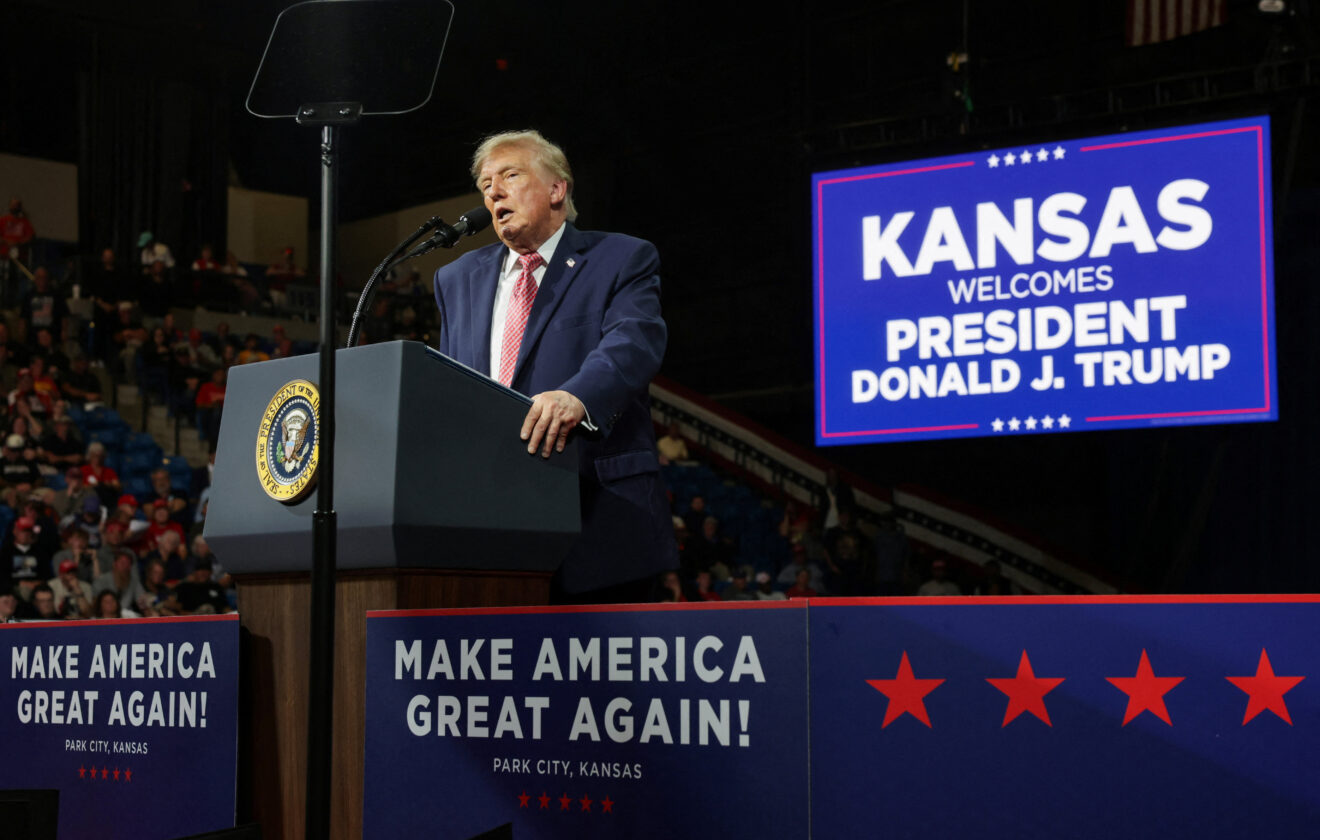
President Donald Trump invoked the violent unrest in France during a campaign rally in Kansas on Monday, warning supporters that the United States could face similar chaos if Democrats win control of Congress in the 3 November midterm elections. He provided no evidence to support the comparison.
Speaking at an arena in Park City, near Wichita, Trump campaigned for Republican Senator Roger Marshall, who is in an unexpectedly close race with Democrat Adam Hamilton, the pastor of a Methodist megachurch. Trump said that when people see burning church steeples and raging fires in France, they should remember that the radical Democrats want the same for America, and that he would not let it happen. He also said immigration had damaged France and urged its leaders to close the borders.
The unrest he referred to followed nationwide cost-of-living demonstrations in France on Saturday, Oct. 17, which turned violent after dark. Protesters set fire to the 19th-century town hall in Limoges, which authorities said was largely lost, and the tourist office in Lyon was set ablaze. Shops were looted in several cities. Prime Minister Sébastien Lecornu reported about 1,200 arrests and 150 injured police officers, and later reports put the number of arrests near 2,000. Lecornu has blamed ultra-left groups for the violence, while the marches themselves were driven by anger over living costs and underfunded public services.
Marshall led his remarks with cultural themes, including stopping what he called radical Islam. Hamilton’s campaign described Marshall’s effort as sinking.
Trump’s comments in Kansas came three days after a rally in Dalton, Georgia, where he joked about how common the name Mohammad is among Muslims while mocking Iran’s presidency. He said that if someone is unsure of a Middle Eastern person’s name, the safe guess is Mohammad would be right about 65 percent of the time. He then pretended to ask people with that name whether they wanted to be president of Iran. The Georgia crowd responded quietly. According to reports from the event, he also repeatedly called Michigan Democratic Senate candidate Abdul El-Sayed by his middle name, Muhammad.
Rights advocates and Muslim advocacy groups have repeatedly criticized Trump for rhetoric they say demonizes and mocks Muslims, immigrants and ethnic minorities. Critics argue that such language makes prejudice more acceptable, and they have called the Georgia remark anti-Muslim. The White House has not been reported to have commented on that criticism.
Kansas has not elected a Democrat to the Senate in 94 years, and Trump carried the state by 16 points in 2024. Marshall, a first-term senator, now faces a race that the Cook Political Report rates as a toss-up. One YouGov poll showed Hamilton ahead by 48 percent to 45 percent. Hamilton is campaigning against Trump’s tariffs and what he calls the president’s erratic leadership. Trump had earlier posted on his social media platform in support of Marshall, describing Hamilton as a phony who pretends to be a moderate.
Republicans are on the defensive in several conservative states because of voter frustration over the war in Iran and rising prices. The latest Reuters/Ipsos poll, published Monday, found that 31 percent of Americans approve of Trump’s performance, a record low for his presidency.
Those concerns were visible at the rally. Many attendees walked more than a mile across a highway to reach the arena, passing a truck stop sign showing gasoline at $3.98 and diesel at $5.78. Monique Mullen, a 59-year-old Republican from Hutchinson, said prices needed to come down and that food had become harder to afford. Outside, a small group of protesters included James Nightingale, an independent farmer from Halstead, who said tariffs had hurt grain markets.
Trump’s Kansas appearance was part of a 32-day campaign push focused largely on Republican-leaning states. Democrats need a net gain of four seats in both chambers to end Republican control, with the party holding a 218-214 majority in the House and a 53-47 majority in the Senate.